The short answer
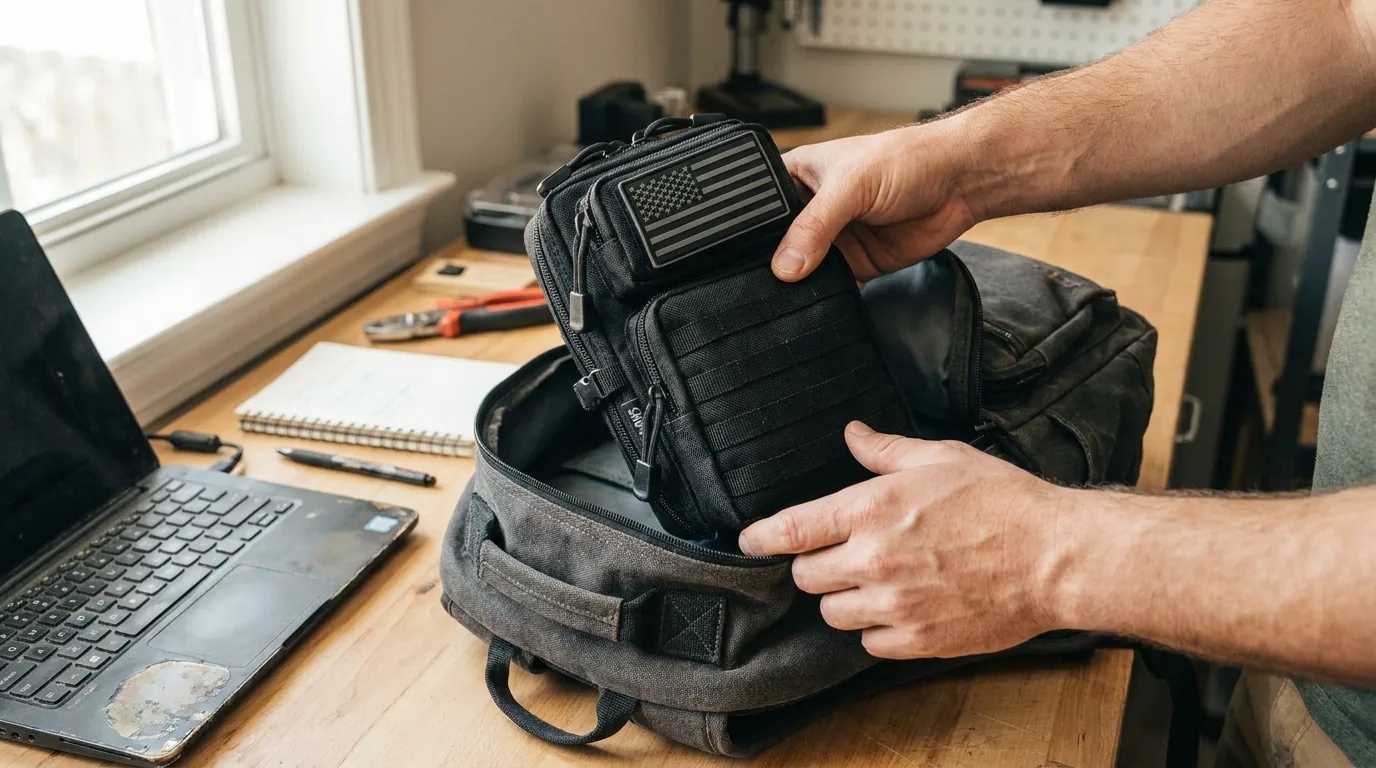
Pack an EDC pouch as the small-gear layer inside your personal-item bag. Give it only the items you are likely to need in the airport, on the plane, or right after landing: a charging cable, wall adapter, earbuds, pen, travel documents, and a few compact essentials. The goal is quick access, not carrying every backup item you own.
Keep the pouch inside the bag rather than treating it as a separate allowance. That makes it a removable organizer: pull it out when you settle into a seat, put it back before you leave, and avoid digging through the whole backpack or tote for one cable.
Start with the airline’s actual allowance
Personal-item rules are not universal. For example, American Airlines currently says a personal item must fit under the seat and lists a maximum of 18 x 14 x 8 inches. Your airline, fare, aircraft, and route may use different rules, so check the policy for the specific trip before packing.
That is why the pouch should stay compact and live inside the personal item. It should organize the bag’s small gear, not make the bag bulge or create a second item to manage at the gate.
| Keep in the pouch | Keep elsewhere in the personal item |
|---|---|
| Charging cable, wall adapter, earbuds | Laptop or tablet in a protected sleeve |
| Pen, travel documents, small notebook | Jacket, book, or larger comfort item |
| Small approved hygiene or comfort items | Liquids and items that need their own compliant bag |
| One compact backup such as a spare cable | Bulky items, duplicate gadgets, and loose clothing |
A practical travel EDC pouch list
Use this as a starting point, then remove anything that does not solve a real part of your trip:
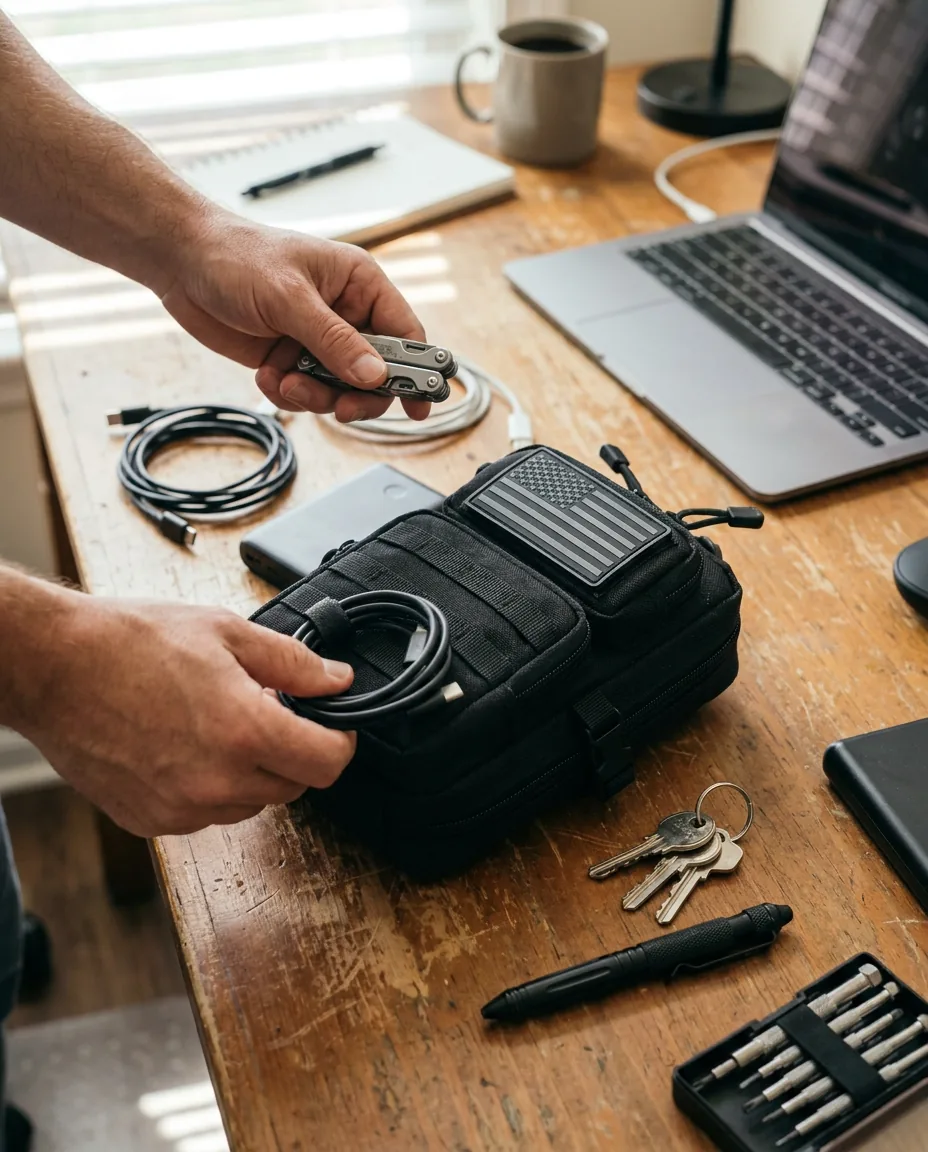
- Power: one charging cable, a wall adapter, and any other small power accessory that is allowed for your trip.
- Audio: earbuds or headphones in a case you will actually use in transit.
- Documents: passport or ID, boarding information, and a pen. Keep documents in a dedicated sleeve or inner pocket when possible.
- Small comfort items: a compact eye mask, earplugs, or a small personal-care item only if it meets current screening rules.
- Arrival basics: one item that helps at the destination, such as a hotel key holder, transit card, or a short cable for a rental car.
Do not use the pouch as a junk drawer. A second charger, three unused cables, a large tool, and loose snacks quickly make a compact organizer heavy and slow to search. If you cannot name when you will use an item, leave it at home or move it to the main bag.
Make the pouch screening-ready
Pack the pouch so you can lift it out without disrupting the rest of the bag. Put documents and fragile electronics where they are protected but still reachable. Keep items that may need separate handling easy to identify, and do not assume an organizer changes any security rule.
The Transportation Security Administration’s What Can I Bring? tool is the right final check for a specific item. Airline guidance also matters: American Airlines directs travelers to review restricted items and TSA rules before flying. Rules and screening decisions can change, so verify them close to departure rather than relying on an old packing list.
The five-minute setup
- Empty the pouch. Start with a clean baseline instead of carrying last trip’s leftovers.
- Add the transit essentials. Cable, adapter, earbuds, documents, and pen come first.
- Add one arrival item. Include only something that solves a likely need after landing.
- Remove duplicates. One reliable cable beats a tangle of “just in case” accessories.
- Place it near the top of the personal item. It should be reachable from the seat without unpacking the full bag.
- Check the bag’s outside shape. If the personal item no longer fits its airline allowance, reduce the main bag before leaving.
Where a CobaltNook pouch fits
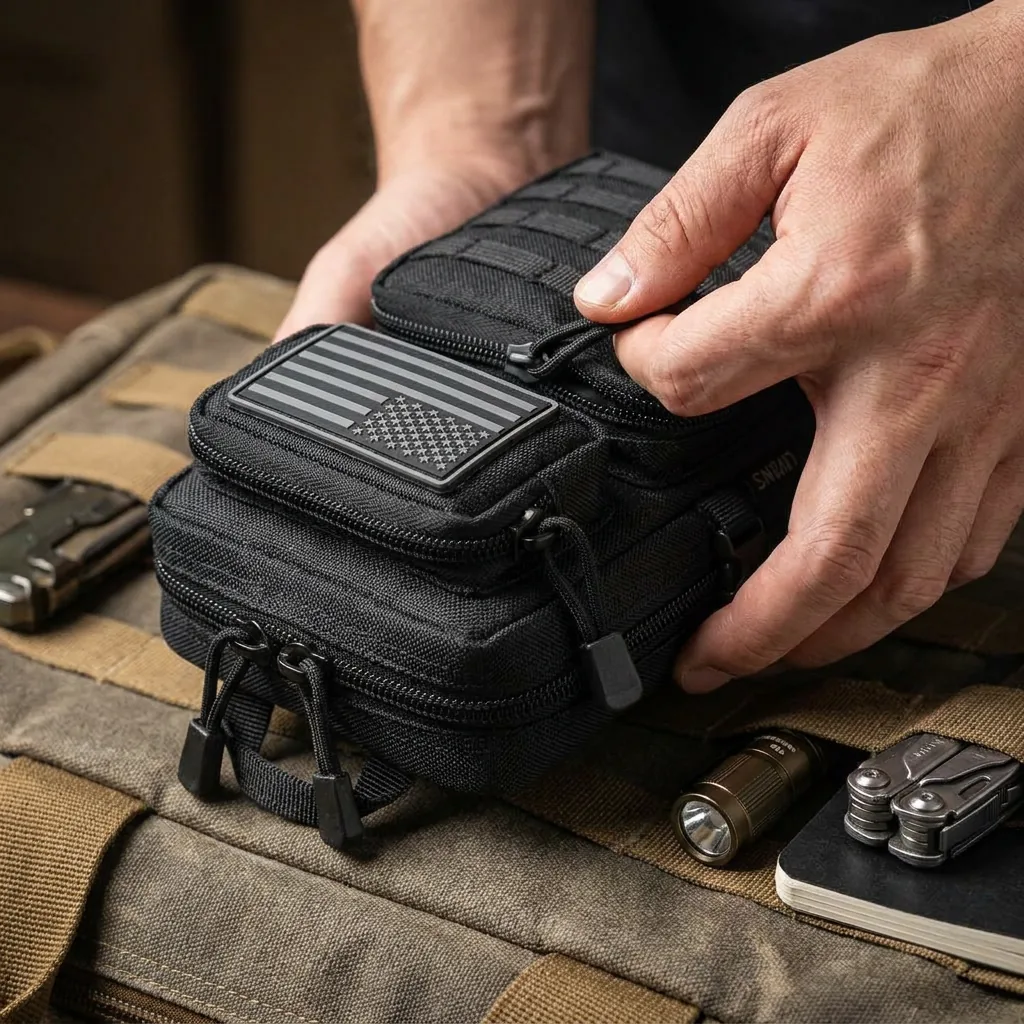
The current CobaltNook D-ring pouch is a compact organizer with a main zip body, front zip pockets, MOLLE webbing, and a shoulder strap. Its approximate outside dimensions are 7 inches high by 3.7 inches long by 3.14 inches deep. That can make it useful as an internal small-gear zone for a backpack, tote, or larger personal item—but it is not a promise that every airline or bag will accept the final packed setup.
Use the main body for cables and a small charger, the front pockets for flatter items, and the rest of the personal item for the laptop, jacket, and larger travel gear. For a different everyday setup, see our guide to organizing a work bag with a tactical EDC pouch. If you are new to this category, begin with what an EDC pouch is and what it is for.
What not to put in the pouch
- Loose liquids: follow the current airline and TSA guidance instead of assuming the pouch will contain them.
- Bulky layers: jackets, large headphones, and clothing belong in the main bag, not in a compact organizer.
- Items you cannot explain: a travel pouch works best when every item has a clear job.
- Heavy duplicates: consolidate chargers and cables before leaving.
- Items for a different kit: vehicle, camp, and range gear deserve their own setup; see our truck-kit guide and MOLLE pouch uses for camping and travel.
Frequently asked questions
Can an EDC pouch count as a personal item?
It depends on the airline and how you carry it. The simplest approach is to keep the pouch inside the personal-item bag so it functions as an organizer, not as an additional bag. Check the current allowance for the airline and fare before travel.
What should go in a travel EDC pouch?
Keep it to small, high-use items: a charging cable, wall adapter, earbuds, pen, travel documents, and a few compact comfort or hygiene basics that comply with current screening rules.
Should the pouch stay in the personal item at security?
Pack it so it can be lifted out quickly if a screener asks. Follow the current TSA guidance for the specific items in the pouch; an organizer does not change what is allowed through screening.
Bottom line
Use a travel EDC pouch to create one small, removable zone inside the personal item. Pack the items that make transit smoother, keep the pouch easy to scan, and confirm the final bag meets your airline’s current allowance. For clothing organization in the main carry-on, pair this setup with our packing-cube carry-on guide.