Why carry-ons get messy so fast
A carry-on looks organized when you zip it at home. The problem starts after the first outfit change, airport security shuffle, or quick overnight stop. Shirts slide into socks, chargers get buried, and the clean side of the bag turns into the same pile you tried to avoid.
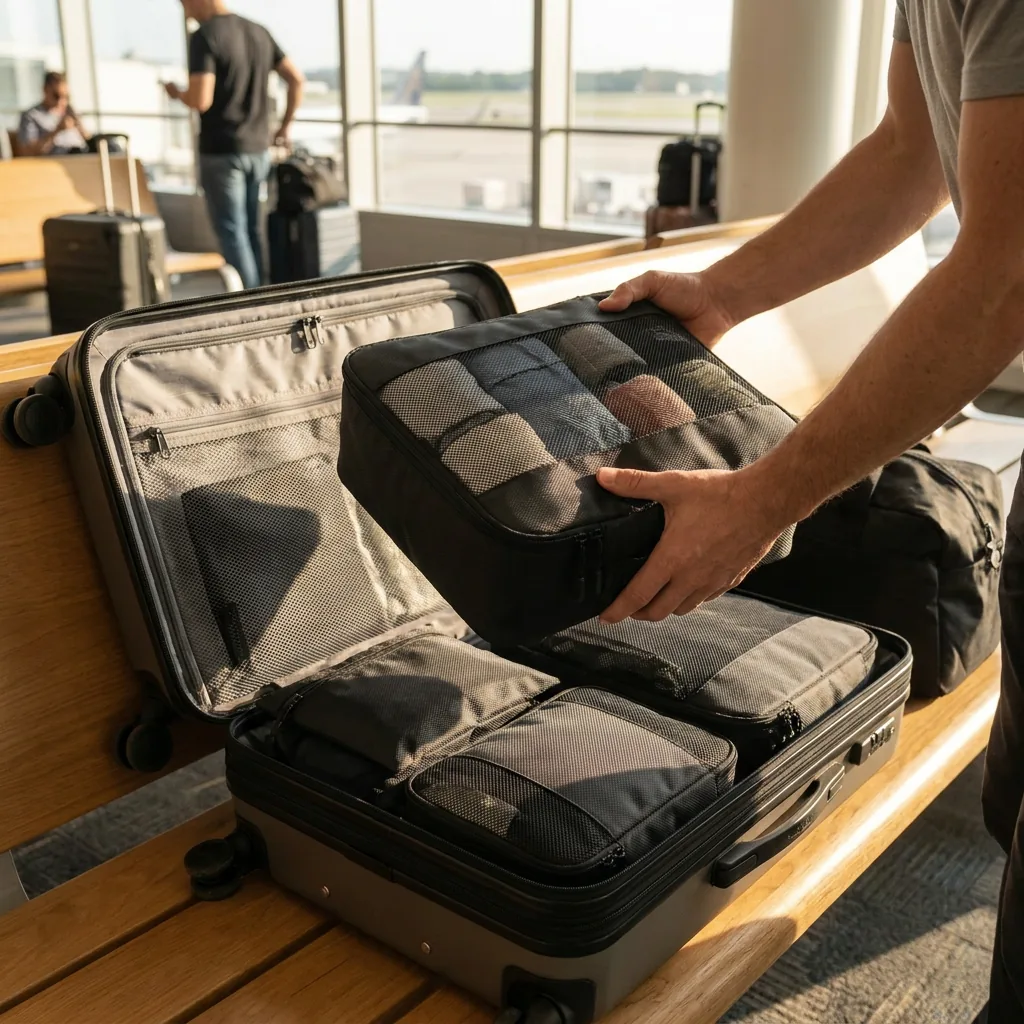
At the checkpoint, ordinary clothing cubes can usually stay inside the bag. Our guide to packing cubes at TSA explains what still needs to be easy to remove.
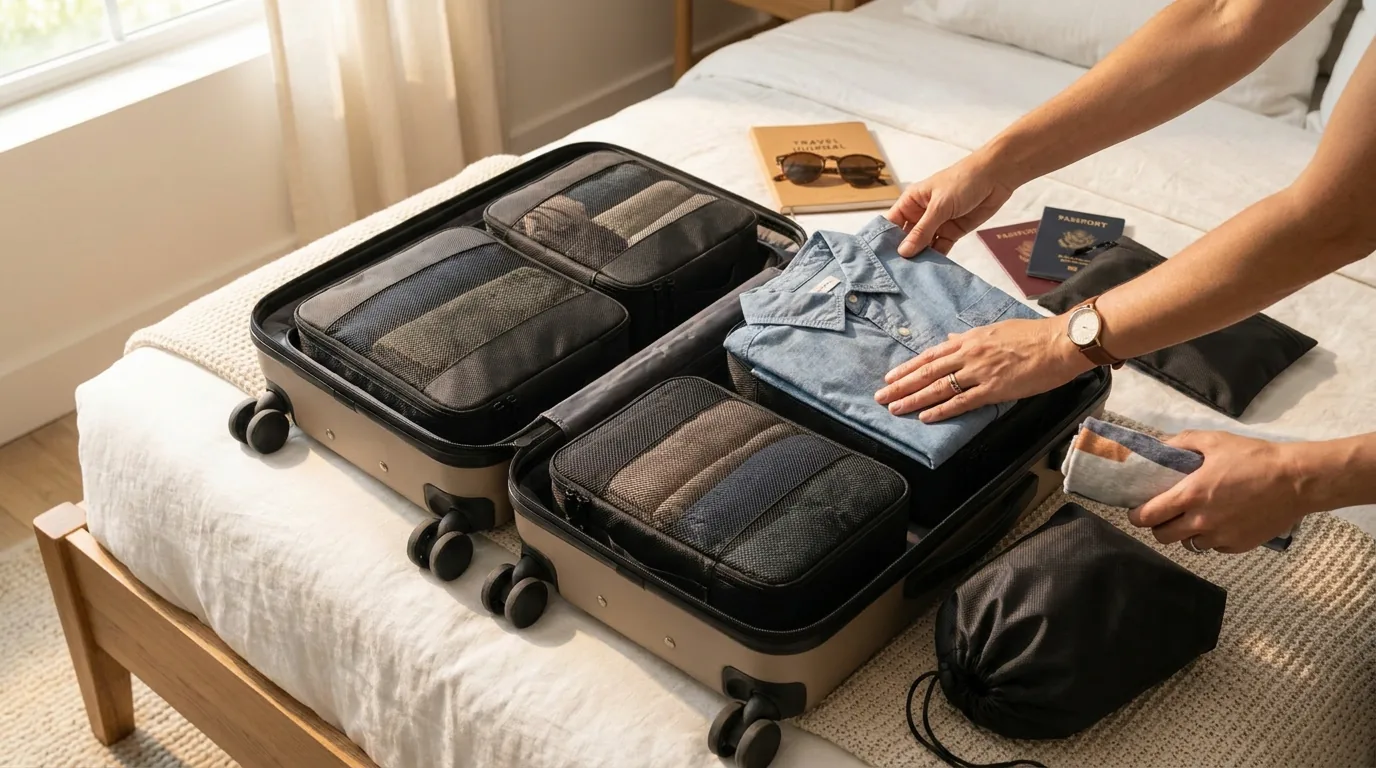
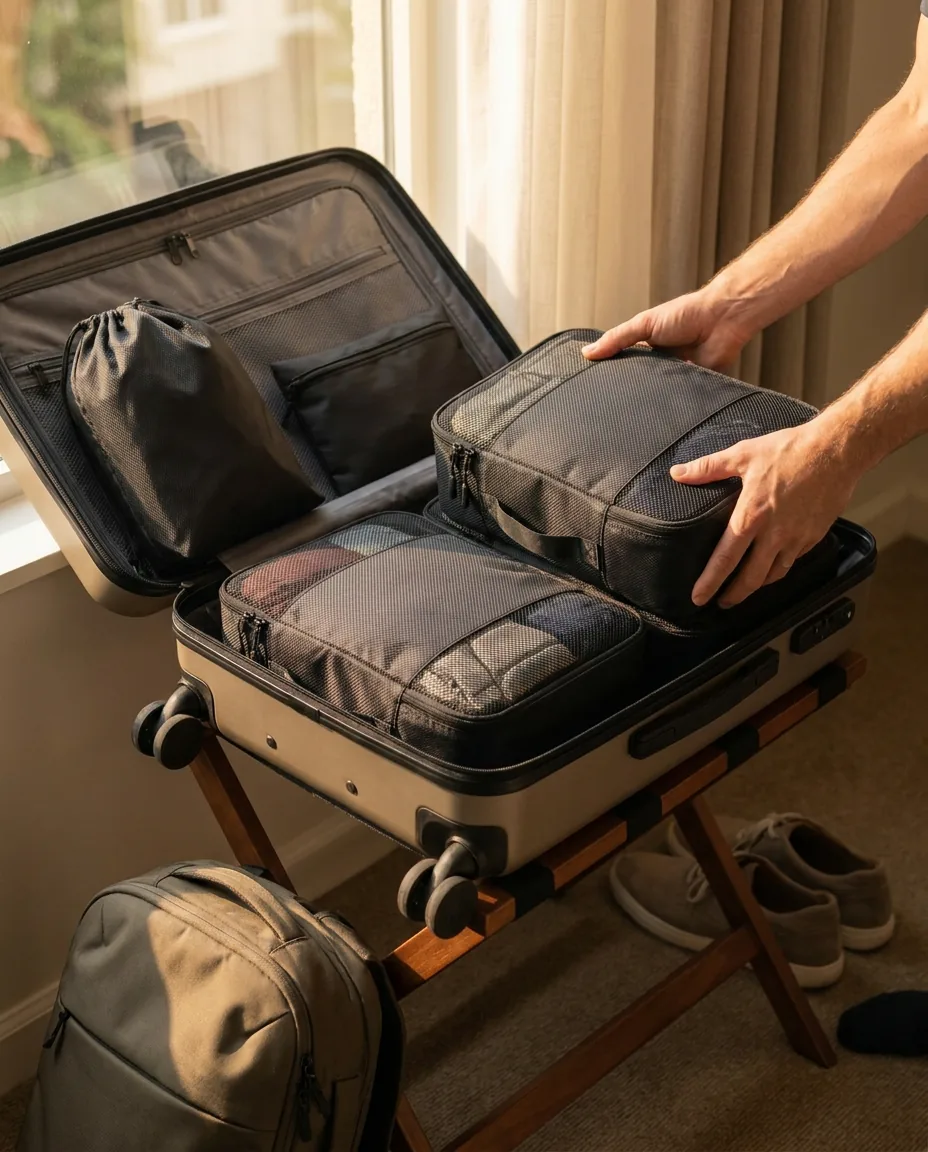
Packing cubes fix that by giving every category a fixed home. Instead of treating your suitcase as one big container, you turn it into a small drawer system. One cube for tops, one for bottoms, one for underwear and socks, one for layers, and one for laundry or overflow. If you carry a travel backpack instead of a suitcase, use this guide to see how packing cubes work in a backpack.
If you are choosing the pieces before building the layout, use the packing cube size guide to match small, medium, and large cubes to clothing groups and the usable shape of your bag.
A simple carry-on cube system
Start with the items you reach for most often. Put your first-night outfit and sleepwear in the easiest cube to grab. Keep underwear and socks in a smaller cube so you do not have to unpack half the bag for one pair. Use a larger cube for folded shirts and a separate cube for bulkier pieces.
The point is not to make the suitcase look perfect for a photo. The point is to make the second and third day of travel easier. When each cube has one job, you can open the carry-on, pull exactly what you need, and close it again without re-packing everything.
If you are choosing a lower-cost, transparent alternative, compare packing cubes vs. Ziploc bags before you pack.
How tight should each cube be?
Packing cubes work best when they are filled, not forced. A cube should hold its shape without straining the zipper. If you have to wrestle it closed, move bulkier items into another cube or wear the thickest layer while traveling.
For longer trips, separate clean and used clothing early instead of waiting until the suitcase is already messy. A dedicated laundry cube or empty spare cube keeps worn clothes away from clean items and makes the return trip less chaotic.
What to pack in each cube
For a standard three-to-five-day trip, use one medium cube for shirts, one medium cube for bottoms, one small cube for underwear and socks, one slim cube for sleepwear or base layers, and one extra cube for laundry. Keep toiletries in a separate toiletry bag so moisture never touches clothing.
If you travel with a laptop backpack as a personal item, keep a small cube inside that bag with a backup shirt, socks, and underwear. If your carry-on gets gate-checked, you still have the basics with you.
Quick answers
Do packing cubes save space?
They help most by compressing soft clothing slightly and preventing dead space. The bigger win is organization: your carry-on stays usable throughout the trip.
Should I roll or fold clothes in packing cubes?
Both work. Roll lighter items when you want visibility and fold structured pieces when you want flatter stacks.
How many packing cubes do I need for a carry-on?
Most travelers can organize a carry-on with four to six cubes, depending on clothing bulk and trip length.
Ready to make the setup cleaner?
Start with the CobaltNook product built for this exact job.