The short answer
A tech pouch is the better specialist. It usually gives cables, chargers, memory cards, adapters, and a power bank dedicated loops or divided pockets. An EDC pouch is the better generalist. It suits a changing mix of electronics, keys, writing tools, a flashlight, small first-aid items, and compact tools.
If at least three quarters of your load is electronics and cable accessories, a tech pouch is likely the cleaner fit. If the load changes by day or includes awkward non-tech items, an EDC pouch is usually easier to live with.
EDC pouch vs. tech pouch at a glance
| Factor | EDC pouch | Tech pouch |
|---|---|---|
| Main job | Organize a mixed everyday kit | Organize electronic accessories |
| Typical contents | Keys, pens, flashlight, compact tools, cables | Chargers, cables, adapters, drives, batteries |
| Interior | Flexible compartments, zip pockets, or loops | More divided pockets and cable-specific loops |
| Outside attachment | May include MOLLE webbing, D-rings, or a strap | Usually designed to ride inside another bag |
| Best advantage | Adapts when the load changes | Fast visual sorting for small tech |
| Common drawback | Can become a junk drawer without a packing rule | Dividers may waste space on bulky items |
What makes a tech pouch different?
A tech pouch is purpose-built around electronic accessories. The category commonly uses elastic loops, small divided pockets, and a wide opening so cables and adapters can be seen without emptying the pouch.
Peak Design’s current Tech Pouch page, for example, describes origami-style pockets, elastic accessory loops, a clamshell opening, and a cable pass-through. Those features show the category’s main strength: many small components can each have a defined place.
This structure helps when you carry several similar-looking cables or adapters. It can also make handoffs easier: remove one pouch from a backpack, place it on a desk, and the mobile-office kit stays together. Pack Hacker’s tested tech pouch guide highlights the same modular benefit—gear in a separate pouch can move between bags instead of being rebuilt in each backpack’s admin panel.
What makes an EDC pouch different?
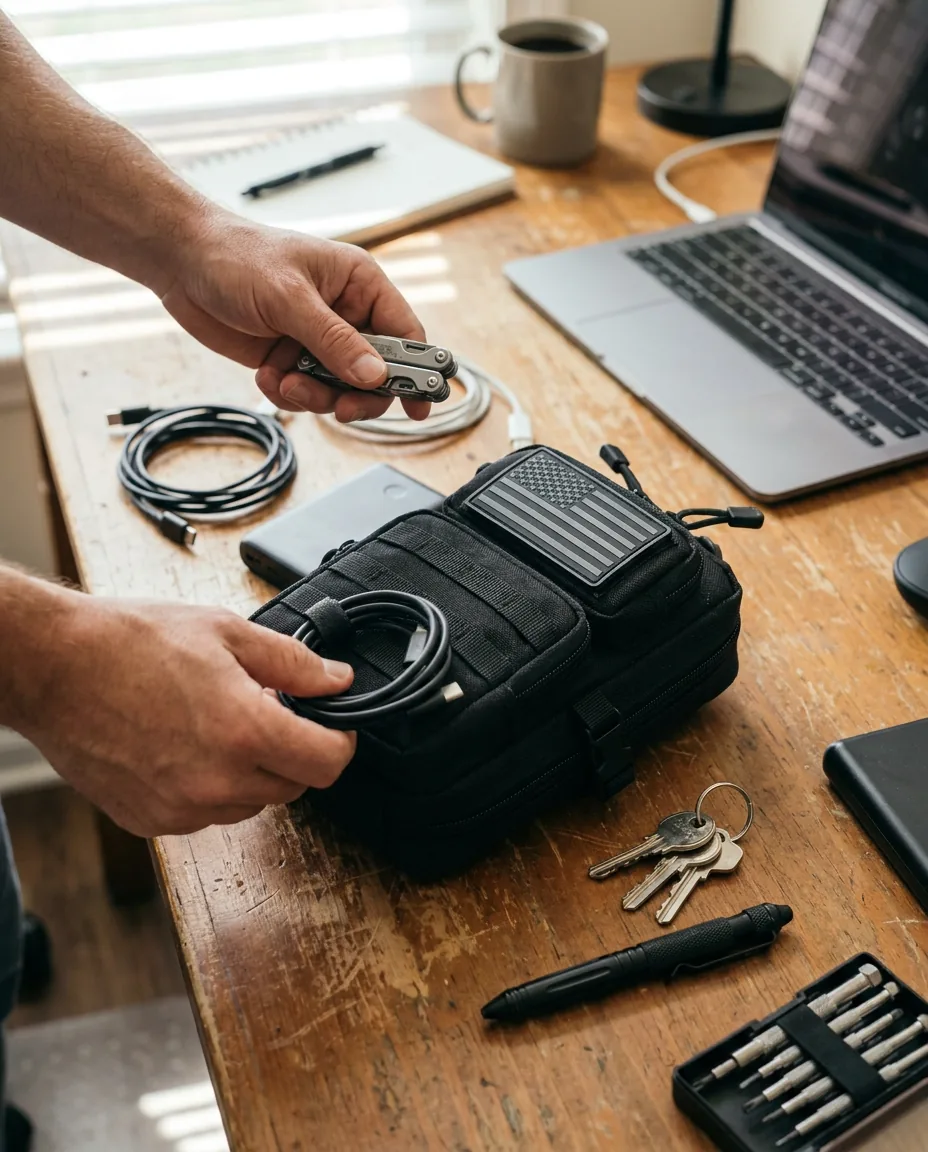
An everyday carry pouch is broader. It gives frequently used small items a fixed home even when they do not belong to one category. A weekday load might include a charging cable, pen, keys, flashlight, lip balm, and notebook. A field day might replace the notebook with gloves, a tape measure, or a compact tool.
That flexibility is why an EDC pouch works in a truck, work bag, garage kit, range bag, or camping setup. Read What Is an EDC Pouch? for the beginner definition, or our MOLLE pouch guide for outdoor and travel examples.
Which one is better for a work bag?
For an office-first laptop bag, choose a tech pouch if you routinely carry a laptop charger, phone cable, earbuds, mouse, presentation adapter, storage drive, and power bank. Dedicated pockets reduce tangles and make it easier to confirm every component came home.
For a bag that crosses office, vehicle, shop, and field use, choose an EDC pouch. A less specialized layout accepts mixed items and can still hold a modest charging kit. It is also a stronger fit when the pouch must work outside the bag instead of only acting as an internal cable organizer.
If your backpack already has good cable pockets, you may not need a separate tech pouch. Use an EDC pouch for loose non-tech items instead. If the backpack has one large undivided compartment, the opposite may be true.
Which one is better for travel?
For business travel, a tech pouch keeps the mobile-office kit together and makes hotel or coworking setup faster. Keep documents, medication, and screening items somewhere easy to reach rather than burying them under the pouch.
For road trips, camping, and vehicle kits, an EDC pouch is usually more adaptable. It can hold a charging lead beside a flashlight, tire gauge, pen, spare batteries, or small first-aid basics. Our truck-kit guide gives a practical setup.
You can also combine the ideas without carrying two bulky organizers. Put essential cables in one zip pocket or small inner bag, then use the rest of an EDC pouch for mixed gear. Keep clothing organization separate with the method in our packing cubes vs. compression bags comparison.
A five-minute test before buying
- Empty the work bag. Include items that normally end up loose.
- Sort the load. Make one tech pile and one mixed-essentials pile.
- Count access frequency. Daily items need easier access than backups.
- Measure the largest item. A pouch that fits cables but not the charging brick or tool fails the real job.
- Choose the layout. Many small tech pieces favor divided pockets; a varied load favors flexible compartments.
- Leave breathing room. A pouch packed to its limit is harder to use and adapt.
Where the CobaltNook pouch fits
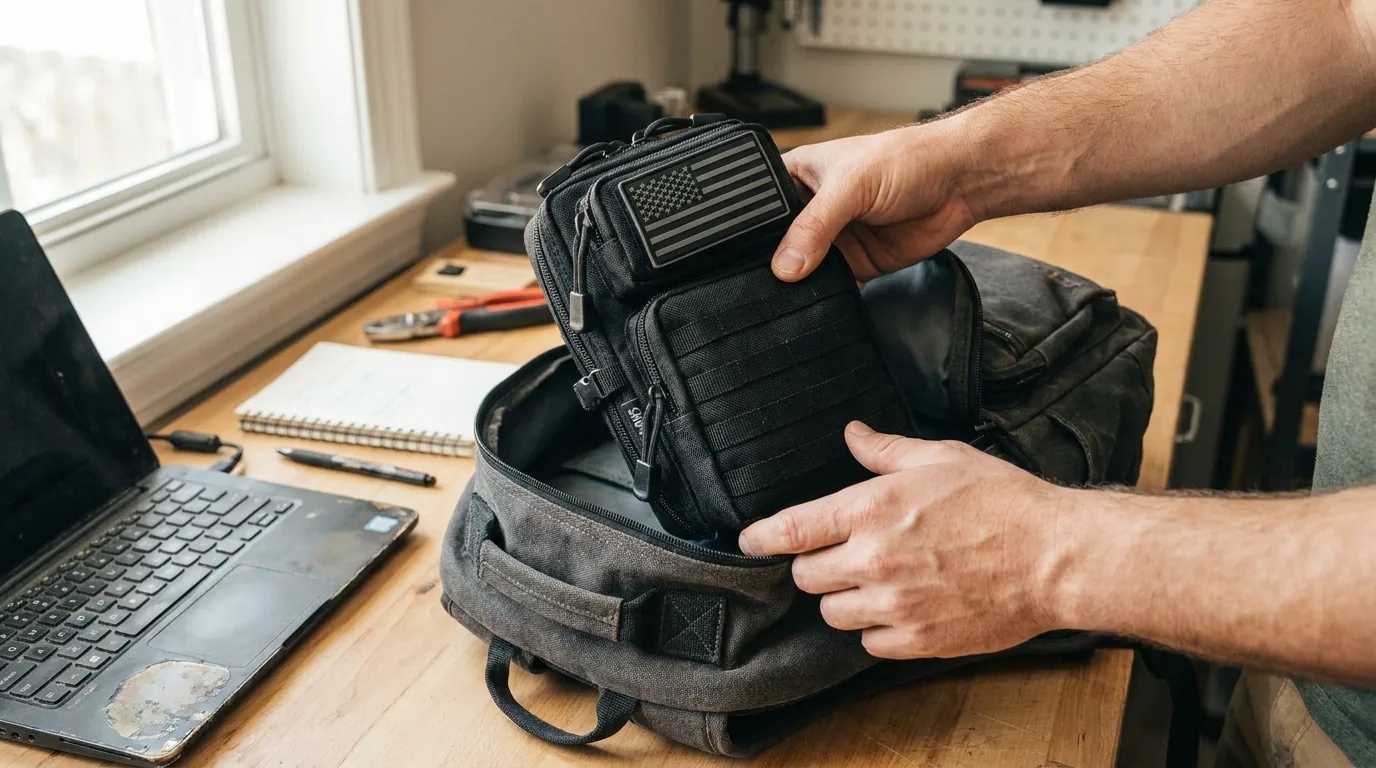
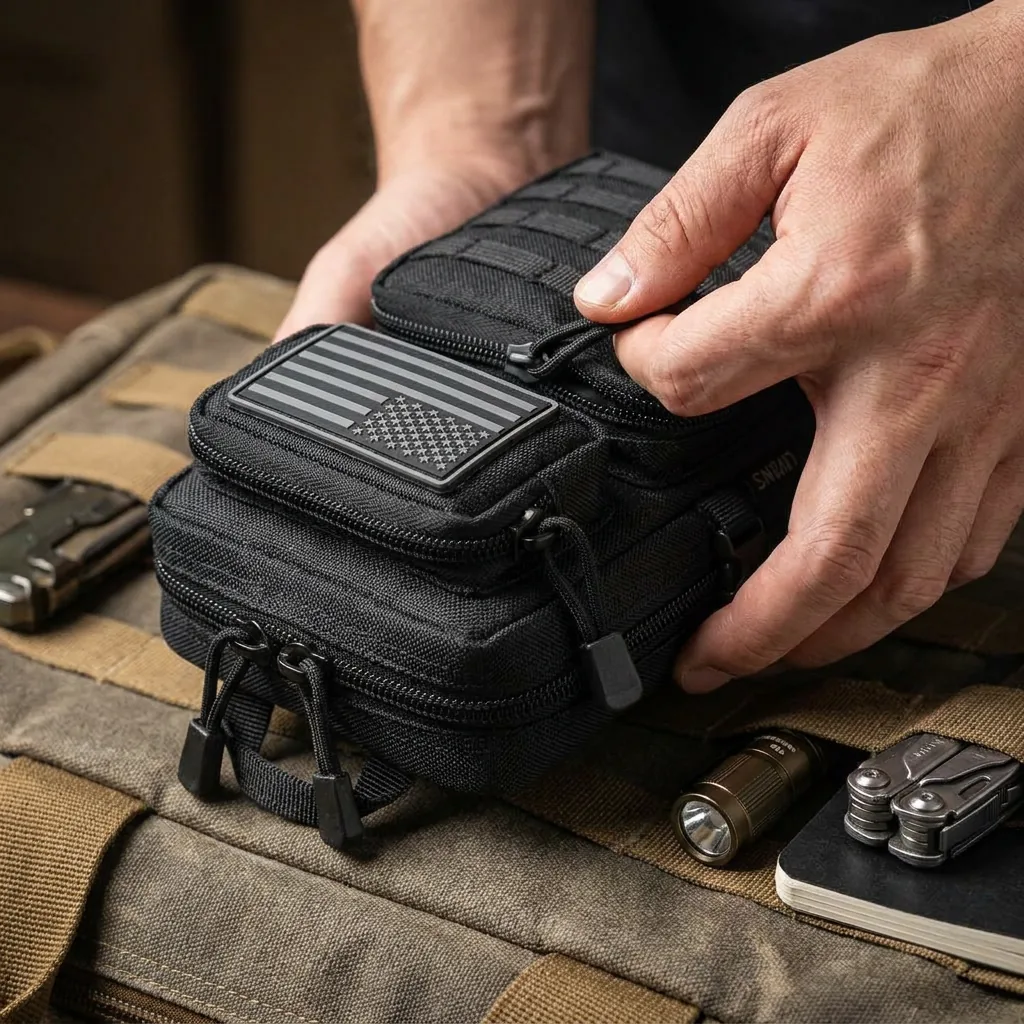
The current CobaltNook Tactical D-Ring EDC Pouch is a general-purpose EDC option rather than a cable-only case. As verified on the live product page on July 12, 2026, each color choice is one pouch with a shoulder strap, flag patch, D-rings, front zip pockets, and MOLLE webbing. The listed approximate outside size is 7 inches high by 3.7 inches long by 3.14 inches deep.
It is aimed at mixed small-gear carry in a work bag, truck, travel kit, garage, or range/camp setup. It can carry tech accessories, but it does not claim the highly divided interior of a specialist tech pouch. Check the current photos and dimensions against your largest item before ordering.
Common mistakes to avoid
- Buying for an imagined load: choose around what already lives in your bag.
- Ignoring the largest item: one thick charger or tool can decide whether the pouch works.
- Over-organizing: too many tiny pockets make bulky items harder to place.
- Duplicating the backpack: do not repeat a good built-in admin panel unless you need bag-to-bag portability.
- Filling every gap: spare capacity makes the system easier to use.
Frequently asked questions
Can an EDC pouch be used as a tech pouch?
Yes, if its dimensions and pockets fit your charger, cables, adapters, and power bank. It will usually offer more flexibility but less cable-specific separation.
Can a tech pouch hold everyday carry items?
Yes. Pens, keys, cards, a small notebook, and a compact flashlight may fit. Bulky or irregular tools can waste divided space or strain pockets designed for electronics.
Should a work bag have both?
Only when the two kits are genuinely separate and used often. Most people are better served by one well-chosen pouch plus the bag’s existing pockets.
Bottom line
A tech pouch wins when electronics dominate and every cable needs a dedicated place. An EDC pouch wins when your work bag carries a broader, changing mix of small essentials or when the organizer must also work in a truck, garage, travel, or outdoor setup. Lay out the real gear, measure the largest piece, and choose the interior that removes the most daily friction.