The short answer
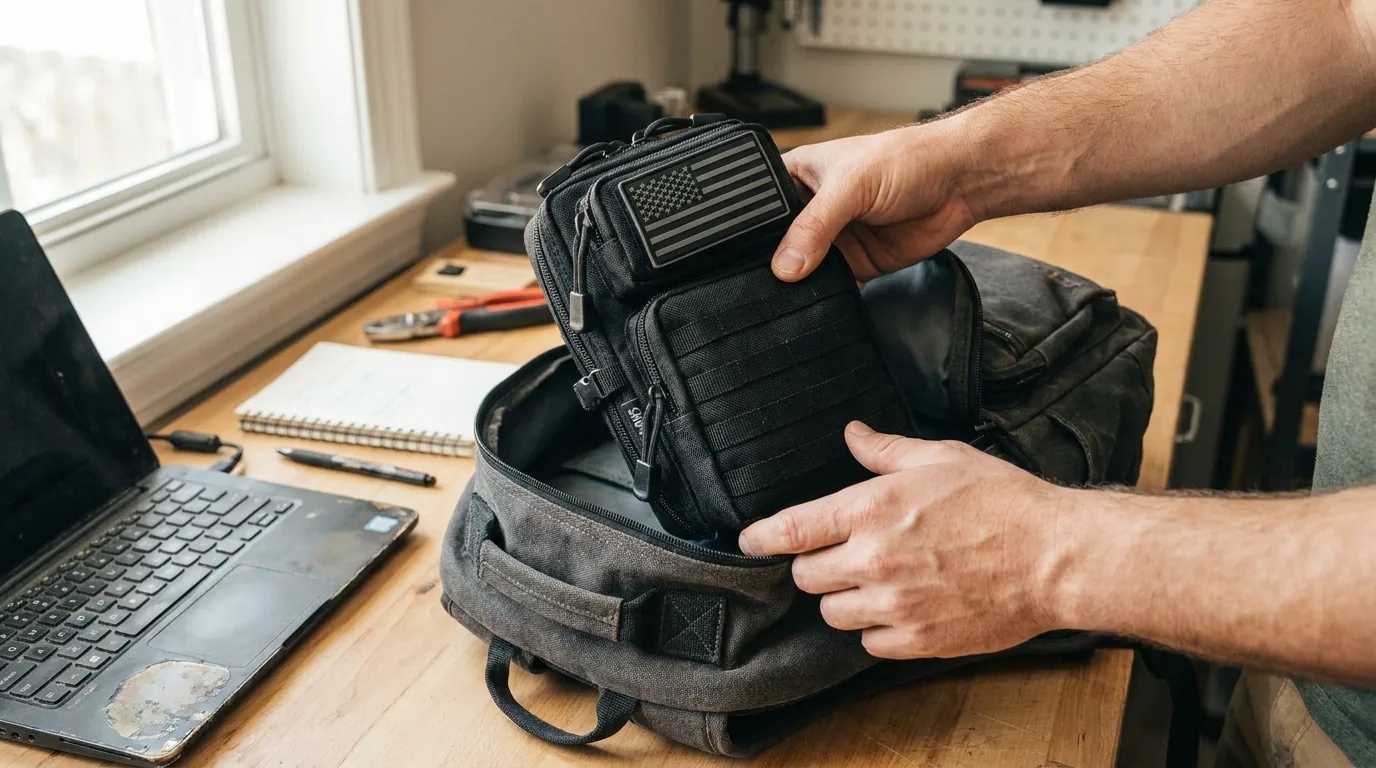
A MOLLE pouch is defined mainly by its modular attachment system. An EDC pouch is defined mainly by its everyday purpose. MOLLE-style webbing and straps let a compatible pouch mount to a backpack, panel, belt, vest, or other prepared surface. An everyday-carry pouch is simply an organizer for the small items you regularly want nearby.
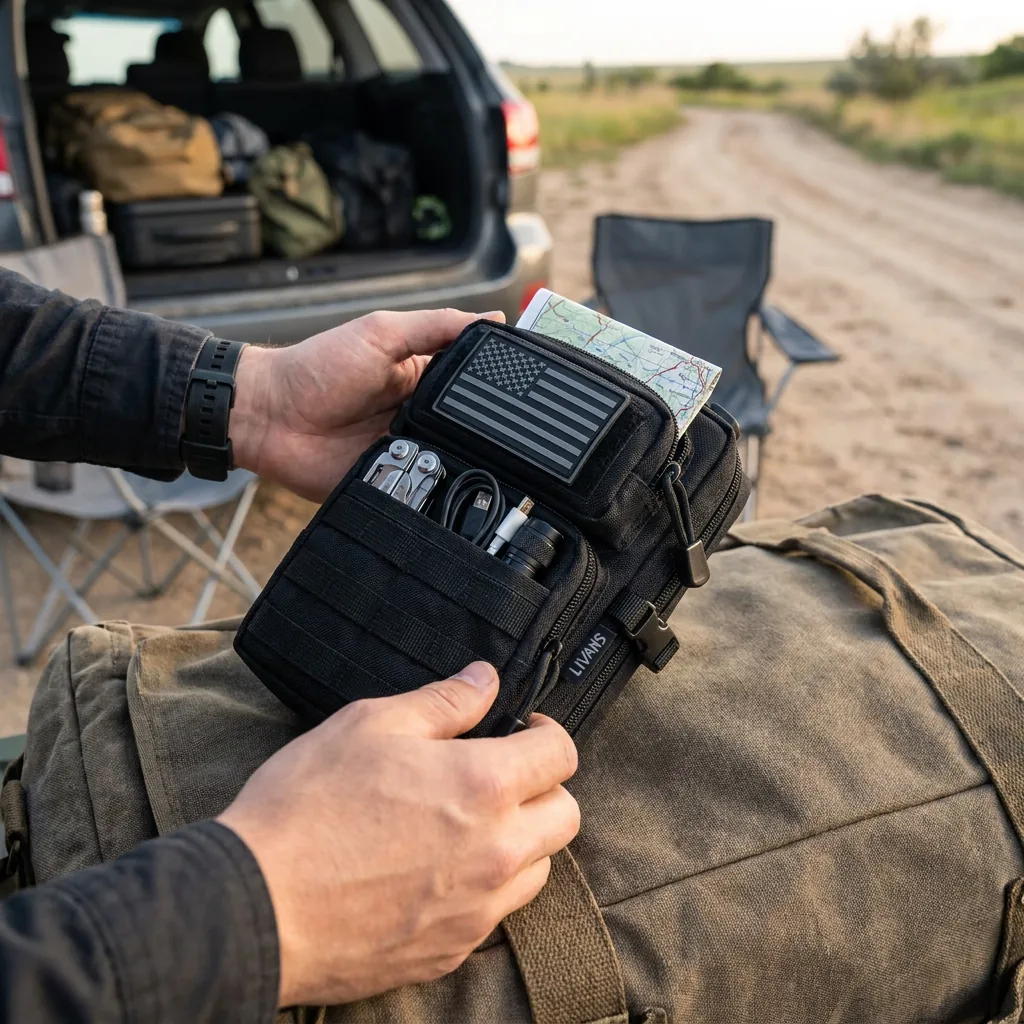
That means the categories overlap. A compact zip pouch can have MOLLE-compatible webbing on the outside and still organize a charging cable, flashlight, pen, keys, compact tool, or personal basics. In that setup it is both a MOLLE pouch and an EDC pouch.
MOLLE pouch vs. EDC pouch at a glance
| Question | MOLLE pouch | EDC pouch |
|---|---|---|
| What defines it? | A compatible modular mounting interface, usually webbing and attachment straps. | Its role: keeping frequently used everyday items together. |
| Where is it carried? | Mounted to compatible webbing, or carried inside another bag when convenient. | Inside a backpack, work bag, vehicle, drawer, pocket, or other daily carry location. |
| Main buying priority | Attachment compatibility, secure fit, placement, and access after mounting. | Size, internal layout, access, portability, and fit with the items you actually carry. |
| Typical mistake | Buying a mounting style without checking the surface it must attach to. | Overfilling the pouch with backups and rarely used “just in case” gear. |
| Can it be both? | Yes. A MOLLE-compatible pouch used for daily small gear is also an EDC pouch. | |
What “MOLLE” tells you
MOLLE stands for Modular Lightweight Load-Carrying Equipment. The webbing interface commonly associated with it is PALS, the Pouch Attachment Ladder System. An Army explanation of the system describes PALS as a component of MOLLE and notes that its interlacing method was developed to secure pouches to load-bearing equipment.
In everyday product listings, “MOLLE pouch” usually signals that the pouch is designed to work with this modular webbing concept. But the label alone does not tell you how much the pouch holds, whether its straps match your bag, or whether it will be comfortable in a particular position. Check the back panel, attachment hardware, webbing rows, and the intended mounting surface before buying.
MOLLE matters most when you want the pouch to stay in a fixed external position. A driver might mount one to a compatible vehicle panel. A camper might keep a small organizer on a compatible pack. Someone using the pouch inside a work bag may not need to mount it at all.
What “EDC” tells you
EDC means everyday carry. It describes the items and organizer you use regularly, not one required attachment standard. Maxpedition’s everyday-carry pouch collection, for example, frames EDC around common daily items such as flashlights, multitools, wallets, smartphones, notebooks, and pens. The exact list should reflect your routine rather than someone else’s checklist.
An EDC pouch may be a simple pocket organizer, a structured tech pouch, a small zip case, or a MOLLE-compatible organizer. Internal layout and access often matter more than external webbing when the pouch will live inside another bag. Helikon-Tex’s current EDC pouch category also shows the overlap directly: the range includes everyday organizers with MOLLE/PALS compatibility alongside compact wallets and inserts.
Which one should you choose?
Start with the carry location, then choose the layout. Do not begin with the label on the product page.
- Choose the final location. Will the pouch be attached to compatible webbing, placed inside a backpack, kept in a truck, or moved between bags?
- List the regular items. Put down only what you use weekly or need for a specific routine. Our beginner’s EDC pouch guide has a simple way to build that list.
- Check the largest item. A pouch that fits cables but not your phone, compact tool, or notebook may force an awkward second storage zone.
- Check access after placement. A zipper that is easy on a desk may be harder to open when the pouch is mounted tightly beside other gear.
- Confirm compatibility. If you plan to mount it, verify the pouch’s attachment method and the receiving webbing or panel. “MOLLE-style” appearance is not enough.
- Leave room to scan. A pouch should make items easier to find. If every pocket is packed tight, the organizer has become another place to dig.
Best choice by use case
Work bag
Prioritize an easy-to-open layout and a size that fits beside your laptop, lunch, or documents. If the pouch stays loose inside the bag, MOLLE attachment may be optional. See our EDC pouch vs. tech pouch comparison if your load is mostly cables and adapters.
Truck kit
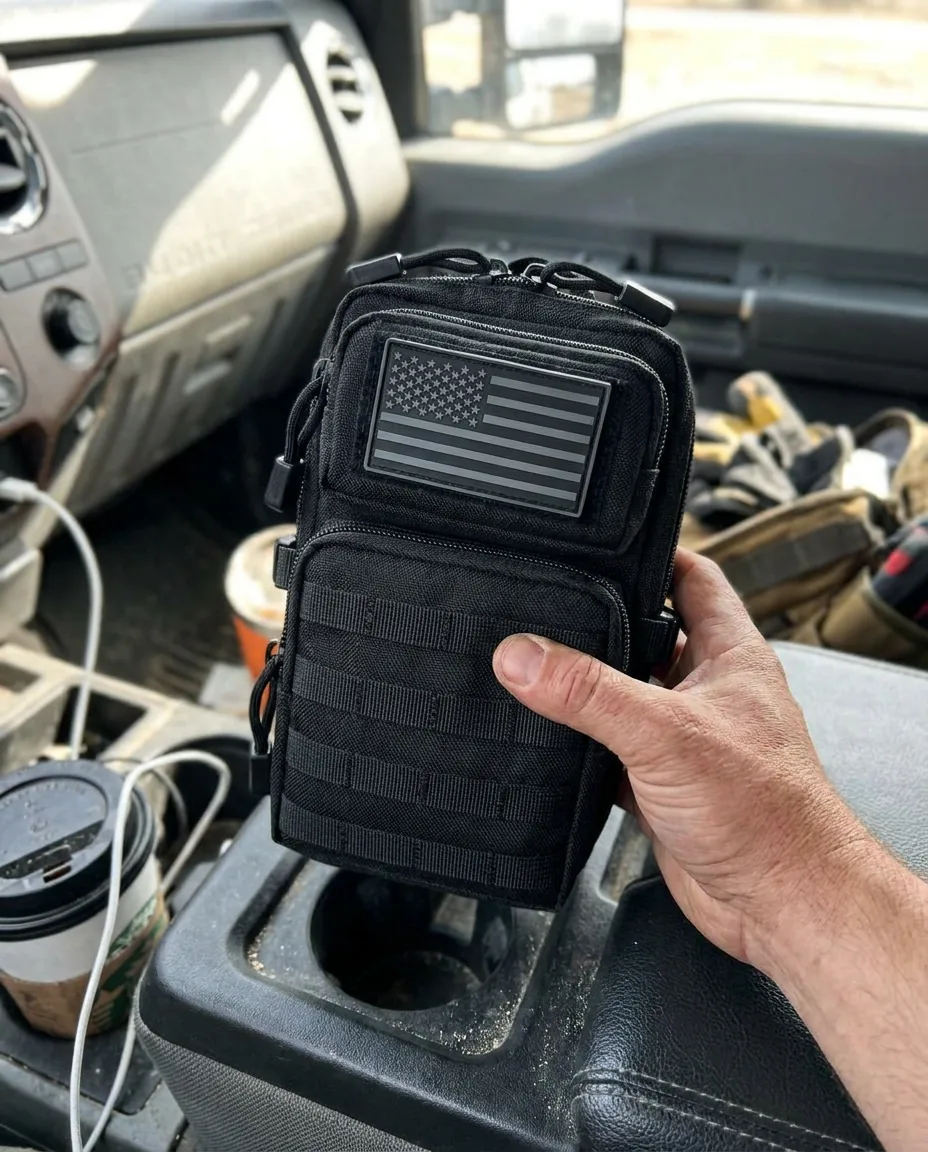
A MOLLE-compatible pouch can make sense when the vehicle has a compatible panel and you want one fixed location. If not, a compact EDC pouch can still keep cables, flashlight, gauge, pen, and other small gear together. Use the truck-kit setup guide to avoid turning the pouch into a catch-all.
Camping or day travel
Choose the pouch according to where it will sit and how often you need it. External mounting can improve access but also exposes the pouch to weather, dirt, and snagging. Carrying it inside a pack offers more protection. Our MOLLE pouch camping and travel guide covers practical placements.
Carry-on or personal item
Internal organization usually matters more than external attachment. Keep the pouch inside the allowed bag, pack only screening-compliant items, and make it easy to lift out if needed. The personal-item EDC setup explains that travel-first approach.
Where the CobaltNook pouch fits
The current CobaltNook offer includes two zippered MOLLE organizer pouches in the selected color plus two US flag patches. The pouch has a main zip body, front zip pockets, and MOLLE webbing. Current color choices shown on the product page are Black, ACU, Green, and Khaki.
That combination makes the pouch relevant to both sides of this comparison: it can organize everyday small gear, and its webbing supports a modular carry setup. It does not include the tools, cables, first-aid supplies, or other contents shown in a suggested loadout; you add the items that fit your own routine. Check the current CobaltNook pouch details before ordering.
Common mistakes to avoid
- Treating MOLLE and EDC as opposites: one describes attachment; the other describes purpose.
- Assuming every webbing panel is compatible: check spacing, straps, clips, and the receiving surface before mounting.
- Buying for an imagined emergency loadout: begin with the small items you already use and add only what has a clear role.
- Mounting the pouch where it blocks movement or access: test the fully loaded pouch in the real position, not only while empty.
- Using every pocket because it exists: spare capacity makes the contents easier to see and reset.
Frequently asked questions
Can a MOLLE pouch also be an EDC pouch?
Yes. MOLLE describes a modular attachment method, while EDC describes how the pouch is used. A pouch with MOLLE-compatible webbing can hold everyday items and serve as an EDC organizer.
Do you need a MOLLE backpack to use a MOLLE pouch?
No. Some MOLLE pouches can also be carried inside a bag or used in another compatible setup. If you want to mount one externally, confirm that both the pouch and the mounting surface use compatible attachment hardware or webbing.
Which is better for a work bag: a MOLLE pouch or an EDC pouch?
Choose by use, not label. For a pouch that stays loose inside a work bag, internal organization and easy access matter most. For a pouch that must attach to compatible webbing, the MOLLE interface matters too.
What should go in a MOLLE EDC pouch?
Pack a short list of small items you use regularly, such as a charging cable, flashlight, pen, keys, compact tool, or basic personal-care item. The exact load should match the pouch size, your routine, and any travel or workplace rules.
Bottom line
Choose a MOLLE pouch when modular attachment is part of the job. Choose an EDC pouch when everyday organization is the goal. Choose a pouch that does both when you need both. The best option is the one that fits your regular items, your real carry location, and the way you need to reach the contents.