The short answer
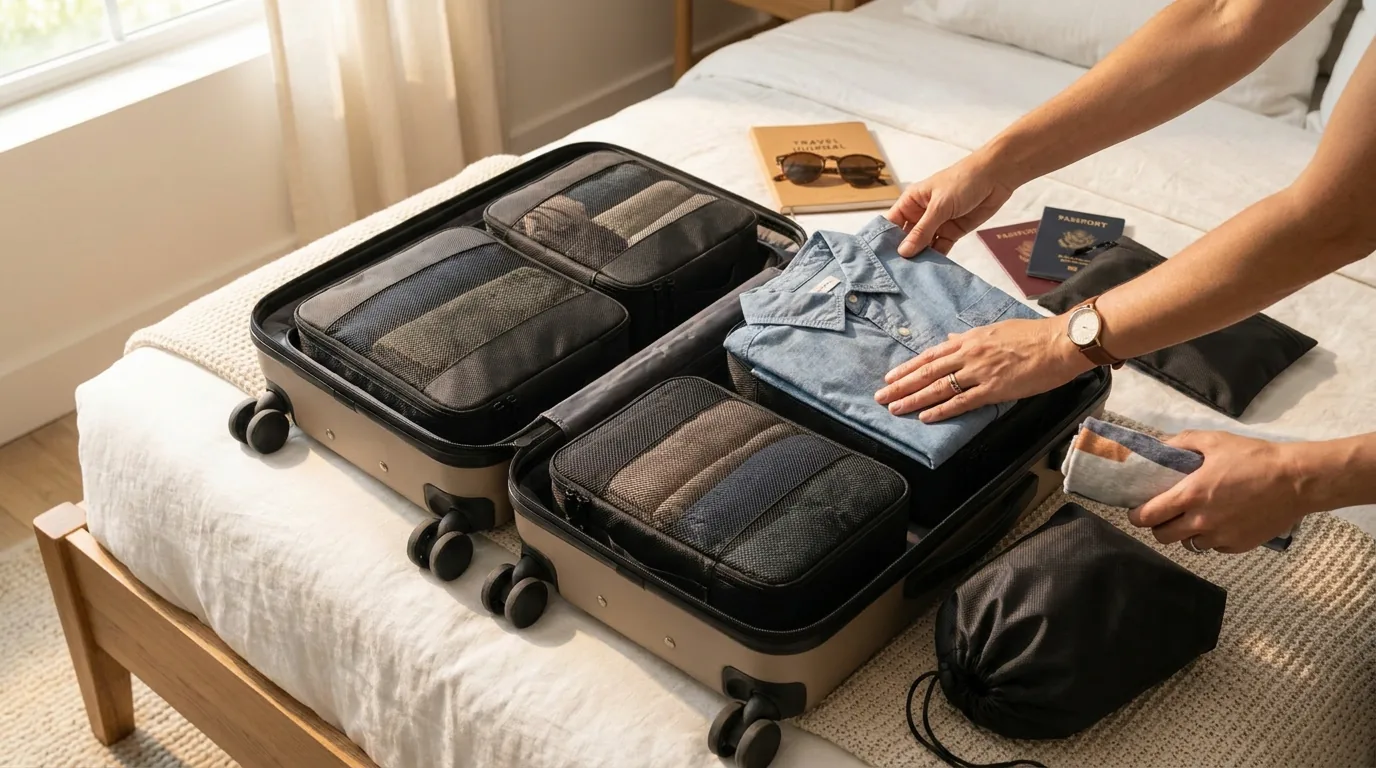
Packing cubes and rolling clothes are not direct substitutes. Rolling can make soft garments compact and easy to line up. Cubes stop those garments from spreading through the suitcase, keep categories separate, and make unpacking faster.
A practical carry-on system uses both: roll T-shirts, underwear, pajamas, leggings, and workout clothes; place the rolls side by side in a cube; fold button-downs, dress pants, jackets, and other structured pieces. The best result is the one that fits the actual fabric and trip—not the method that forces every item into the same shape.
Packing cubes vs. rolling clothes at a glance
| Factor | Rolling clothes | Packing cubes |
|---|---|---|
| Main job | Change each garment into a compact shape | Contain and separate groups of items |
| Best for | Soft casual clothing and filling narrow gaps | Categories, outfits, shared bags, and repeat packing |
| Access | Good when rolls stand in one visible layer | Good when each cube has one clear purpose |
| Wrinkle control | Depends on fabric and rolling technique | Depends on what is placed inside and how tightly it is packed |
| Space benefit | May reduce gaps between soft garments | Keeps the load from spreading; standard cubes are not vacuum bags |
| Common mistake | Rolling bulky or structured pieces | Using too many cubes or overfilling them |
What rolling clothes does well
Rolling works best on flexible garments that can form an even cylinder without bunching: T-shirts, underwear, pajamas, swimwear, leggings, and some casual pants. Rolls can stand side by side, making the full set visible instead of burying one shirt under another.
It is less convincing for thick sweaters, blazers, stiff denim, dress shirts, or formal clothing. A bulky roll can consume more room than a flat fold, while structured fabric can pick up irregular creases. If a piece already has a natural fold line or needs to look sharp on arrival, fold it and place it near the top of the bag.
CNET compared folding, rolling, and packing cubes using the same suitcase and clothing load. Its test found rolling left more free space than folding, while the most practical overall answer was a mix of methods. The test also found rolled clothes inside a packing cube used the least suitcase space in that specific setup. Treat that as a useful experiment, not a universal guarantee: fabric thickness, cube dimensions, and suitcase shape all change the result.
What packing cubes does well
Packing cubes create zones. One can hold tops, one underwear and socks, and one sleep or workout gear. That structure survives a multi-stop trip: remove the cube, use it like a drawer, zip it again, and move on without rebuilding the suitcase.
Cubes are especially helpful when several people share a bag or when clean and worn items must stay separate. Our family packing cube guide shows how to divide space by person or category. For a shorter trip, the weekend bag setup keeps the system intentionally small.
Ordinary cubes do not remove air like vacuum bags. Their main benefit is organization and containment. If volume from jackets or fleece is the real problem, read our packing cubes vs. compression bags comparison before choosing the tool.
The best hybrid method by garment
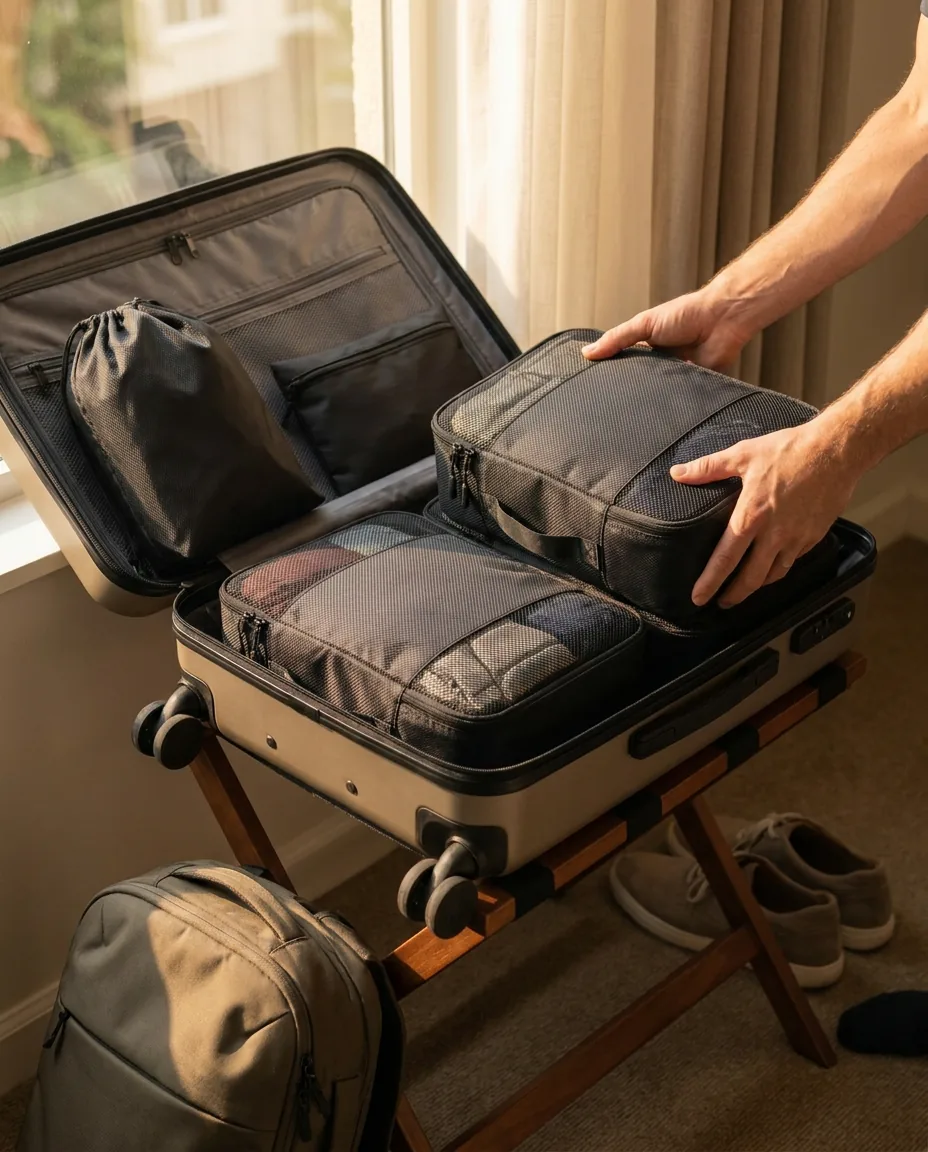
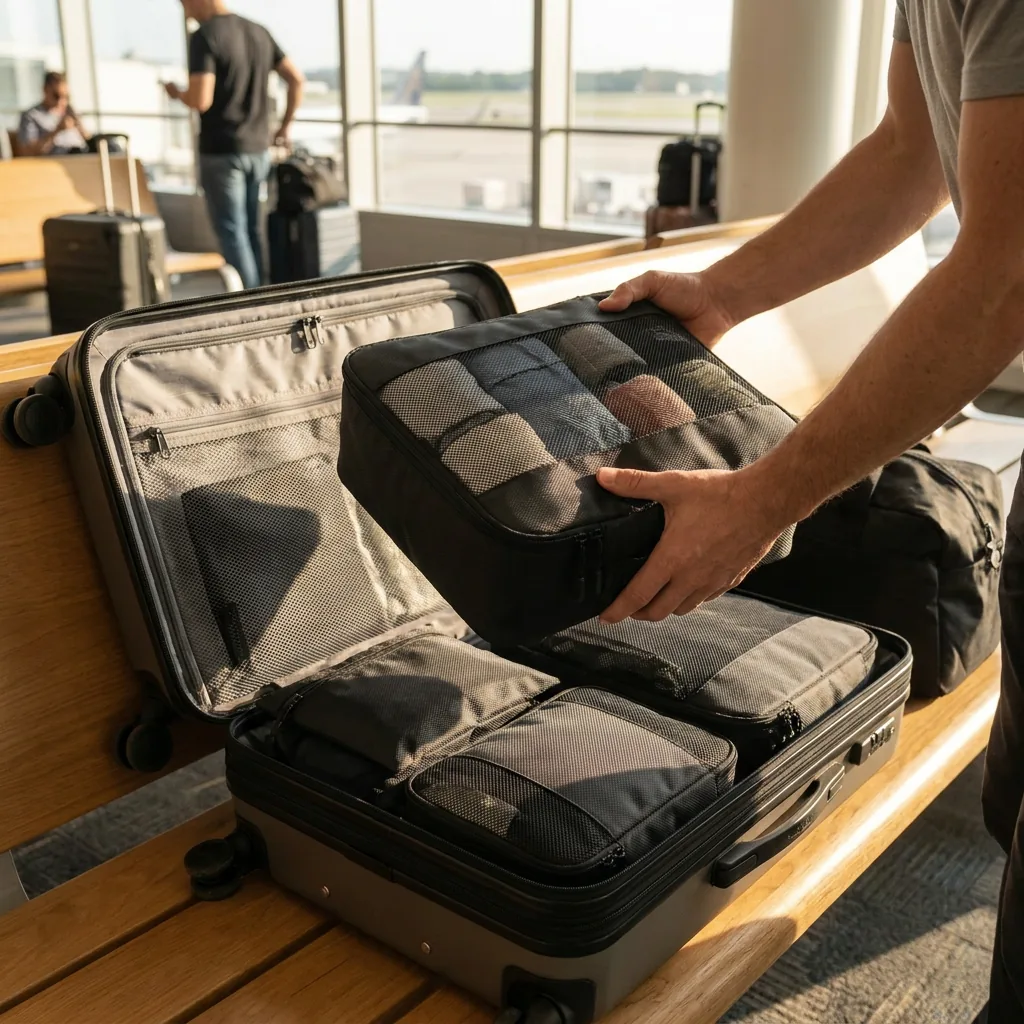
- Roll: T-shirts, underwear, socks, pajamas, swimwear, leggings, and light workout gear.
- Fold: Button-down shirts, dress pants, blazers, jackets, stiff denim, and formal pieces.
- Lay flat: Delicate garments or one outfit that must stay especially presentable.
- Wear in transit: The heaviest shoes, coat, or sweater when practical.
- Leave out: Duplicates and “just in case” items that do not solve a likely need.
The same garment can behave differently by fabric. A thin knit tee rolls well; a thick knit sweater may not. Test the finished shape rather than following a rigid rule.
A simple carry-on setup
- Check the current airline rules. The organizer changes the layout, not the airline’s size or weight limits.
- Build the packing list first. Cubes should organize a decided load, not justify extra clothing.
- Sort by fabric and use. Separate soft rollable items from structured pieces.
- Roll one test garment. If the roll becomes thick, uneven, or badly creased, fold it instead.
- Give each cube one job. Two or three purposeful cubes are easier to use than a suitcase full of tiny containers.
- Fill gently. Close the zipper without straining it; compression is not the goal of a standard cube.
- Place dense items near the wheels. Keep shoes and toiletries separate, then use folded pieces to cover the top.
- Weigh the finished bag. More available space does not mean more weight allowance.
For a fuller layout, see How to Use Packing Cubes for a Cleaner Carry-On.
If keeping shirts neat matters more than saving space, read Do Packing Cubes Prevent Wrinkles? for a low-pressure folding setup.
Where CobaltNook packing cubes fit
The current CobaltNook packing cube set is an eight-piece travel organization system with breathable mesh panels for visibility, double-way zippers, and reinforced handles. It is designed for carry-ons, checked bags, weekend duffels, and family travel. The set gives you several container sizes; it does not require one packing technique inside them.
Use the larger cubes for rolled everyday clothing, smaller pieces for underwear or accessories, and the remaining organizers only when they have a clear job. Do not fill all eight pieces merely because they are available. A lighter trip may need only two or three.
Common mistakes to avoid
- Treating rolling as compression: it can reduce gaps, but it does not remove weight.
- Rolling every garment: structured and bulky pieces often pack better folded.
- Overstuffing cubes: strained zippers and dense blocks make the bag harder to close.
- Using a cube for every category: too much separation adds friction and wastes space.
- Ignoring restricted items: check the TSA’s current item guidance instead of assuming an organizer changes the rules.
Frequently asked questions
Do packing cubes work better than rolling clothes?
They do different jobs. Rolling shapes individual garments; cubes contain groups of garments. For most casual carry-on loads, rolling soft clothes inside cubes combines both benefits.
Should clothes be rolled or folded inside packing cubes?
Roll soft casual items and fold structured or wrinkle-prone pieces. Avoid forcing bulky knits into tight rolls. The cube should close without straining.
Do packing cubes make luggage heavier?
They add a small amount of material weight and can make it easier to pack more. They do not reduce the weight of the contents, so weigh the finished bag and follow the airline’s current rules.
Bottom line
Use rolling for the right garments and packing cubes for the whole system. Roll soft casual clothing, fold structured pieces, and group the result into two or three purposeful cubes. That gives you compact shapes, predictable categories, and a carry-on that is easier to unpack and repack.