The short answer
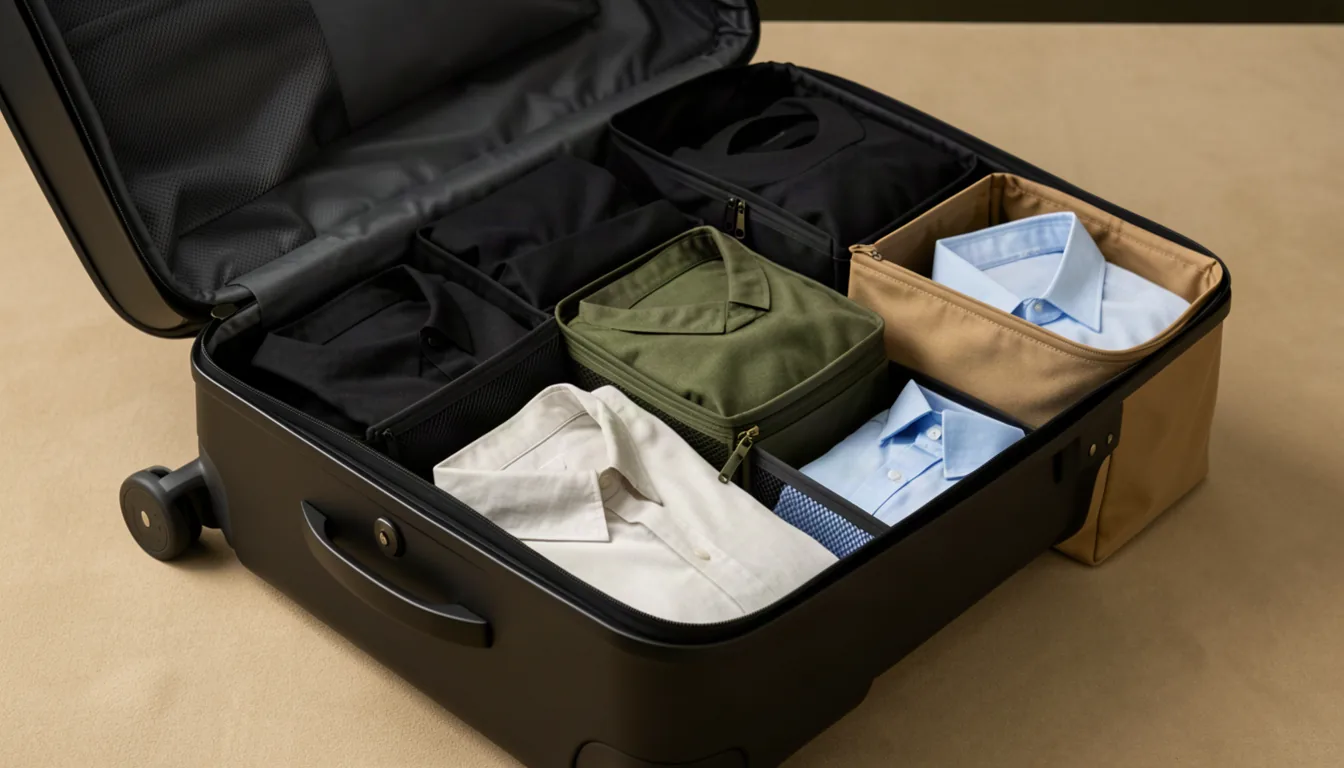
Packing cubes can help clothes arrive neater because they stop stacks from spreading around the suitcase, but they cannot make clothing wrinkle-proof. A smooth, lightly packed fold may stay more stable inside a cube. A crushed shirt in an overfilled cube will still come out creased.
Think of the cube as a container, not a wrinkle-removal tool. It controls movement and separates clothing groups. The condition of each garment still depends on how it was prepared and how much pressure it carries during the trip.
| Factor | Usually means fewer wrinkles | Usually means more wrinkles |
|---|---|---|
| Fabric | Knits, synthetics, stretch blends, and travel fabrics | Linen, crisp cotton, rayon, and structured garments |
| Method | Smooth folds or even rolls matched to the garment | Random bunching, tight ranger rolls, or sharp uneven folds |
| Cube fill | Full enough to hold shape without strain | Bulging, compressed hard, or forced shut |
| Time | Unpacked and hung soon after arrival | Left compressed for days |
How packing cubes can help
A cube creates one stable zone. Without it, folded clothes may slide into shoes, toiletries, and the curved edges of a suitcase. That movement can undo folds and create new pressure points. A properly filled cube keeps the stack together when the bag is carried upright, opened during a trip, or repacked.
- Less shifting: the clothing group moves as one unit instead of spreading through the bag.
- Cleaner separation: shoes, cables, and toiletries are less likely to press directly into clothing.
- Easier unpacking: the whole group can be lifted out without disturbing each garment.
- More consistent repacking: the same folds return to the same space on a multi-stop trip.
Those benefits are real, but they come from organization. A standard packing cube does not steam fabric, remove fold lines, or change a wrinkle-prone material.
When a packing cube makes wrinkles worse
The main problem is too much pressure. If the cube becomes rounded, the zipper pulls hard, or clothing pushes through the mesh, the load is overfilled. Pressure can set hard fold lines and transfer the shape of buttons, seams, or zippers into nearby fabric.
Compression cubes can intensify this effect. Their second zipper reduces thickness by pressing soft contents together. That can be useful for volume, but it is not the same as wrinkle protection. Our regular versus compression cube guide explains the tradeoff in more detail.
- Do not sit on a cube or force its zipper closed.
- Do not place a heavy shoe or toiletry bag on top of a dress shirt.
- Do not mix a crisp shirt with bulky jeans in one tightly packed cube.
- Do not leave wrinkle-prone clothes compressed longer than necessary.
What to fold and what to roll
There is no single method for every garment. Wirecutter's hands-on comparison found folded cotton shirts had fewer wrinkles than rolled ones after 24 hours, and its practical rule is simple: roll casual clothing and fold formal clothing.
Fold these
- Button-down shirts and blouses
- Dress trousers and skirts
- Blazers, dresses, and structured pieces
- Stiff cotton or linen garments
Roll these
- T-shirts and casual tops
- Leggings, underwear, and socks
- Soft knitwear that rolls without bunching
- Wrinkle-resistant travel fabrics
Rolling is useful when it creates an even cylinder with no hard pinch points. If the garment twists, bunches, or forms a thick lump, fold it instead. See our full packing cubes versus rolling clothes comparison.
A six-step low-wrinkle packing method
- Start with clean, completely dry clothing. Damp fabric can crease and hold odor.
- Fasten and smooth structured garments. Button shirts, close zippers, empty pockets, and flatten seams.
- Match the method to the fabric. Fold structured pieces; roll soft casual pieces only when they stay smooth.
- Use one useful category per cube. Keep dress clothing away from dense jeans, shoes, and hardware.
- Fill gently. The cube should hold its rectangular shape and close with normal hand pressure.
- Unpack early. Hang wrinkle-prone pieces as soon as practical and use a hotel iron or travel steamer if the care label allows it.
How to pack a button-down shirt in a cube
Button the shirt, lay it face down on a flat surface, and smooth the collar, sleeves, and side seams. Fold each sleeve across the back without twisting it. Bring the sides inward, then fold the lower section upward in one or two broad folds sized to the cube.
Place the shirt flat near the top of a lightly filled cube. Avoid positioning a zipper pull, shoe heel, or rolled belt directly above it. If the shirt must look especially crisp, a garment folder is usually a better tool than a soft cube; compare both in our packing cubes versus garment folder guide.
Fabric matters more than the organizer
Soft knits and many synthetic blends recover more easily after packing. Linen and crisp cotton show folds quickly. Rayon and delicate fabrics may also crease or react poorly to pressure. Check the garment care label before using steam or heat.
For an important meeting, wedding, or formal event, choose travel-friendly fabric where possible, leave extra room around the garment, and plan a safe wrinkle-release step at the destination. No organizer removes that need completely.
A practical carry-on setup
Use one medium cube for folded or lightly rolled everyday clothing and one small cube for underwear and socks. Keep structured shirts in a separate lightly filled cube or garment folder near the top of the suitcase. Place shoes and toiletries along the bottom or edges so their hard shapes do not press into the shirts.
If you are choosing sizes, use our packing cube size guide. The right cube is the smallest one that holds its category without bulging.
Frequently asked questions
Do packing cubes stop clothes from wrinkling?
No. Packing cubes keep clothing grouped and can reduce shifting, but fabric, folding method, pressure, moisture, and time in the bag still affect wrinkles.
Is rolling or folding better for wrinkles?
Fold structured and wrinkle-prone clothes such as button-down shirts and trousers. Roll soft casual pieces such as T-shirts, leggings, and underwear when they roll smoothly without hard creases.
Do compression packing cubes cause more wrinkles?
They can. Heavy compression presses folds into fabric and may increase creasing, especially when a cube is overfilled. Use only enough compression to tidy the load, not to force the zipper shut.
How should dress shirts be packed?
Button the shirt, smooth it flat, fold along clean lines, and place it near the top of a lightly filled cube or use a garment folder. Unpack and hang it soon after arrival.
Bottom line
Packing cubes can reduce movement and keep careful folds together, but they do not prevent wrinkles on their own. Fold structured clothes, roll soft casual pieces, avoid heavy compression, and unpack wrinkle-prone garments soon after arrival.
Use cubes for organization first. If a garment must arrive crisp, give it room and use a garment-focused method.
Sources and further reading
- Wirecutter: Should You Roll or Fold Your Clothes When You Pack? — hands-on comparison of space, speed, and wrinkles.
- Eagle Creek: How to Pack Wrinkle-Free — travel packing guidance covering folds, rolls, and garment-focused organizers.
- Condé Nast Traveler: How to Use Packing Cubes More Effectively — expert advice on categories, sizes, and practical cube use.