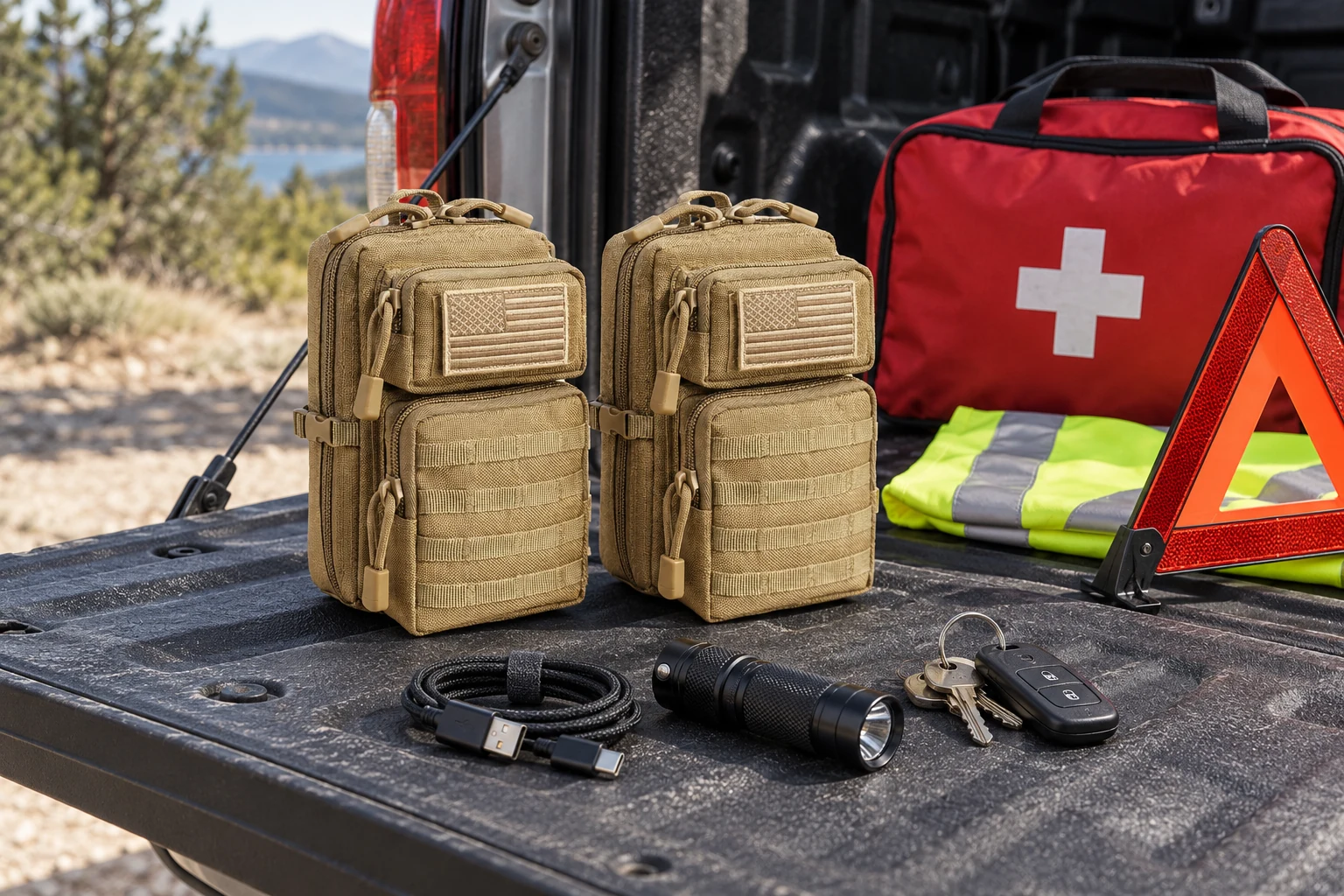
The short answer
Use a car EDC pouch for small, routine-access items. Use a separate emergency kit for safety, recovery, first aid, food, water, warmth, and roadside visibility. A flashlight or tire gauge may fit neatly in a compact pouch. Jumper cables, a warning triangle, blankets, drinking water, and a proper first-aid kit do not.
The distinction matters because convenience gear and emergency gear have different sizes, inspection needs, and priorities. If they are all mixed into one bag, the useful daily items become hard to find and the safety kit becomes harder to audit. A simple two-layer setup keeps the small pouch easy to grab while preserving a clearly marked emergency kit for the situations that demand it.
| Question | Car EDC pouch | Vehicle emergency kit |
|---|---|---|
| Main job | Organize small items used during normal driving, work, errands, or minor roadside checks | Support safety, visibility, warmth, communication, first aid, and basic recovery during an emergency |
| Typical contents | Compact flashlight, tire gauge, cable, pen, notes, cloth, gloves, small everyday tools | Warning triangle or flares, jumper cables, first-aid kit, blanket, water, food, charger, map, and weather-specific supplies |
| Best location | Secured in an easy-to-reach console, seat-back, work bag, or cargo organizer | Secured in a known cargo location that every driver can reach |
| Inspection focus | Charge, wear, missing items, and whether the pouch still closes cleanly | Expiration, leakage, battery condition, weather exposure, seasonal fit, and completeness |
| What it should not become | An overpacked survival bag or loose medical kit | A random storage bag that hides critical equipment |
Why one bag should not do both jobs
A compact organizer earns its place by being easy to open, easy to move, and easy to reset. That advantage disappears when bulky emergency supplies crowd the zipper or cover the daily items. The opposite problem also occurs: a large emergency bag can swallow a charging cable, pen, flashlight, or tire gauge so completely that you end up searching through safety equipment during a normal stop.
Official preparedness guidance also describes a vehicle kit at a scale larger than an ordinary EDC pouch. Ready.gov's car-safety guidance lists jumper cables, flares or a reflective triangle, an ice scraper, a car charger, a blanket, a map, and traction material among its vehicle extras. The American Red Cross vehicle-kit guide adds a dedicated first-aid kit, flashlight and batteries, water, nonperishable food, warm clothing, tire-repair support, warning devices, and a power bank.
Those are safety and delay supplies, not just organization accessories. Treat the small pouch as the top layer of your vehicle system and the emergency bag as the deeper safety layer.
What to keep in the car EDC pouch
Start with items you use at least occasionally during ordinary driving, work, or roadside checks. A practical starting load can include:
- Compact flashlight: useful for checking a dark footwell, cargo area, tire, or engine bay without draining a phone.
- Tire-pressure gauge: small enough for the pouch and easier to find when it has one fixed home.
- Charging cable and suitable car adapter: keep only the connectors used by the regular drivers or passengers.
- Pen and slim notepad: for a plate number, service note, measurement, or contact detail.
- Microfiber cloth: useful for glasses, screens, mirrors, or small cleanup.
- Work gloves: a compact pair can help with dirty checks, but it does not replace protective equipment required for a specific task.
- Small routine extras: spare keys, a compact tool, or another item tied to how the vehicle is actually used.
Keep the list modest. If the pouch bulges, the zipper needs pressure, or one item blocks everything behind it, move the bulky item to the emergency kit or remove it. The EDC pouch organization guide explains how to sort a compact kit by reach, role, and weight.
What belongs in the separate emergency kit
The emergency kit should cover the route, season, passengers, vehicle, and realistic delay. For a broad US starting point, consider the official items above: a clearly identified first-aid kit, flashlight and spare power, warning devices, jumper cables, blanket or warm layer, water, nonperishable food, phone charging, and a current map. Add traction or winter supplies when the conditions call for them.
Do not use a small organizer as proof that the vehicle is “prepared.” A pouch can keep a few essentials visible, but it cannot safely hold every roadside item. The complete kit also needs a deliberate storage point and a driver who knows how to use its contents. The Red Cross notes that knowing how to use the equipment is part of being prepared, not an optional extra.
Keep medical supplies in a dedicated, recognizable first-aid kit instead of mixing loose dressings or medicine into everyday gear. Our EDC pouch versus first-aid kit comparison explains why separation makes the medical kit easier to identify and maintain.
Build the setup around the trip, not a giant list
A daily commute, summer interstate trip, remote rural drive, and winter mountain route do not create the same risks. Before a long trip, the National Highway Traffic Safety Administration recommends planning ahead, servicing the vehicle, checking the battery and charging system, inspecting belts and hoses, securing the load, checking recalls, and checking air-conditioning performance. Gear does not replace vehicle maintenance.
Use three layers:
- Daily-access pouch: the compact items you reach for during normal use.
- Emergency bag: safety, visibility, first aid, warmth, food, water, communication, and recovery supplies.
- Trip-specific additions: weather, terrain, passenger, medical, and route needs added before departure and removed or refreshed afterward.
This approach avoids two common mistakes: carrying too little because a small pouch looks complete, and carrying so much unorganized gear that nobody can find the item that matters.
Store both kits safely
Secure every bag so it does not slide around the cabin or become loose cargo during a sudden stop. NHTSA's road-trip guidance specifically calls for securing the load. Keep the emergency bag in one known place, and do not bury it beneath luggage that would be difficult to move on the roadside.
Vehicle interiors can become very hot or cold. Check the storage directions for medicines, batteries, food, water containers, adhesives, aerosols, and electronics before leaving them in a car. Replace anything swollen, leaking, corroded, expired, discharged, damaged, or exposed outside its safe storage range. A product that is appropriate at home is not automatically suitable for year-round vehicle storage.
A 15-minute setup
- Empty the existing console and cargo pockets. Remove trash, duplicates, and mystery items first.
- Make two piles. Put frequently used small gear in one pile and true safety or delay supplies in the other.
- Load the EDC pouch lightly. Give each small item a visible position and confirm the pouch closes without pressure.
- Build or inspect the emergency kit. Use current official guidance, then adapt it to the vehicle, route, season, and passengers.
- Choose fixed storage points. Secure both kits and make sure every regular driver knows where they are.
- Record a check date. Recheck before long trips and when seasons change.
Where a CobaltNook pouch fits
The CobaltNook Tactical MOLLE Organizer Pouch is designed for compact, phone-sized essentials and loose small gear such as a cable, charger, keys, flashlight, tire gauge, and small tools. Its open main compartment and front zip pockets can serve as the daily-access layer in a vehicle setup. The product is not presented as a substitute for a full-size medical kit, oversized tools, or a complete vehicle emergency bag.
Each selected-color pack currently includes two organizer pouches and two US flag patches. That makes it practical to keep one small kit in the vehicle and use the second for a work bag, garage, or travel setup. Check the current product page for the live offer, colors, shipping, and guarantee details.
Frequently asked questions
Can a car EDC pouch replace a vehicle emergency kit?
No. A compact EDC pouch is useful for frequently reached small items, while a vehicle emergency kit needs larger safety supplies such as warning devices, jumper cables, blankets, water, food, and first-aid equipment suited to your route and weather.
What belongs in a car EDC pouch?
Useful small items can include a compact flashlight, tire-pressure gauge, charging cable, pen, notepad, microfiber cloth, work gloves, and other items you regularly use. Keep the pouch light enough to open and inspect easily.
Where should a vehicle emergency kit be stored?
Store it where it is secure, dry, and reachable without digging under loose cargo. Secure the load so emergency gear does not move around the cabin or cargo area during driving.
How often should you check a car kit?
Check it before long trips and when seasons change. Replace expired, damaged, discharged, leaking, or weather-sensitive supplies and confirm that every driver knows where the kit is stored.
Bottom line
Keep convenience and emergency readiness separate. A compact car EDC pouch gives small daily items one visible home. A larger, clearly identified emergency kit covers the safety supplies that do not belong in that pouch. Build both around real use, secure them in fixed locations, inspect them before long trips, and let maintenance—not just gear—carry the biggest share of road-trip preparation.
Sources and further reading
- Ready.gov: Car Safety — official vehicle emergency-kit and severe-weather preparation guidance.
- American Red Cross: Emergency Car Kit — vehicle safety-supply categories and preparedness guidance.
- NHTSA: Road Trip Safety Tips — planning, maintenance, recall, load-security, and heat-safety reminders.