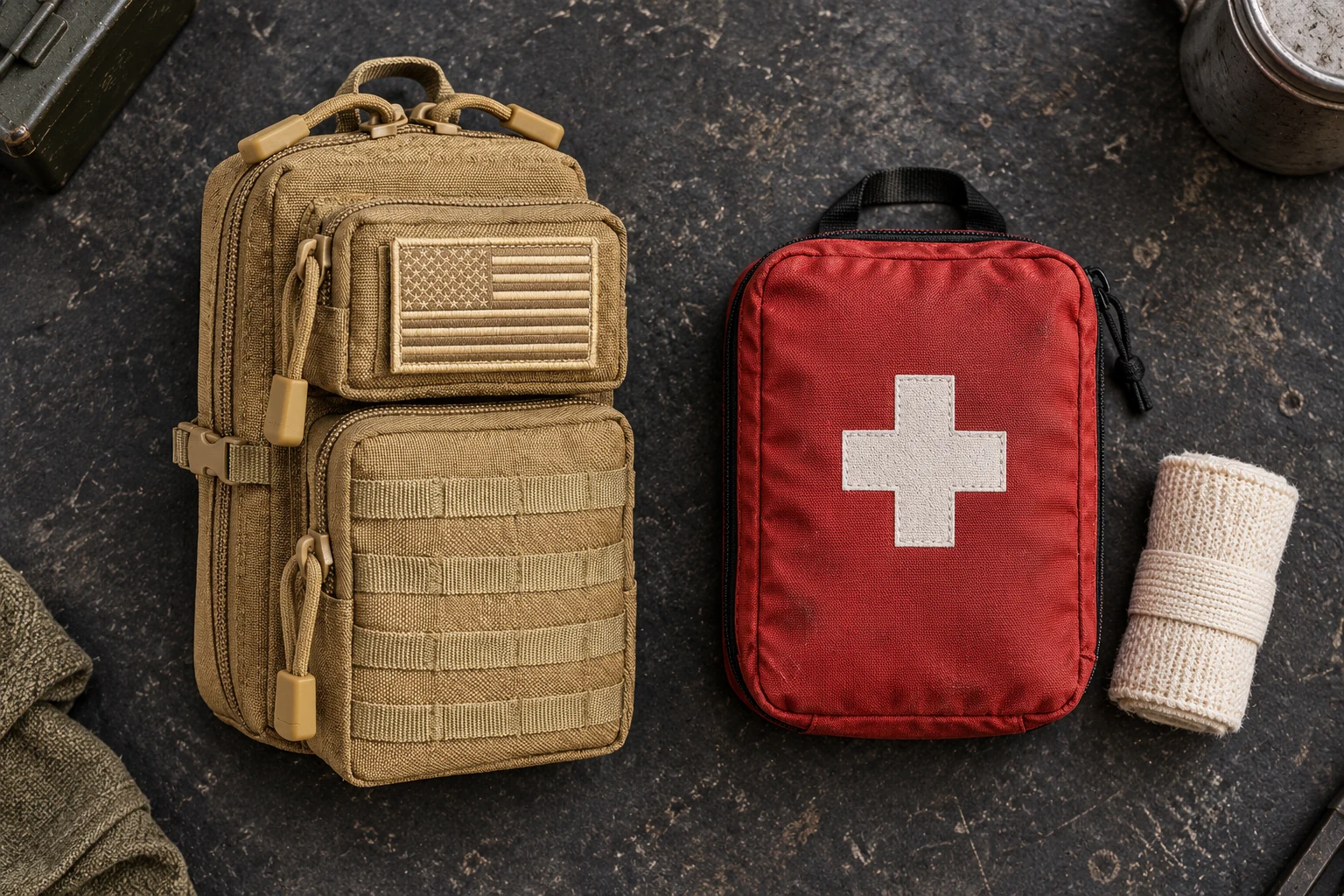
The short answer
An EDC pouch should not replace a first aid kit. Use the first aid kit for bandages, gauze, gloves, medications, instructions, and other medical supplies. Use the EDC pouch for dry gear such as a flashlight, charging cable, tire gauge, pen, small notebook, gloves, batteries, and tools you use often.
The best truck, camp, or travel setup keeps both within reach. That way the medical kit stays clean, complete, and easy to hand to someone else, while the EDC pouch handles the loose gear that otherwise ends up scattered around the bag or glove box.
Why the difference matters
The problem is not storage capacity. A zippered pouch can physically hold medical items, cables, and tools at the same time. The problem is access and reset. If you open the same pouch for a charging cable, a tire gauge, a snack, and a bandage, the kit slowly stops being a dependable first aid kit.
MedlinePlus from the National Library of Medicine says it is important to keep a first aid kit available, including one at home and one in the car, and that the kit should include a first-aid guide. That is a different job from organizing everyday carry gear.
EDC pouch vs. first aid kit comparison
| Question | EDC pouch | First aid kit |
|---|---|---|
| Main job | Organize dry, quick-access gear used in normal daily situations. | Keep medical supplies together for cuts, scrapes, bleeding, minor injuries, and emergencies. |
| Best contents | Flashlight, cable, tire gauge, pen, small notebook, gloves, batteries, small repair items, comfort basics. | Bandages, gauze, gloves, wound-care items, personal medications, emergency guide, and supplies matched to the trip. |
| Who uses it | Usually the owner reaching for normal gear throughout the day. | Potentially anyone helping during an injury, including someone who does not know your pouch layout. |
| Reset routine | Clean out receipts, dead batteries, loose cables, and one-off tools after use. | Replace used or expired medical items and keep the kit ready before the next drive or trip. |
| Where it fits | Truck console, work bag, backpack, camp bag, garage backup, or carry-on small-gear zone. | Clearly marked car kit, home kit, trail kit, camp kit, or travel first-aid pocket. |
| Big mistake | Stuffing it with medical supplies until daily gear is hard to find. | Letting tools, cables, and random items bury the medical supplies. |
What belongs in the first aid kit
Keep the first aid kit boring and predictable. It should be the place where medical items live, not where every small item goes. The National Park Service Ten Essentials recommends packing first-aid supplies, starting with a pre-made kit, modifying it for the trip and personal medical needs, checking expiration dates, and including personal medications.
For a truck, camping, or travel setup, that means the medical kit should stay separate enough that you can open it quickly and see what is missing. Do not bury gauze under a USB cable. Do not wrap a tire gauge around gloves and bandages. Do not let “I know where it is” become the system.
What belongs in the EDC pouch
The EDC pouch is the place for useful non-medical gear that gets lost in bigger bags. It is especially helpful when you move between a vehicle, work bag, garage shelf, backpack, and travel bag.
- Truck kit: tire gauge, charging cable, small flashlight, gloves, pen, zip ties, small notebook, and a few clean comfort items. The truck-kit pouch guide goes deeper on this setup.
- Work bag: cable, earbuds, adapter, badge, pen, keys, and compact backup items. Compare this against a dedicated tech pouch in the EDC pouch vs. tech pouch guide.
- Camp bag: light, spare batteries, cord, gloves, small repair items, and dry essentials. For attachment-style use cases, see MOLLE pouch uses for camping and travel.
- Travel personal item: charger, pen, comfort items, documents, and small dry basics. Use the personal-item EDC pouch guide for a compact flight setup.
Truck and car setups need both
A vehicle setup is where people are most tempted to mix everything together. That is understandable: the glove box, center console, door pocket, and under-seat space all become small-item traps.
But the better answer is a two-part kit. Keep the first aid kit clearly identifiable and easy to grab. Keep the EDC pouch beside it for the small gear you use more often. AAA’s winter driving safety guidance stresses that severe weather and road emergencies can be dangerous and that drivers should know safety rules for road emergencies. A tidy kit cannot replace judgment, but it does reduce the search time when conditions are bad.
Camping and trail bags need separation too
Outdoors, the first aid kit should be even less cluttered. The NPS Ten Essentials list treats first-aid supplies, illumination, repair tools, food, hydration, and emergency shelter as separate systems. That is the right mental model for a camp bag: first aid is one system, tools are another, light is another, and water is another.
An EDC pouch can support those systems by holding the dry, frequently handled pieces: headlamp batteries, cord, small repair items, gloves, and a pen. It should not swallow the actual medical kit.
Where the CobaltNook tactical pouch fits
The current CobaltNook tactical organizer offer includes two MOLLE organizer pouches in the selected color. The product page positions it for small gear such as cables, chargers, tools, keys, and everyday carry across truck, work-bag, garage, camp/range, and travel setups.
That makes it a strong fit for the EDC-pouch side of this comparison. Use it to give everyday small gear a fixed home. Keep the first aid kit separate, clearly marked, and complete. If you are still choosing the broader pouch category, start with what an EDC pouch is, then compare MOLLE pouch vs. EDC pouch.
A clean two-pouch setup
- First aid kit: medical supplies, guide, personal medications, gloves, bandages, gauze, and other health-specific items.
- EDC pouch: flashlight, cable, tire gauge, pen, notebook, small repair items, gloves, batteries, and practical daily gear.
- Reset habit: after a trip or truck use, put tools back in the EDC pouch and replace any used or expired medical supplies in the first aid kit.
This gives every item a job. The first aid kit stays medical. The EDC pouch stays practical. The bigger bag stays cleaner.
Common mistakes
- Calling any pouch a first aid kit: if it is not stocked, checked, and easy to identify, it is just a pouch with some bandages in it.
- Mixing dirty gear with medical supplies: gloves, tools, and tire gauges do not belong loose beside wound-care items.
- Forgetting expiration dates: first-aid items and personal medications need review, especially before long trips.
- Overpacking the EDC pouch: if it takes two hands and a table to find one cable, the pouch is doing too many jobs.
- Hiding the medical kit: the first aid kit should be easy for another person to find without decoding your whole carry system.
Frequently asked questions
Can an EDC pouch replace a first aid kit?
No. An EDC pouch can organize non-medical daily gear, but a first aid kit should keep medical supplies together, labeled, clean, and easy to hand to someone else.
Should first aid supplies go in a truck EDC pouch?
A few minor first-aid basics can ride near a truck pouch, but the actual first aid kit should be separate so bandages, medications, gloves, and instructions are not mixed with tools or cables.
What should go in the EDC pouch instead?
Use the EDC pouch for dry quick-access gear such as a flashlight, charging cable, pen, tire gauge, gloves, small notebook, batteries, and other everyday items that do not belong inside the medical kit.
Where does the CobaltNook tactical pouch fit?
The CobaltNook tactical pouch fits the everyday-gear side: truck kit, work bag, camp bag, garage backup, or travel small-gear organization. Keep medical supplies in a dedicated first aid kit.
Bottom line
Keep first aid medical and keep the EDC pouch practical. The first aid kit should be clean, complete, and easy to identify. The EDC pouch should organize the dry daily gear you use often. Together, they make a truck, camp, work-bag, or travel setup calmer and faster to use.