The short answer
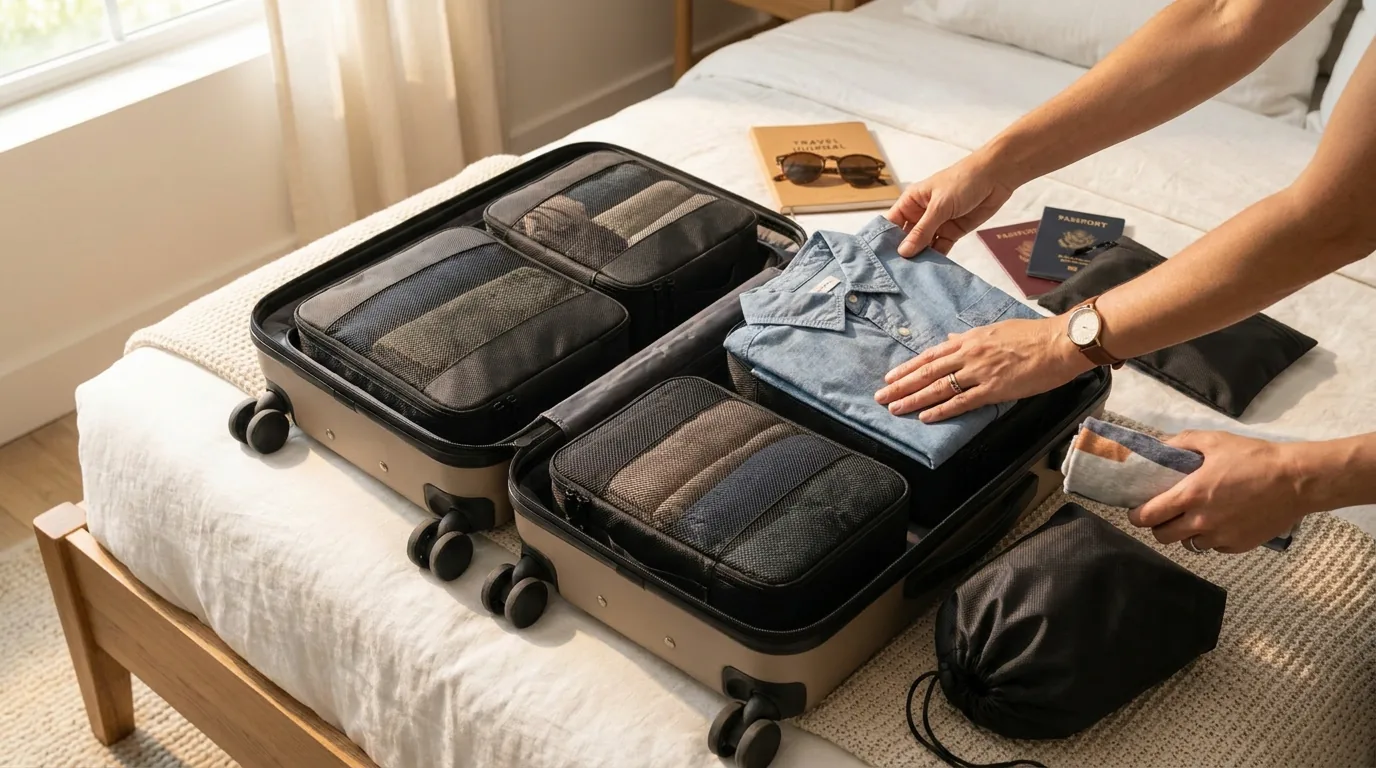
Use packing cubes for soft clothing and an EDC pouch for small, high-use gear. They are not competing solutions. Packing cubes make shirts, underwear, and other soft layers easier to group in the main carry-on. A compact pouch gives cables, earbuds, a pen, documents, and similar small essentials one reachable home.
If your bag contains both clothes and small accessories, the useful question is not “which organizer wins?” It is which items need to stay together, and which items need to be reached quickly? Put the first group in cubes. Put the second in a pouch. That division keeps a carry-on from becoming one mixed pile.
They solve different carry-on problems
Packing cubes work best when an item is soft, foldable, and used in groups. A cube can keep a clothing category together from packing through arrival. An EDC pouch works best when an item is small, easy to misplace, or needed while you are still traveling. It creates a compact grab-and-go zone rather than a large clothing compartment.
| Question | Packing cubes | EDC pouch |
|---|---|---|
| Best for | Clothing, sleepwear, socks, and other soft layers that belong together. | Cables, earbuds, pen, documents, keys, and other compact essentials. |
| Where it fits | Usually the main carry-on compartment or a weekend bag. | Near the top of a carry-on or inside a personal-item bag for faster access. |
| Main benefit | Lets you pack and unpack clothing categories without mixing everything together. | Gives the small gear you use in transit a fixed, easy-to-scan home. |
| Not ideal for | Loose cables, tiny adapters, or travel documents that can slide around. | Bulky clothes, shoes, or anything that needs a large flexible compartment. |
| Best decision rule | Choose a cube when the items are soft and used as a group. | Choose a pouch when the items are small and likely to be needed quickly. |
A simple carry-on layout that uses both
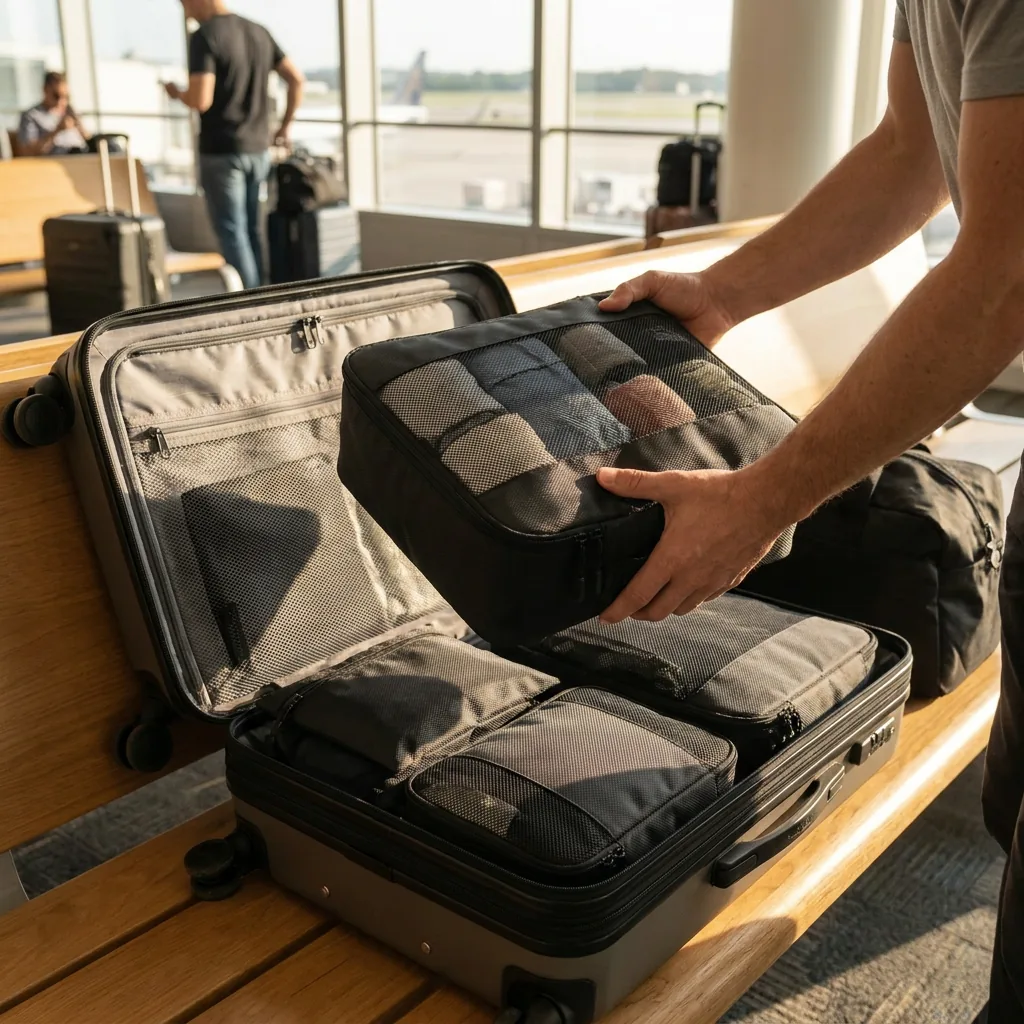
Start by treating the bag as two zones: the clothing zone and the access zone. The clothing zone can sit deeper in the carry-on because you normally open it at the hotel, not in an airport line. The access zone stays near the zipper opening or in the personal item because you may need it during the trip.
- Pack clothing first. Put outfits, layers, underwear, or sleepwear into packing cubes by category or by day. Our carry-on packing-cube guide explains one practical clothing-first setup.
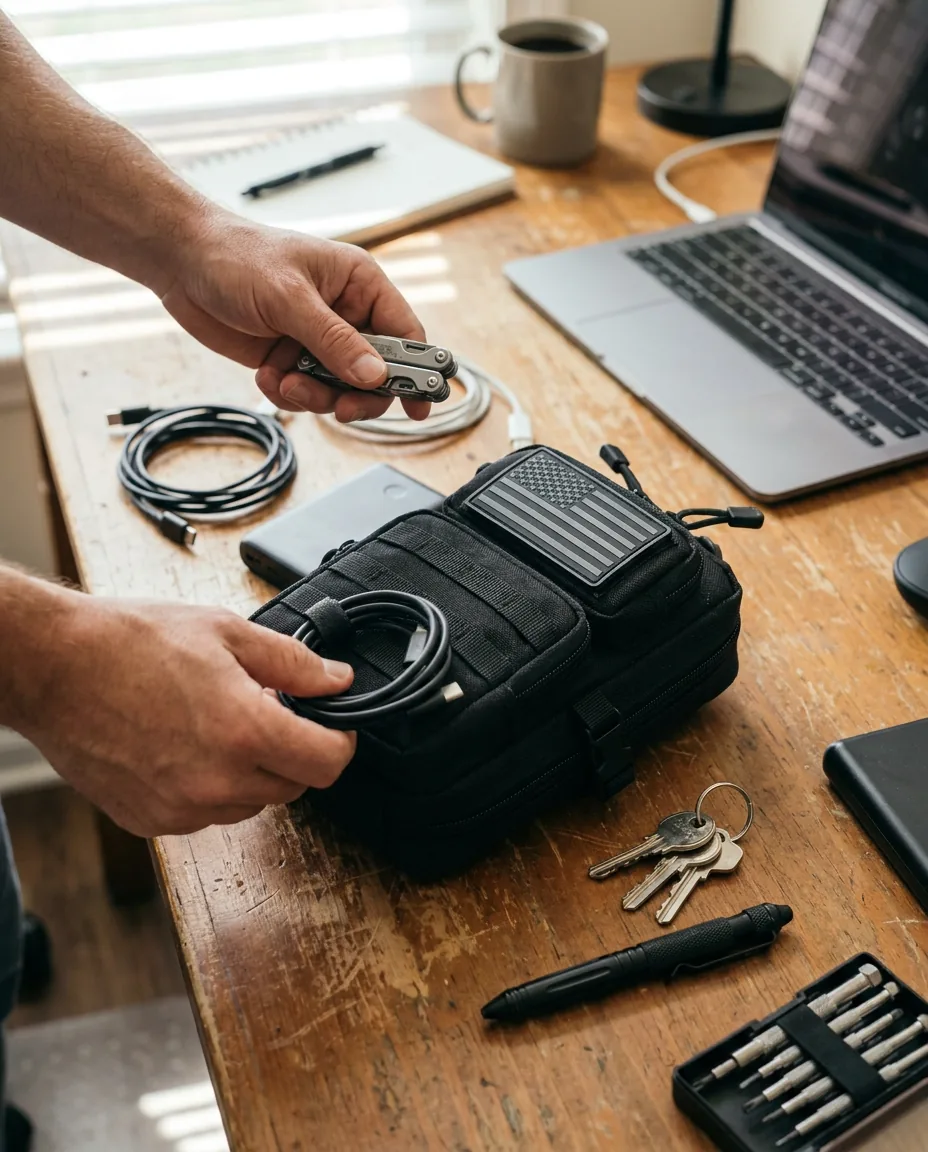
- Keep the small gear separate. Put one charging cable, a wall adapter, earbuds, a pen, and travel documents in a compact pouch. Do not fill this pouch with spare clothing or bulky “just in case” items.
- Place the pouch where it is reachable. A pouch can sit at the top of the carry-on or inside the personal item, depending on what you expect to need during transit.
- Leave one buffer space. A small empty gap makes it easier to repack after a security check or after pulling out an item at the gate.
That layout also makes the return trip simpler. Dirty clothing can go back into one cube, while the pouch still protects the same small items from getting scattered among souvenirs or laundry.
When should you choose only one?
Use only packing cubes if the bag is almost entirely clothing and you already have a secure place for your phone, documents, and charging gear. That can work for a simple weekend trip when your small accessories are minimal.
Use only an EDC pouch if you are not packing clothing at all—for example, on a short workday, a day trip, or a drive where the main problem is loose small gear. If you are unsure what belongs in that kind of kit, begin with what an EDC pouch is and what it is for.
For most overnight or multi-day carry-on travel, using both is the clearer setup. It is less about owning more organizers and more about avoiding two common problems: clothes spilling into the small-gear area, and tiny accessories getting buried in clothing.
Keep the airline rule separate from the organization plan
An organizer does not change the bag allowance. American Airlines, for example, says a personal item must fit under the seat in front of you and lists a maximum size of 18 × 14 × 8 inches. Airlines, fares, routes, and aircraft can differ, so confirm the specific trip’s policy before packing.
The safest approach is to build your organization inside the allowed bags: cubes inside the carry-on, and a pouch inside the carry-on or personal item. If adding the pouch makes the personal item bulge or creates a separate bag to manage, reduce what is in the bag rather than assuming the organizer adds an allowance.
The ten-minute setup before a trip
- Lay out every item. Do not pack straight from drawers. Seeing the whole group makes duplicates obvious.
- Make clothing groups. Put the soft items you will use together into cubes: underwear and socks, a change of clothes, or sleepwear.
- Make one access list. Choose only the small items you may use before arrival: cable, adapter, earbuds, documents, pen, and one or two personal basics.
- Test the pouch. Zip it closed and make sure it remains a compact organizer, not a dense catch-all.
- Put it in the final bag. Place the pouch where you can remove it without taking out clothing.
- Check the bag shape. Confirm the fully packed carry-on and personal item still meet the airline’s current requirements.
For a personal-item version of this method, see how to pack an EDC pouch for a personal-item bag. For a different packing choice, compare packing cubes and rolling clothes before changing your clothing zone.
Where a CobaltNook pouch fits
The current CobaltNook D-ring pouch has a main zip body, front zip pockets, MOLLE webbing, and a shoulder strap. Its approximate outside dimensions are 7 inches high by 3.7 inches long by 3.14 inches deep. That makes it a compact option for a small-gear zone, not a substitute for a clothing cube or a guarantee that a packed bag will meet every airline’s rules.
Use the main body for cables and small essentials, and use the rest of the bag for clothing and larger travel gear. If the same pouch also supports your weekday routine, our work-bag organizer guide shows a separate everyday setup. If you are deciding between two small-gear styles, see EDC pouch vs. tech pouch.
What to avoid
- Putting clothing in the pouch: this turns a quick-access organizer into a bulky second cube.
- Putting loose electronics in a cube: small adapters and cables are harder to find when they are mixed with clothing.
- Adding organizers without removing duplicates: one reliable charger and cable are usually easier to manage than several backups.
- Treating the pouch as another bag allowance: keep it inside the permitted carry-on or personal item unless the airline’s current policy says otherwise.
- Skipping the final bag check: organization helps only if the packed bag still closes comfortably and meets the carrier’s current rules.
Frequently asked questions
Are packing cubes or an EDC pouch better for a carry-on?
They are best for different items. Use packing cubes for clothing and an EDC pouch for compact accessories you want to reach quickly. Many carry-on setups work better with one of each.
Should an EDC pouch go in the carry-on or personal item?
Put it where you will need it most. The personal item is useful for transit essentials; the top of the carry-on can work when you need quick access but want the pouch inside the larger bag.
Do packing cubes save space?
Packing cubes mainly help group and manage clothing. Their value is organization and easier unpacking, not a promise that every load will become smaller.
Bottom line
Use packing cubes for clothing and an EDC pouch for small, high-use gear. Give each item one role and one place, keep the access pouch compact, and verify the final bag against the airline’s current allowance. That is a more useful carry-on system than forcing clothing and loose accessories into the same organizer.