The short answer
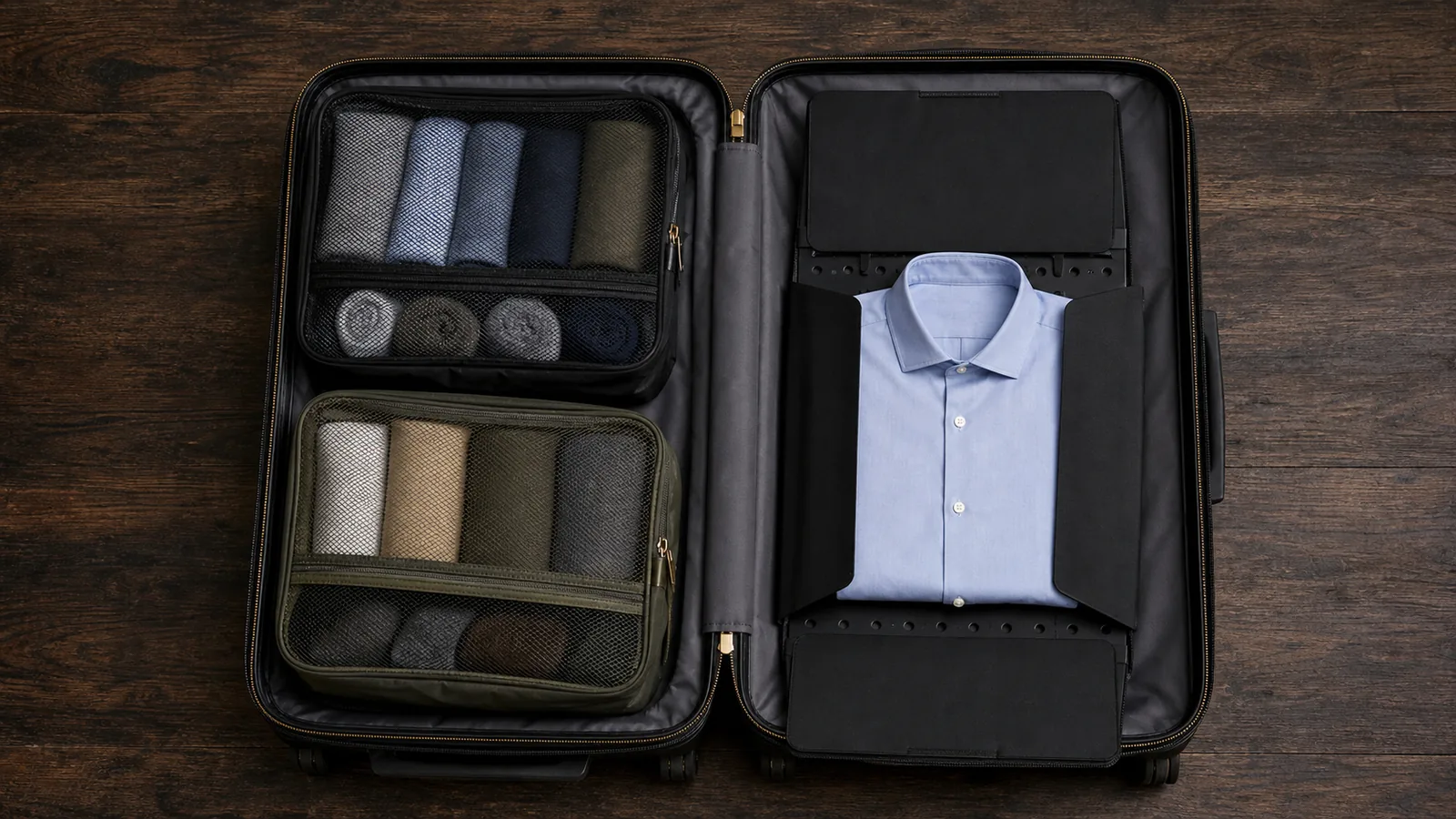
Choose packing cubes for casual clothing, categories, and flexible suitcase layouts. Choose a garment folder for dress shirts, trousers, blouses, and other items you want to keep flat. Packing cubes separate the contents of a carry-on into small zippered zones. A garment folder uses a flat panel or folding board to create a neat stack of folded clothing.
The choice is not really about which organizer is universally better. It is about the clothes and the trip. A weekend of T-shirts, underwear, activewear, and sleepwear is a packing-cube trip. A two-day meeting with several pressed shirts may justify a garment folder. A mixed work-and-leisure itinerary is where both systems can earn a place.
Packing cubes vs. garment folder at a glance
| Question | Packing cubes | Garment folder |
|---|---|---|
| Best for | Casual tops, underwear, socks, sleepwear, activewear, family categories, and soft layers. | Dress shirts, blouses, trousers, and a small stack of clothes that benefit from staying flat. |
| Main strength | Flexible organization that fits different bags and makes categories easy to find. | A structured folding method that limits shifting and keeps selected clothes in one flat stack. |
| Suitcase fit | Easy to divide across the bag, stack, or move between a carry-on and duffel. | Works best laid flat against the back, base, or lid of luggage with suitable dimensions. |
| Wrinkle control | Depends on how carefully each item is rolled or folded; the cube itself does not press garments flat. | Better for keeping a careful fold stable, though no organizer can guarantee wrinkle-free clothing. |
| Odd-shaped gaps | Smaller cubes can work around shoes, toiletries, and the edges of the case. | The flat rectangular shape is less adaptable around bulky or irregular items. |
| Mixed trips | Strong all-purpose base for casual and small clothing. | Useful as a specialist layer beside one or two cubes. |
When packing cubes are the better choice
Packing cubes work best when the main problem is organization. Instead of opening one large suitcase full of loose clothes, you can give each category a defined place: one cube for tops, another for underwear and socks, and another for sleepwear or gym clothes.
That system is useful beyond the flight. At a hotel, a cube can move from the suitcase to a drawer without unpacking every item. On a family trip, different travelers can use separate colors or labels. In a duffel, the cubes stop soft clothing from collapsing into one mixed pile. The carry-on packing cube guide shows a simple category system, while the family packing guide explains how to separate people and outfits.
Eagle Creek’s packing-organizer buying guide describes cubes, folders, and sacs as different sections within a larger bag. That is the most useful way to think about a cube: it is a movable drawer, not a promise that every item will take less space or never wrinkle.
When a garment folder is the better choice
A garment folder is a specialist. It makes sense when several pieces of clothing should stay in a controlled flat stack. The folder normally opens out, lets you arrange garments around a folding board or template, then closes around the stack to limit movement.
Current Eagle Creek garment-folder guidance describes folding boards designed to keep clothing crisp and folders sized for many carry-on bags. Briggs & Riley’s garment folder likewise uses a folding tray, template, and instructions and positions the format for business travel. Those are manufacturer descriptions, but they establish the defining difference: a folder manages a flat sequence of folds, while a cube contains a category.
A garment folder is not a full hanging garment bag. It still folds clothes, and the result still depends on fabric, packing pressure, handling, and how long the item stays packed. Use “wrinkle reducing” as the realistic goal, not “wrinkle proof.”
Which is better for business travel?
For a dress-heavy trip, the garment folder wins. If the priority is arriving with two or three dress shirts, a blouse, or trousers in a predictable stack, the folder gives those pieces a dedicated structure. Place it flat, avoid crushing it under shoes or hard objects, and unpack soon after arrival.
For a casual work trip, packing cubes are usually enough. Polo shirts, knit tops, underwear, socks, and sleepwear do not always need a rigid folding system. A small cube also moves easily into a personal-item bag if the airline checks a larger carry-on.
For a mixed business trip, combine them. Put meeting clothes in the garment folder and the rest in one or two cubes. This keeps the folder from becoming an overstuffed catch-all and prevents a single cube from mixing pressed shirts with socks and workout gear.
How each organizer uses carry-on space
Packing cubes are easier to rearrange. You can place two cubes side by side, stack a shallow cube over a deeper one, or use a small cube to fill the area beside shoes. This flexibility is especially helpful in soft-sided luggage and weekend bags. For short trips, see the weekend-bag packing cube setup.
A garment folder wants a broad flat footprint. Check its dimensions against the inside of your suitcase, not only the outside size of the bag. Wheels, handle rails, curved corners, and a packed lid can reduce the usable rectangle. If the folder barely fits when empty, it may bow once clothing is added.
Neither organizer changes the airline’s size or weight limits. Packing more neatly can make a bag easier to close, but it can also make it easier to add weight. If space is the main concern, read the packing cubes vs. compression bags comparison; compression is a separate feature from simple organization.
What actually helps with wrinkles?
The garment folder has the advantage because it controls the fold and limits shifting. But careful packing matters more than the label on the organizer. Smooth each garment, line up seams, avoid hard objects inside the fold, and do not force an oversized stack into a folder that will not close cleanly.
With packing cubes, either fold items to the cube’s shape or roll suitable casual pieces without creating tight creases. Do not pack a dress shirt under a dense bundle of belts, chargers, or shoes and expect the mesh lid to protect it. The packing cubes vs. rolling clothes guide explains why the container and the folding method solve different problems.
A simple hybrid carry-on setup
- Garment folder: place dress shirts, blouses, or trousers in one careful flat stack.
- Medium packing cube: use it for casual tops, shorts, knitwear, or sleepwear.
- Small packing cube: use it for underwear, socks, and compact accessories.
- Separate quick-access pouch: keep chargers, documents, and small travel essentials outside the clothing system. The packing cubes vs. EDC pouch guide shows how those roles fit together.
- Leave a little room: an organizer that closes without strain is easier to reset during the trip.
Lay the garment folder flat first, then place the cubes where the bag has depth. Keep shoes and hard toiletries away from the center of the folded dress clothes. When you arrive, remove the folder first and hang the structured clothing before opening the casual-clothing cubes.
Where CobaltNook packing cubes fit
The current CobaltNook packing-cube offer is an 8-piece travel organization system with breathable mesh panels for visibility, double-way zippers, and reinforced handles. The range is positioned for carry-ons, checked bags, weekend duffels, and family travel.
That makes it the flexible side of this comparison: use the cubes to sort casual clothing and smaller categories across the trip. If you regularly travel with pressed business clothes, add a separate garment folder rather than asking a soft cube to do a rigid folder’s job.
Common mistakes to avoid
- Buying by category name alone: measure the inside of the luggage and think about the clothes you actually pack.
- Overfilling a garment folder: too much pressure can defeat the controlled fold you bought it for.
- Expecting cubes to remove weight: organization can improve fit, but the bag and its contents still weigh the same.
- Using a folder for every item: socks, underwear, and soft casual layers are easier to manage in cubes.
- Using one large cube as a second suitcase: categories disappear when everything is packed into one oversized container.
- Ignoring the return trip: leave a cube or section available for laundry so clean and worn clothes stay separate.
Frequently asked questions
Can packing cubes keep dress shirts wrinkle-free?
Packing cubes can keep shirts grouped and protected from loose items, but they do not hold a dress shirt flat the way a garment folder and folding board do. Careful folding still matters.
Is a garment folder worth it for carry-on travel?
A garment folder is most useful when the trip includes several dress shirts, trousers, blouses, or other clothes you want to keep flat. For mostly casual clothes, packing cubes are usually more flexible.
Can you use packing cubes and a garment folder together?
Yes. Put the garment folder flat against the back or base of the suitcase, then use packing cubes for underwear, casual tops, sleepwear, and other soft items around it.
Which organizer is better for business travel?
For a dress-heavy business trip, a garment folder has the advantage. For a mixed business trip, use a folder for structured clothes and packing cubes for everything else.
Bottom line
Packing cubes are the better all-purpose organizer; a garment folder is the better specialist for selected dress clothes. Choose cubes for flexible categories and everyday travel. Choose a folder when keeping a careful stack flat is central to the trip. For mixed carry-on travel, use both and give each one a narrow job.