The short answer
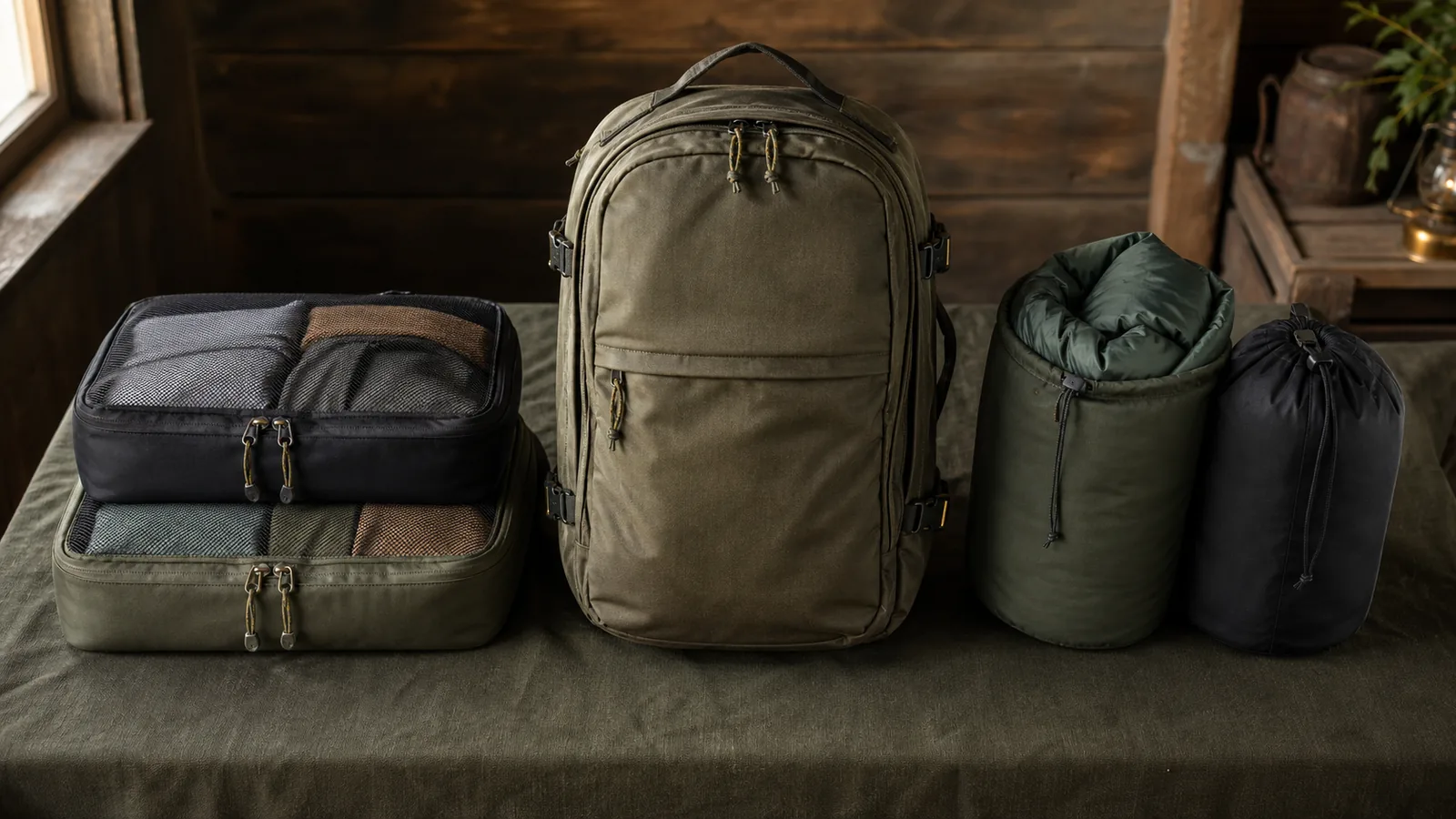
Packing cubes are better for access and tidy categories. Stuff sacks are better for flexible shapes and soft, compressible loads. A packing cube opens wide with a zipper, so shirts, underwear, socks, or sleepwear stay visible and separated. A stuff sack usually loads from the top and closes with a drawcord, roll, or similar closure, so it can conform to the empty corners of a travel backpack or camping bag.
The decision is less about which organizer is universally superior and more about what you need to retrieve. If you will open the container every day and want to see a whole clothing category at once, use a cube. If the contents are bulky, soft, and unlikely to be needed until camp or the end of the day, a stuff sack may pack more naturally.
Packing cubes vs. stuff sacks at a glance
| Question | Packing cubes | Stuff sacks |
|---|---|---|
| Typical shape | Rectangular or box-like, with a zippered opening. | Soft and often cylindrical, with a top opening and drawcord or similar closure. |
| Best load | Folded or rolled clothing, underwear, socks, sleepwear, and other categories you open often. | Puffy layers, sleep gear, laundry, soft camp items, or awkward loads that can settle into a flexible shape. |
| Access | Wide opening makes the full category easy to scan. | Top-loaded contents may require removing upper items to reach the bottom. |
| Pack fit | Stacks cleanly in rectangular luggage and travel packs. | Can mold around curves and narrow gaps in outdoor packs or gear bags. |
| Compression | Only compression cubes reduce volume with a secondary mechanism. | Only compression sacks reduce volume with straps or a designed compression system. |
| Water protection | Depends entirely on the specific material, seams, and closure. | Depends entirely on the product; a basic stuff sack is not automatically a dry bag. |
| Main mistake | Overfilling until the cube becomes a rigid block that will not fit the bag. | Mixing too many small items and creating a deep sack that is difficult to search. |
What is the real difference?
A packing cube behaves like a movable drawer
A packing cube divides a larger bag into smaller zippered sections. The rectangular footprint works especially well in suitcases, duffels, and travel backpacks with broad panel openings. You can assign one cube to tops, another to base layers, and another to sleepwear, then move each category without disturbing the rest of the bag.
Eagle Creek’s current packing organizer guide draws a useful distinction between basic organization and compression: ordinary packing cubes group items, while compression bags or compression cubes add a separate space-saving function. That is manufacturer guidance, but the category distinction is important. A zipper and rectangular shape do not automatically mean an organizer compresses its contents.
A stuff sack behaves like a flexible bucket
A stuff sack is usually a soft bag that loads from one end. It gives up the cube’s broad opening in exchange for a shape that can settle around the contents and the outer pack. This suits puffy jackets, sleep systems, laundry, and other soft loads that do not need a flat, drawer-like layout.
Sea to Summit’s current stuff sack collection shows how varied this category is: lightweight sacks, mesh sacks, different sizes, and models with different features. Treat those as product-specific examples, not proof that every stuff sack is ultralight, waterproof, or suitable for every sleeping bag.
When packing cubes are the better choice
Choose packing cubes when the trip is organized around clothing categories and repeated access. On a city trip, business trip, family vacation, or hotel-based itinerary, you may open the same cube every morning and evening. A wide zip opening helps you find one shirt or pair of socks without emptying the whole container.
Cubes also make handoffs easier. One family member can own one color or size. A gym or sleepwear cube can move from a suitcase to a bathroom shelf. A clean-clothes cube can stay separate from a laundry sack. Our carry-on packing cube guide explains a simple category setup, and the family travel guide shows how to separate people and outfits.
The limit is geometry. A firm, overfilled cube may leave unused wedges around the curves of a top-loading backpack. Do not keep adding clothes simply because the zipper still moves. The better test is whether the loaded cube drops into the real bag without force and can be removed without rebuilding the entire pack.
When stuff sacks are the better choice
Choose a stuff sack when the load is soft, bulky, or rarely accessed. A puffy layer used only at camp, a sleep system, or a contained laundry load does not always need a wide panel opening. The sack can settle into a rounded pack bottom or fill a gap between more structured items.
Stuff sacks are also useful when the outer backpack loads from the top. A long, narrow container can be easier to lower into that space than a broad rectangular cube. This does not mean every backpacker should put every item in a sack. Too many identical dark sacks create a guessing game, and one deep sack full of mixed small items can be slower to use than loose pockets.
Give each sack one job and make it identifiable by color, size, or a simple tag. Keep frequent-use items such as a rain shell, water treatment, navigation tools, or snacks where the pack design makes them easy to reach rather than burying them under the sleep system.
Which is better for a suitcase or carry-on?
For a conventional carry-on suitcase, packing cubes usually win. Suitcases are already rectangular, so two or three cubes can stack or sit side by side without wasting much space. The wide opening also works well when the bag lies flat on a hotel rack.
A stuff sack can still help as a specialist. Use one for laundry, a soft jacket, or another category whose shape changes during the trip. If your main concern is reducing bulky clothing rather than organizing it, compare the specific compression mechanism instead of assuming a basic stuff sack will shrink the load. Our packing cubes vs. compression bags guide covers that separate decision.
For dress shirts or trousers, neither format guarantees a wrinkle-free result. Careful folding, fabric choice, packing pressure, and how soon you unpack all matter. If keeping selected garments flat is the priority, see the packing cubes vs. garment folder comparison.
Which is better for camping or backpacking?
For car camping and organized base-camp travel, either system can work. Cubes are convenient for clothing that moves between the vehicle, tent, and shower area. Stuff sacks suit sleep gear, puffy layers, or soft camp categories that need to fit around harder equipment.
For backpacking, pack shape and retrieval order matter more. Put low-use soft gear deeper and keep weather, navigation, water, and first-aid items accessible according to your pack design and trip plan. Do not let an organizer become a reason to bury something you may need quickly.
Neither a packing cube nor an ordinary stuff sack is a substitute for required food storage. The National Park Service’s bear-country food storage guidance says rules differ by park, some areas require lockers or bear-resistant containers, and food should not be stored in a tent or backpack. Check the rules for the exact park and use the required storage method for food, garbage, toiletries, and other scented items.
Do not confuse containment, compression, and waterproofing
These three functions are different:
- Containment: keeps a category together.
- Compression: uses straps, a secondary zipper, or another designed mechanism to reduce volume.
- Water protection: depends on material, seam construction, closure, and a product’s stated rating.
A plain packing cube contains. A compression cube contains and reduces some volume. A plain stuff sack contains. A compression sack adds a reduction system. A dry bag is designed around water protection. Product names are not perfectly consistent across brands, so read the actual construction and care instructions before trusting a bag with a sleeping system, electronics, or other moisture-sensitive gear.
The hybrid setup: cubes plus one stuff sack
Many travelers do not need to choose one format for the whole trip. A simple hybrid load can look like this:
- Medium packing cube: shirts and pants.
- Small packing cube: underwear and socks.
- Stuff sack: puffy layer, sleep gear, or laundry.
- EDC pouch: small cables, light, adapters, keys, or other loose support items.
This gives frequent-use clothing a wide opening while allowing one soft category to conform to the remaining space. If your carry-on also contains chargers and small accessories, the packing cubes vs. EDC pouch guide explains why clothing and small hard goods usually deserve separate containers.
A practical five-minute test
- Lay out the real contents. Do not buy around an imagined packing list.
- Mark access frequency. Daily clothing favors a wide-opening cube; camp-only soft gear can sit deeper in a sack.
- Check the outer bag. Rectangular luggage favors cubes; a curved top-loader may accept sacks more naturally.
- Separate soft from hard items. Protect clothing and insulated gear from sharp or dirty equipment.
- Test the loaded shape. Close the organizer without forcing it, then place it in the actual bag.
- Try one retrieval. Remove one needed item and repack it. The easier reset is usually the better long-term system.
Where CobaltNook packing cubes fit
The current CobaltNook packing cube offer is an eight-piece travel organization system with breathable mesh panels for visibility, double-way zippers, and reinforced handles. It is positioned for carry-ons, checked bags, weekend duffels, and family travel. Those features place it on the packing-cube side of this comparison: easy clothing categories and repeated access inside a larger travel bag.
The product page does not position the set as a replacement for a compression sack, dry bag, bear-resistant food container, or dedicated sleeping-bag storage system. Use it for the organization job it is built to do. If the trip also includes bulky outdoor gear, add the correct specialist container rather than forcing every category into one format.
Common mistakes to avoid
- Calling every soft bag a compression sack: look for an actual reduction mechanism.
- Assuming water resistance: verify the specific product’s material, seams, closure, and rating.
- Overfilling cubes: a neat rectangle is not useful if it no longer fits the outer bag.
- Creating a sack full of tiny loose items: deep top access makes mixed small gear hard to find.
- Burying frequent-use essentials: organizer order should follow retrieval order.
- Using an organizer as food protection: follow park-specific storage rules and required bear-safe methods.
Frequently asked questions
Are packing cubes better than stuff sacks?
Packing cubes are better for organized, easy-to-access clothing in suitcases and travel packs. Stuff sacks are better for soft or bulky gear that needs to fit into irregular spaces. Neither format is best for every load.
Is a stuff sack the same as a compression sack?
No. A basic stuff sack contains gear and closes with a drawcord or similar closure. A compression sack adds straps or another mechanism that reduces the packed volume. Check the specific product rather than assuming every stuff sack compresses.
Can a stuff sack keep gear waterproof?
Only when the specific sack is designed and rated for water protection. A basic fabric stuff sack or mesh sack is not automatically a dry bag, and a packing cube is not automatically waterproof either.
Can you use packing cubes and stuff sacks together?
Yes. Use packing cubes for clothing you want to sort and reach often, then use a stuff sack for a puffy layer, sleep system, laundry, or another soft category that benefits from a flexible shape.
Bottom line
Choose packing cubes for visible, repeatable clothing categories. Choose stuff sacks for soft, bulky loads and irregular pack spaces. A suitcase trip will usually lean toward cubes. A camping or backpacking load may use more sacks. For a mixed trip, use both and give each container one clear job.