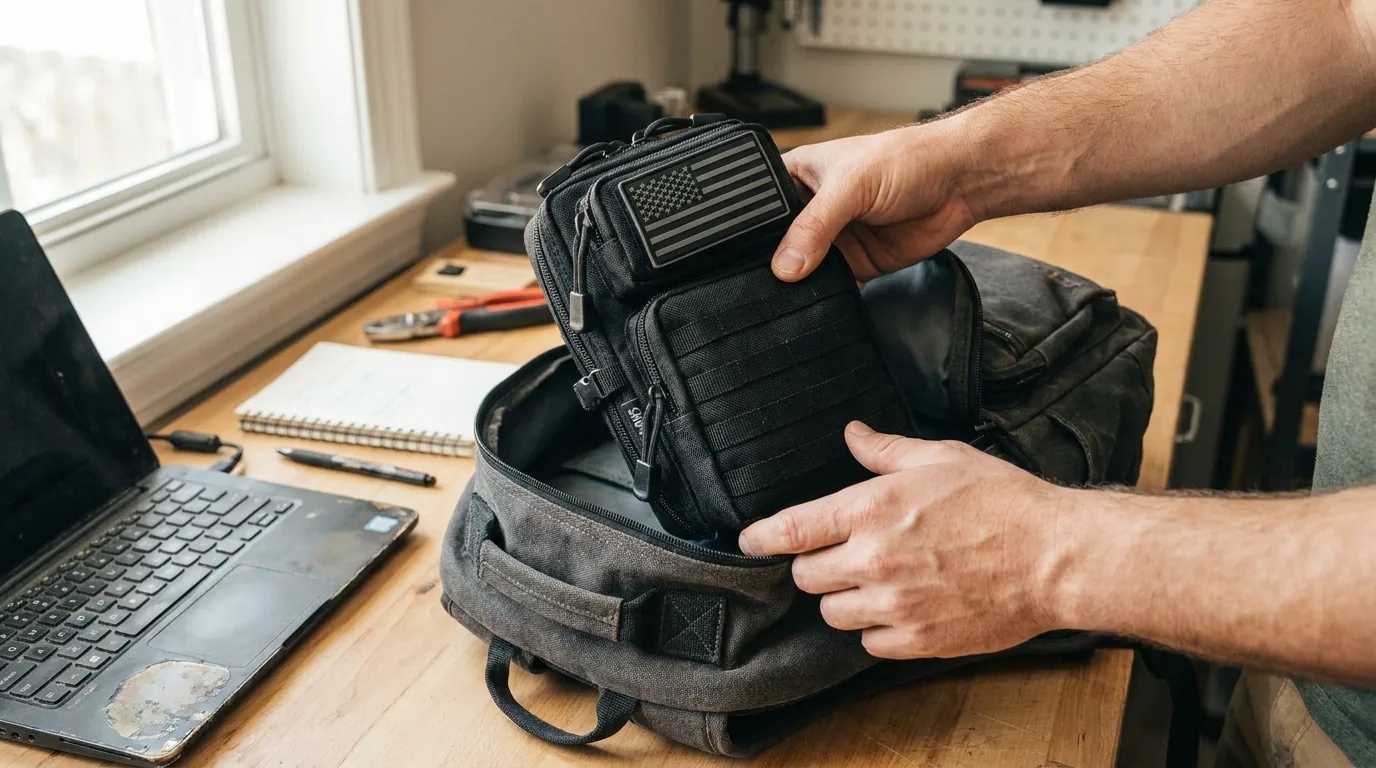
The short answer
You can bring an EDC pouch on a plane if the contents follow carry-on rules. TSA screens the items inside the organizer, not the word “EDC” on the pouch. A compact pouch full of cables, earbuds, a pen, medicine, and travel documents is very different from a pouch that contains blades, oversized tools, loose liquids, or restricted batteries.
The safest airport setup is simple: keep the pouch inside your carry-on or personal item, pack only flight-safe small gear, and place anything that may need extra screening where you can reach it quickly.
The pouch is fine; the contents get screened
An EDC pouch works well for air travel because it gives small items one home. But it does not make those items exempt from security rules. The TSA “What Can I Bring?” guide is the best starting point before packing tools, batteries, liquids, or sharp items.
Think of the pouch as a tray inside your bag. If a security officer needs to inspect the contents, the pouch should be easy to lift out and open. That is better than scattering the same items across five pockets.
What to pack, move, or leave out
| Item type | Best pouch decision | Why it matters |
|---|---|---|
| Cables, wall adapter, earbuds, pen | Good pouch items. | They are small, easy to lose, and usually useful before arrival. |
| Travel documents or small notes | Good if you need quick access. | A pouch can keep them from bending, sliding, or disappearing into the bag lining. |
| Liquids, gels, creams, aerosols, pastes | Keep them in the TSA liquids bag, not buried in the pouch. | TSA says carry-on liquids must fit the 3-1-1 rule: travel-size containers in a quart-size bag. |
| Power bank or spare lithium battery | Carry on only, protected, and easy to access. | FAA and TSA guidance says spare lithium batteries and power banks belong in carry-on baggage, with terminals protected. |
| Small tools | Be conservative; check current TSA rules first. | TSA notes some tools 7 inches or shorter may be allowed, but power tools and longer tools must go in checked baggage. |
| Knives, blades, blade-based multitools | Leave out of the air-travel pouch. | They create avoidable screening problems and may be prohibited in carry-on bags. |
Two rules most pouch packers miss
Liquids need their own plan
The TSA liquids rule allows a quart-sized bag of liquids, aerosols, gels, creams, and pastes in carry-on baggage, with travel-size containers. If you use an EDC pouch for lip balm, lotion, sanitizer, or toothpaste, keep the liquids-rule items together and easy to remove instead of hiding them under cables and tools.
Batteries should stay accessible
The FAA PackSafe lithium battery guidance says spare lithium batteries, including power banks and phone charging cases, are allowed in carry-on baggage only and should be protected from damage and short circuits. A pouch can help with that, but do not pack loose battery terminals against keys or metal tools.
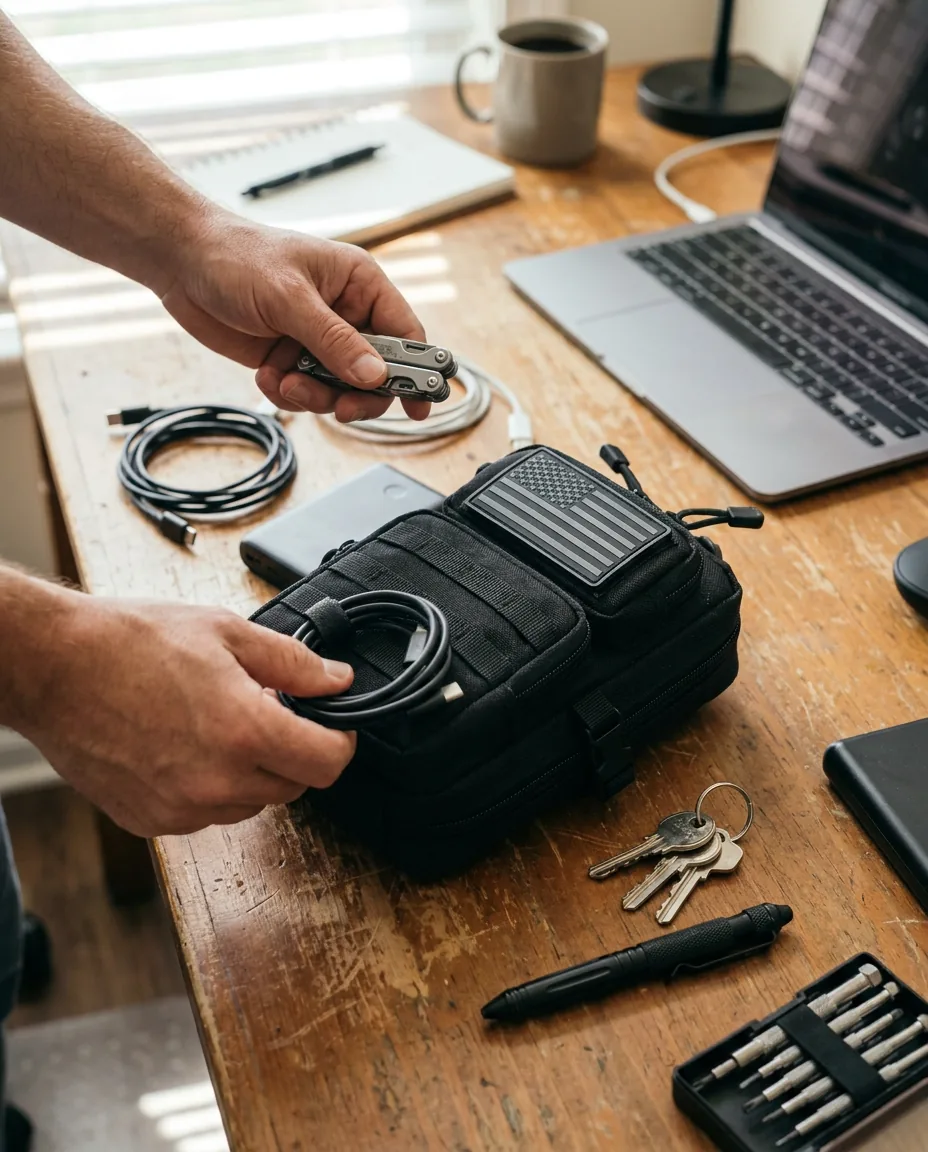
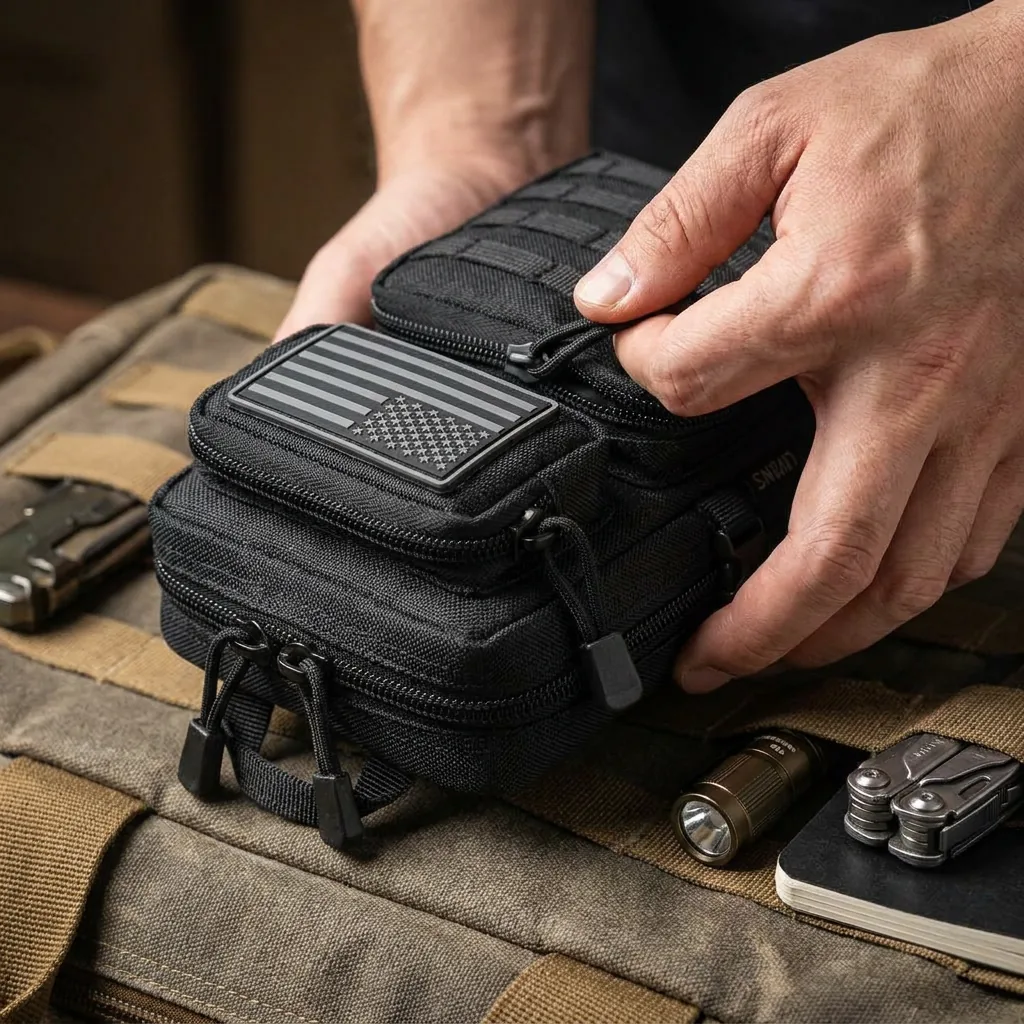
A clean air-travel EDC pouch loadout
For most flights, start smaller than you think. The goal is not to build a survival kit. The goal is to stop small travel items from turning into a pocket-by-pocket search.
- One charging cable. Bring the cable you actually use on the trip, not every spare cable in the drawer.
- One wall adapter. Keep it separate from keys and anything sharp.
- Earbuds or headphones adapter. Small audio gear disappears quickly in a packed personal item.
- Pen and tiny notebook or folded paper. Useful for forms, labels, or quick notes.
- Medicine or comfort basics. Keep necessary personal items accessible and follow current screening rules.
- Power bank, if needed. Carry it in the cabin, protect the terminals, and check airline limits before flying.
If you are also packing clothes, use a separate clothing system. The packing cubes vs. EDC pouch carry-on guide explains how to use cubes for clothes and a pouch for quick-access small gear.
Where the pouch should ride
Place the pouch where you can reach it without unpacking your bag. For many travelers, that means inside the personal item, near the top of the carry-on, or in an outer pocket that still closes securely. Do not treat it as an extra bag allowance; keep it inside the bag your airline allows.
If your trip uses only a personal item, keep the pouch compact. Our personal-item EDC pouch guide shows how to keep the pouch helpful without turning the under-seat bag into a hard-to-close brick.
Where the CobaltNook pouch fits
The current CobaltNook tactical EDC pouch offer includes two MOLLE organizer pouches and two US flag patches. CobaltNook describes the pouch as built for cables, chargers, keys, flashlights, first-aid basics, and small tools, with MOLLE webbing for compatible packs, belts, panels, and gear setups.
For air travel, use that structure conservatively. Pack the cable, charger, pen, earbuds, small approved personal items, and any carry-on-safe battery gear you actually need. Leave restricted or questionable items out. The pouch organizes the setup; it does not decide what security allows. For broader everyday use, compare this with the simple EDC pouch guide, the EDC pouch vs. tech pouch comparison, and the MOLLE pouch vs. EDC pouch explanation.
Common airport-pouch mistakes
- Packing the “cool” EDC list instead of the flight-safe list: airport carry should be boring, legal, and easy to scan.
- Mixing liquids with electronics: put liquids-rule items in the right bag and keep electronics dry.
- Letting small tools create doubt: if you are unsure whether a tool will pass, do not make it part of the carry-on pouch.
- Overstuffing every pocket: a dense pouch is slower to inspect and harder to reset after security.
- Forgetting the return flight: repack the pouch before heading home so new receipts, snacks, or loose items do not hide restricted gear.
Frequently asked questions
Can I bring an EDC pouch in my carry-on?
Yes. The pouch itself is just an organizer. The items inside still need to follow TSA, airline, and destination rules, so pack the pouch with allowed carry-on items and keep questionable tools out.
Can liquids go inside an EDC pouch for air travel?
Small liquids, gels, creams, aerosols, and pastes should follow TSA’s 3-1-1 rule and fit inside the allowed quart-size liquids bag. Do not bury that bag deep inside a gear pouch if it may need to be removed quickly.
Can a power bank go in an EDC pouch on a plane?
Power banks and spare lithium batteries normally belong in carry-on baggage, not checked baggage. Keep terminals protected and check current FAA, TSA, and airline limits before flying.
Should small tools go in an air-travel EDC pouch?
Only pack tools that comply with current TSA rules, and remember that the final decision rests with the security officer. For a smoother airport pouch, leave knives, blades, multitools with blades, and questionable tools at home or in checked baggage when allowed.
Bottom line
An EDC pouch can fly when the loadout is flight-safe. Use the pouch for small allowed essentials, keep liquids and batteries packed according to current rules, and leave anything questionable out of the carry-on setup. That gives you the benefit of everyday-carry organization without creating avoidable airport problems.