The short answer
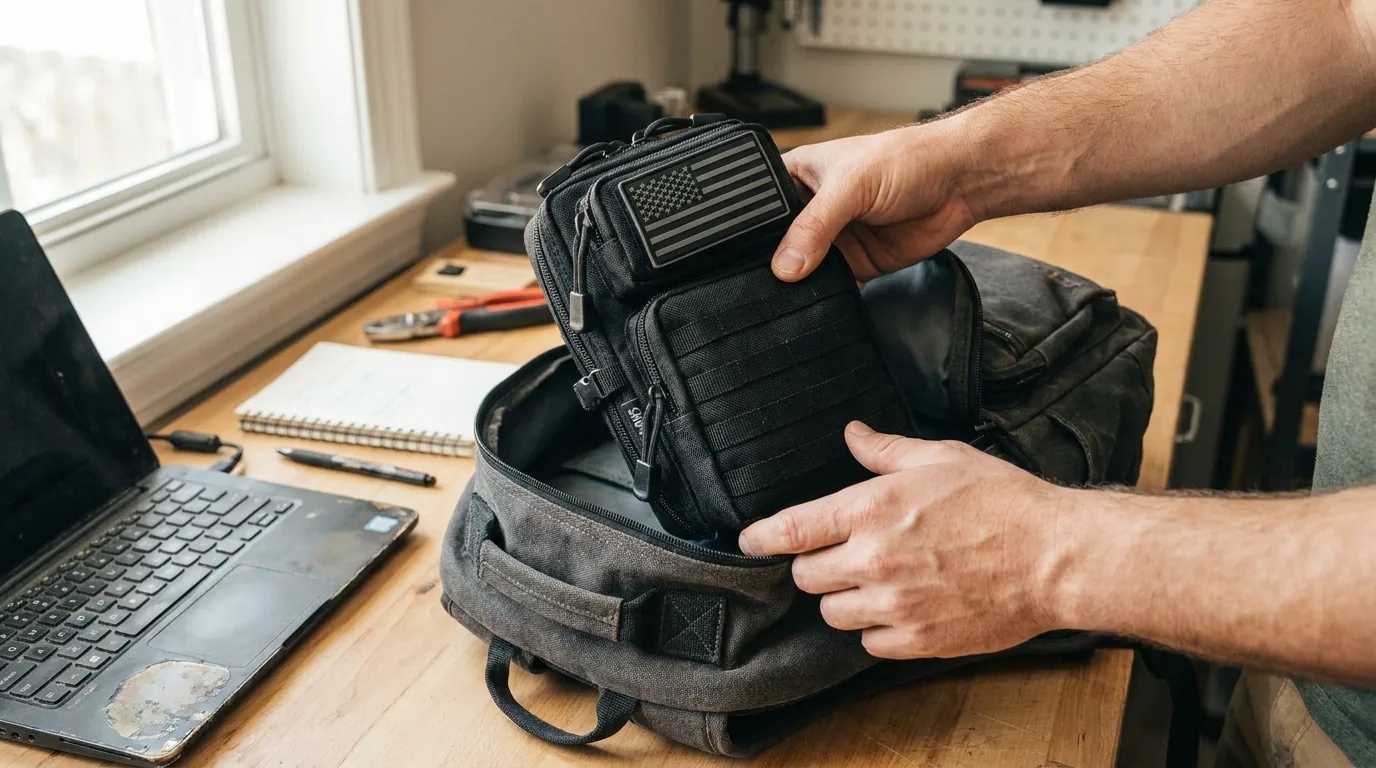
An EDC pouch and a Dopp kit can look similar, but they solve different packing problems. A Dopp kit is the better home for toothbrushes, shaving gear, deodorant, skin care, and other toiletries. An EDC pouch is the better home for dry, quick-access small gear: charging cable, earbuds, pen, tiny notebook, flashlight, keys, first-aid basics, and other items that disappear inside a bag.
If you travel often, the cleanest answer is not “one pouch for everything.” Use the Dopp kit for bathroom items and the EDC pouch for the small gear you reach for in the seat, car, hotel room, campsite, or work bag.
What is the real difference?
A Dopp kit is a toiletry bag. Travel and luggage brands usually describe it around grooming and personal-care storage. That means bottles, tubes, razors, toothbrushes, combs, deodorant, and similar bathroom items.
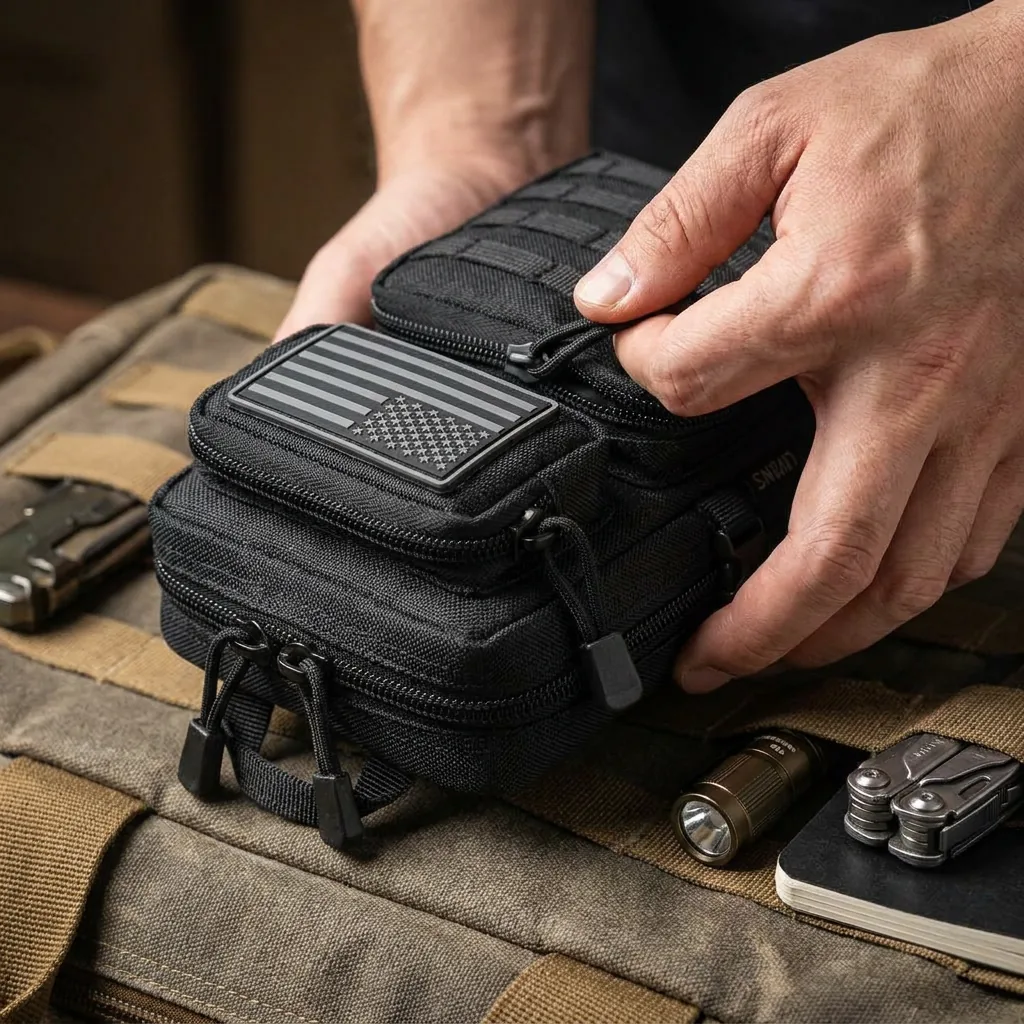
An EDC pouch is an everyday-carry organizer. It is built around access and separation. Instead of one open toiletry cavity, many EDC pouches use pockets, loops, webbing, and zip sections to keep small gear from piling into one loose corner.
The overlap is why the question exists. A zip pouch can hold almost anything that fits. But the better choice depends on the job: wet and grooming items belong in the Dopp-kit lane; dry tools, tech, and daily essentials belong in the EDC-pouch lane.
EDC pouch vs. Dopp kit comparison
| Question | EDC pouch | Dopp kit |
|---|---|---|
| Best for | Dry small gear, tech, cables, keys, small tools, comfort items, first-aid basics. | Toiletries, grooming products, bathroom items, travel-size bottles, shaving gear. |
| Main packing goal | Fast access and separation inside a backpack, work bag, truck kit, or carry-on. | Keep personal-care items together for the bathroom, hotel sink, gym, or overnight bag. |
| Liquids | Not ideal unless they are sealed and separated from electronics or tools. | Usually the better category for liquids, gels, creams, toothpaste, and deodorant. |
| Carry-on travel | Good for dry cabin items, but liquids still need to follow TSA rules. | Good for toiletries, but airport liquids still need the proper quart-size liquids bag when carried on. |
| Everyday use after the trip | Strong. It can move from travel bag to work bag, glove box, range/camp kit, or desk drawer. | More limited. It is usually a bathroom or overnight-trip organizer. |
| When not to use it | Do not treat it as a leak-safe toiletry bag unless the pouch is specifically made for that. | Do not use it for dense tech and tools if everything will rattle together in one open space. |
The airport rule that changes the answer
For carry-on travel, the bag type matters less than the contents. The TSA liquids, aerosols, and gels rule says carry-on liquids must be in travel-size containers and fit the allowed liquids bag. That makes a Dopp kit useful for organizing toiletries before and after screening, but it does not let you bypass the liquids rule.
The same idea applies to batteries. The FAA PackSafe lithium battery guidance says spare lithium batteries and power banks belong in carry-on baggage and should be protected from damage and short circuits. If your EDC pouch carries a power bank, keep it dry, accessible, and away from loose metal items.
When to choose an EDC pouch
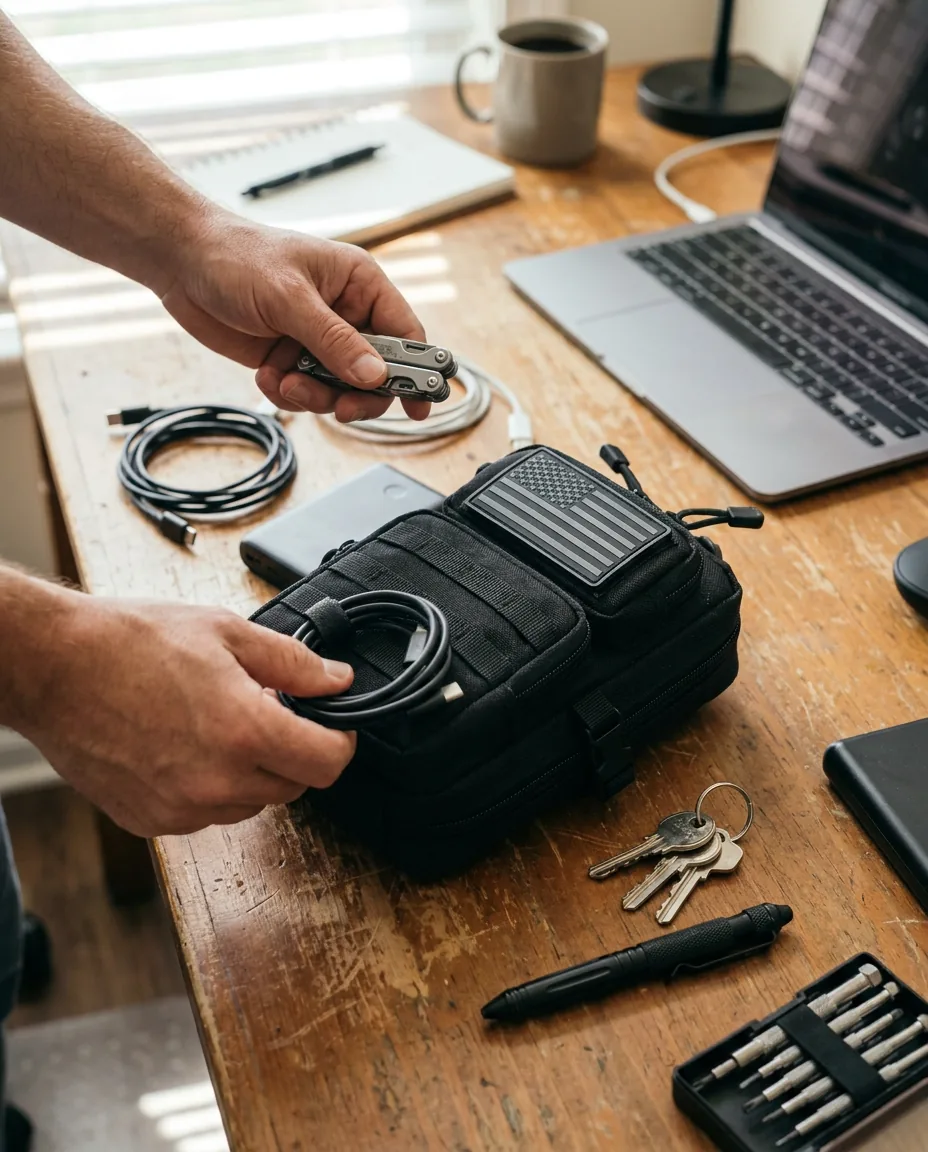
Choose an EDC pouch when the items are small, dry, and useful outside the bathroom. The pouch should make your bag calmer, not heavier.
- Work bag: cable, earbuds, adapter, pen, badge, small notebook, and backup essentials. The EDC pouch vs. tech pouch guide compares this setup in more detail.
- Personal item: charger, medicine, comfort items, gum, pen, and documents. See the personal-item EDC pouch guide for a compact under-seat setup.
- Truck kit: tire gauge, flashlight, charging cable, gloves, pen, and small first-aid basics. The truck-kit pouch guide shows that use case.
- Camp or road-trip kit: light, cord, small repair items, batteries, and essentials you do not want loose in the larger bag.
When to choose a Dopp kit
Choose a Dopp kit when the items are bathroom items. Toothbrush, toothpaste, razor, comb, deodorant, lotion, sunscreen, and shaving products need a different packing mindset from cables and flashlights.
A good toiletry setup should be easy to pull out at the hotel, sink, gym, campsite, or guest bathroom. It should also keep messy items away from dry gear. Even when every bottle is closed, toiletries are more likely to leak, smear, or leave residue than a cable or pen.
Can one pouch do both?
It can, but it is usually a compromise. If you only carry a toothbrush, floss, lip balm, and a tiny deodorant, one small pouch may be enough for a one-night trip. But once liquids, creams, razors, or full grooming items enter the kit, separate the categories.
The problem is not that a pouch cannot physically hold toiletries. The problem is reset time. A mixed pouch gets unpacked in the bathroom, repacked for the plane, opened for a charger, then dug through for medicine. That is how toothbrush covers, cords, receipts, and small tools end up touching each other.
Where the CobaltNook pouch fits
The current CobaltNook tactical MOLLE organizer offer includes two organizer pouches and two US flag patches. The product page describes the pouch around phone-sized essentials, small gear, main and front zip pockets, MOLLE webbing, and everyday setups such as a truck kit, work bag kit, range/camp kit, garage backup, or travel setup.
That makes it a better fit for the EDC side of this comparison than the wet-toiletry side. Use it for dry carry items and small essentials. Use a dedicated toiletry bag or liquids bag for toothpaste, creams, gels, deodorant, and anything likely to leak. For the broader category difference, start with what an EDC pouch is, then compare MOLLE pouch vs. EDC pouch if attachment style matters to your setup.
A clean two-pouch travel setup
- Dopp kit: toothbrush, toothpaste, deodorant, razor, skin care, comb, travel bottles, and bathroom-only items.
- EDC pouch: cable, wall adapter, earbuds, pen, notebook, small medication, comfort basics, power bank, and dry quick-access gear.
- Packing cubes: clothing, socks, underwear, sleepwear, and laundry separation. If clothes are the main problem, use the packing cubes vs. EDC pouch carry-on guide to split the system clearly.
This setup gives every item a reason to be where it is. Clothes stay in cubes. Bathroom items stay together. Dry small gear stays in the EDC pouch. You spend less time searching and less time repacking.
Common mistakes
- Putting liquids beside electronics: one small leak can ruin the point of having an organized pouch.
- Buying the wrong shape: a deep toiletry bag may swallow small cables, while a flat EDC pouch may be awkward for bottles.
- Overpacking “just in case” items: a pouch should reduce clutter, not become a junk drawer.
- Ignoring airport screening: your organizer does not change TSA, FAA, airline, or destination rules.
- Using one pouch forever: reset the kit after each trip so bathroom items, receipts, tools, and tech do not merge.
Frequently asked questions
Is an EDC pouch the same as a Dopp kit?
No. A Dopp kit is mainly a toiletry and grooming bag. An EDC pouch is mainly for everyday small gear, tools, tech, and quick-access essentials.
Can I use an EDC pouch as a toiletry bag?
You can for a very small dry toiletry setup, but it is not the best default if you carry liquids, gels, creams, toothpaste, deodorant, or shaving items. Keep those in a toiletry bag or TSA liquids bag when flying.
Can a Dopp kit hold chargers and cables?
It can, but it may not organize them well. A Dopp kit is usually shaped for bathroom items. If you carry chargers, earbuds, adapters, and small tools every day, an EDC pouch is usually easier to reset.
Which one should go in a carry-on?
Both can go in a carry-on if the contents follow current rules. Keep liquids in the proper liquids setup, and keep spare lithium batteries or power banks in carry-on baggage with terminals protected.
Bottom line
Pack the Dopp kit for toiletries and the EDC pouch for dry everyday gear. That simple split keeps bathroom items away from electronics, makes airport screening easier, and gives your carry-on, work bag, truck kit, or camp bag a cleaner system.