The short answer
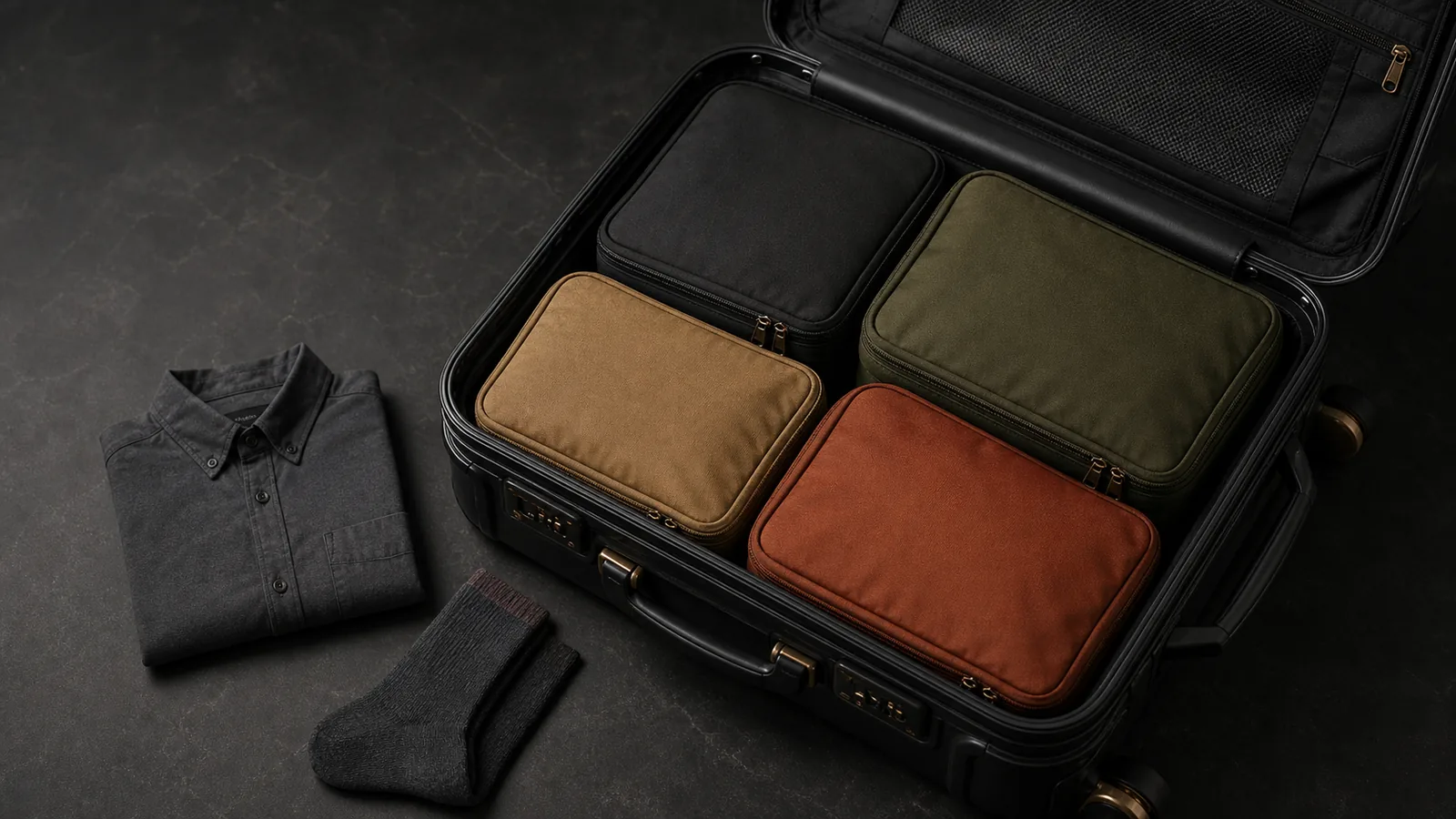
Three packing cubes are a practical starting point for one traveler using a standard carry-on. That count creates enough separation to be useful without filling every gap with another zippered container. A simple setup is:
- Cube 1: shirts and light tops.
- Cube 2: pants, shorts, or skirts.
- Cube 3: underwear, socks, and sleepwear.
That is a starting layout, not a universal rule. A two-night warm-weather trip may need only two cubes. A week with business clothes, workouts, or a cold destination may justify four. The cube count should follow the clothing groups you actually need, the shape of your suitcase, and the baggage rules for your flight.
Airline limits are not identical. American Airlines currently lists a maximum carry-on size of 22 by 14 by 9 inches, while Southwest currently lists 24 by 16 by 10 inches. That difference alone is a good reason to fit your cubes to the real bag and airline instead of copying someone else’s cube count.
Packing cube counts at a glance
| Trip and load | Good starting count | Simple setup |
|---|---|---|
| Two- to three-night light trip | 2 cubes | One cube for main clothing; one for underwear, socks, and sleepwear. |
| Four- to seven-night trip | 3 cubes | Tops; bottoms; underwear, socks, and sleepwear. |
| Mixed work and casual trip | 4 cubes | Work tops; work bottoms; casual clothing; base layers and sleepwear. |
| Cold-weather or activity-heavy trip | 4 cubes, sometimes 5 | Separate bulky layers or activity gear only when that makes access easier. |
| Shared family carry-on | 1 cube per person, plus 1 shared cube | Give each traveler one clothing zone; use the shared cube for sleepwear or spare layers. |
These counts assume shoes, toiletries, liquids, electronics, and documents have their own sensible places. Do not force every object into a packing cube. Cubes are strongest at organizing soft clothing; they are less useful when they hide items you need at security, in the airport, or during the flight.
Why three cubes work for many carry-ons
Three is useful because it matches three common packing decisions. Tops form one group, bottoms form another, and small base-layer items form a third. Each group stays visible, and each cube can be opened without disturbing the others.
The count also leaves room around the cubes. That space matters. A carry-on still needs a place for shoes, a toiletry bag, a jacket, or an item bought during the trip. Packing cubes should create order inside the suitcase, not claim every inch before the trip begins.
Three cubes also make unpacking simple. You can place the tops cube and bottoms cube in a hotel drawer, keep the small cube near the bed, and leave the suitcase open for shoes and laundry. If you want a broader carry-on system, our packing cube carry-on guide shows how to build clothing zones without overpacking.
When two packing cubes are enough
Use two cubes when the wardrobe is small and the categories are obvious. A weekend trip might fit all main clothing in one cube and all small items in another. This is often cleaner than splitting six shirts, two pairs of pants, and a few base layers across four half-empty containers.
Two cubes also work when you wear the bulkiest items in transit. If the jacket, jeans, and larger shoes are on your body, the carry-on may only need light tops, one spare bottom, underwear, socks, and sleepwear. A soft weekend bag may benefit from the same simple structure; see our weekend-bag packing cube setup.
A useful test is whether each cube has a clear sentence attached to it. “This is all my clothing” and “this is everything worn next to the skin” are clear. “This is miscellaneous stuff that did not fit elsewhere” is a sign that the categories need work.
When four packing cubes make more sense
Add a fourth cube when it protects a real category that would otherwise create friction. Good reasons include:
- Work and casual clothing need separation. A dedicated workwear cube can stay neat while casual clothing is used more often.
- Workout or outdoor gear may be damp or dirty. Keep it apart from clean clothing, and use a suitable washable or breathable solution.
- Cold-weather layers are bulky. One cube can hold thermal layers or knitwear without burying lighter clothing.
- A long trip has a clear laundry rotation. An empty or dedicated cube can separate worn clothing on the return journey.
The fourth cube should solve one of those problems. If it exists only because the set came with more pieces, leave it at home. More containers create more zipper weight, more edges, and more small decisions.
When five or more cubes become too many
Five or more cubes can work for a family, a highly specialized trip, or a larger carry-on, but the system can quickly become too fragmented. A traveler should not need to open three cubes to assemble one outfit. If categories overlap or one cube contains only two small items, combine them.
Too many cubes also make poor use of irregular gaps. Shoes, a toiletry kit, a rolled belt, and a jacket rarely form perfect rectangles. A suitcase packed edge to edge with cubes can leave awkward unused spaces while pushing important non-clothing items into the personal item.
Run a practical check before the trip. Zip the suitcase, stand it upright, reopen it, and confirm that the load has not shifted. Then remove the item you are most likely to need first. If that action requires unpacking several cubes, the layout is too complicated.
Choose cube sizes before choosing the count
Cube count and cube size are connected. Three large cubes may be impossible in a small carry-on, while four small cubes may fit but hold clothing inefficiently. Start with the suitcase footprint:
- Measure the usable interior. Ignore the outside shell and count the space between wheel housings, handle rails, and zipped dividers.
- Lay the empty cubes inside. Test more than one orientation before loading them.
- Assign bulky items first. Give sweaters, jeans, or work clothing the deeper cube.
- Use a small cube for compressible little items. Underwear and socks can fill a shallower area without demanding a large container.
- Keep one flexible gap. Leave room for shoes, toiletries, a jacket, or the return trip.
The goal is not a perfect rectangle. The goal is a suitcase you can close without strain and reopen without losing the packing logic.
How trip length changes the count
Two to three nights
Start with two cubes. Pack complete clothing groups, not one cube per day. A tops-and-bottoms cube plus a base-layers cube usually gives enough order for a short trip.
Four to seven nights
Start with three cubes. Rewearable items and a small laundry plan matter more than adding containers. If one category grows bulky, add a fourth cube only for that category.
More than one week
Do not automatically keep adding cubes. Plan a wash cycle, rewear practical items, and keep the same three- or four-zone system. A longer trip often needs better rotation, not twice as much clothing.
Family travel
Use one main cube per person when the carry-on is shared. Color, position, or a simple tag can identify each person’s cube. Add one shared cube for sleepwear, swimwear, or a change of clothes. Our family packing cube guide covers the handoff and laundry side of that system.
Do not confuse cube count with compression
Regular packing cubes mainly create order. Some compression cubes add a second zipper or panel that reduces the volume of soft clothing, but that does not remove weight. A compressed cube can still make a carry-on too heavy, hard to close, or difficult to fit around shoes and toiletries.
If volume is the main problem, compare packing cubes with compression bags. If wrinkles and business clothes matter more, a garment folder may be the better companion. The best answer is not always another cube.
A five-minute cube-count test
- Put every planned clothing item on the bed. Remove “maybe” items before choosing containers.
- Make three piles. Tops; bottoms; underwear, socks, and sleepwear.
- Load three cubes without forcing them. Fabric should not pull hard against the zipper.
- Place the cubes in the actual carry-on. Add shoes, toiletries, and the jacket or layer that will not be worn in transit.
- Adjust once. Combine two small piles or add one cube for a genuinely separate bulky category.
This test is more reliable than packing by the number of pieces in a set. It uses the real clothing, real bag, and real trip.
How to use an eight-piece CobaltNook set
The current CobaltNook gear page presents an eight-piece packing cube set. That does not mean all eight pieces belong in one carry-on. Treat the set as a flexible system: choose the pieces that create the two, three, or four clothing zones your trip actually needs, and leave the rest available for another traveler, a checked bag, or a different trip.
For a normal solo carry-on, begin with three useful zones. If the set gives you smaller pieces that help with underwear, socks, or a separate activity kit, substitute them without increasing the count just for the sake of using more pieces.
Still deciding how to load clothing inside each cube? Our packing cubes vs. rolling clothes comparison explains when rolling helps and when folding creates a cleaner stack.
Common mistakes to avoid
- Using every cube because it came in the set: choose by purpose, not package count.
- Giving every outfit its own cube: this often creates too many small containers and slows access.
- Stuffing cubes until the zippers strain: redistribute or remove clothing instead of forcing closure.
- Ignoring the airline and suitcase: carry-on dimensions vary, so check the actual rule for each trip.
- Packing the personal item as overflow: keep documents, medicine, electronics, and in-flight essentials accessible rather than burying them under clothing.
- Forgetting the return trip: leave room for laundry, damp items, and anything acquired while traveling.
Frequently asked questions
Can three packing cubes fit in a carry-on?
Usually, but the answer depends on the suitcase interior and cube dimensions. Test the empty cubes in the actual bag, then add shoes and toiletries before deciding the layout is finished.
Should I use all eight packing cubes in an eight-piece set?
No. Use only the pieces that create useful clothing zones. Many solo carry-on trips work well with two to four cubes, while the remaining pieces can support another traveler, a checked bag, or a future trip.
Are small or large packing cubes better for a carry-on?
A mix is usually more useful than one size. A larger cube suits shirts or bottoms, while a smaller cube can hold underwear and socks. The combined footprint matters more than the label on each cube.
Do more packing cubes save more space?
No. More cubes create more separation, not automatic space savings. Over-fragmenting the load can waste gaps and add fabric and zipper bulk. Use the fewest cubes that keep the important categories clear.
Bottom line
Start with three packing cubes for a solo carry-on, then subtract or add one based on the trip. Two cubes suit a light weekend. Three cover many four- to seven-night trips. Four help when workwear, cold-weather layers, workouts, or laundry need a real boundary.
Measure the actual suitcase, check the airline rule, and keep space for non-clothing items. The right cube count is not the largest number that fits. It is the smallest number that makes packing, unpacking, and finding clothing easier.
Build your own setup from the CobaltNook eight-piece packing cube set, and choose only the pieces your carry-on needs.
Sources and further reading
- American Airlines: Carry-on bags — current first-party carry-on and personal-item dimensions and packing restrictions.
- Southwest Airlines: Carry-on and personal item policy — current first-party carry-on size limit and note that partner-airline rules may differ.
- CobaltNook gear lineup — current eight-piece packing cube product reference checked before publication.