The short answer
Do not assume every packing cube is machine washable. Materials, mesh panels, coatings, zipper construction, padding, and stiffeners vary. Follow the sewn-in label or the maker’s current care instructions whenever they are available.
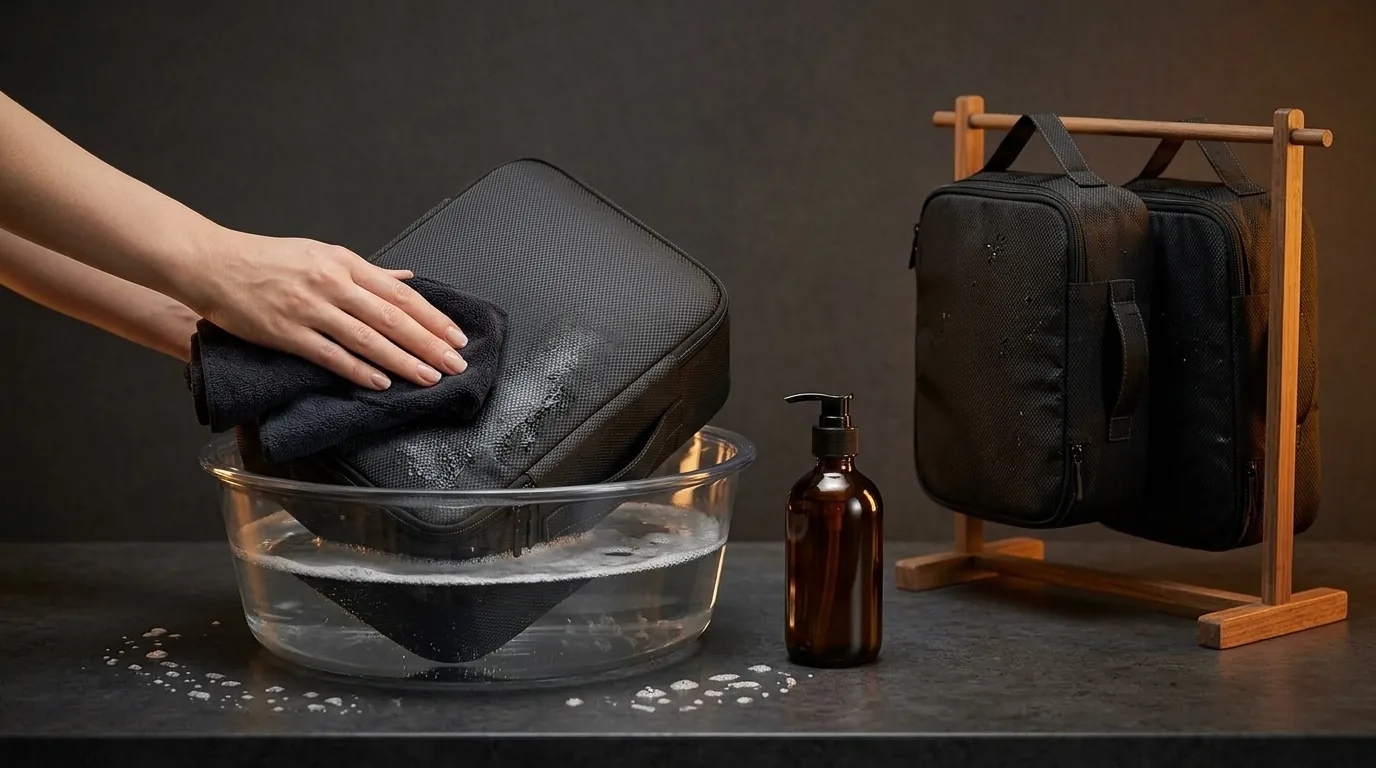
If you cannot find instructions, start conservatively: remove every item, shake out lint and grit, wipe small marks with a damp cloth, or hand-wash the cube in cool water with a small amount of mild detergent. Rinse out all soap, press out water without twisting, reshape the cube, and let it air-dry with every zipper and pocket open.
| Condition | Best first method | Avoid |
|---|---|---|
| Dust or lint | Shake out, vacuum gently, or wipe with a dry cloth | Unnecessary full washing |
| Small mark | Spot-clean with cool water and mild detergent | Hard scrubbing across mesh or coating |
| Odor or broad soil | Hand-wash unless the care label allows a machine | Bleach, hot water, or strong solvents |
| Machine-safe cube | Cold gentle cycle inside a mesh laundry bag | Heavy items, high spin, or tumble drying |
Read the care label before adding water
A packing cube can look like a simple fabric box while using several materials at once. The body may be nylon or polyester, the top may be open mesh, the zipper tape may use another fiber, and the inside may have a coating that helps resist moisture. A compression cube also has extra seams and a second zipper under load.
- Follow the strictest instruction. If one part says hand-wash or no heat, treat that as the limit for the whole cube.
- Check for rigid pieces. Removable boards, frames, hooks, or labels may need to come out before cleaning.
- Test color first. Dab an inside corner with a white damp cloth when the cube is dark, brightly dyed, or unfamiliar.
- Look at the coating. Peeling, tackiness, or flaking means the cube needs very gentle cleaning and no machine agitation.
Manufacturer advice can differ. Eagle Creek says its packing cubes can be machine-washed in cold water on a gentle cycle or hand-washed, but it also says to air-dry them rather than use a dryer. Other makers may specify hand-washing only. The label on the cube you own is more useful than a universal rule.
Start with the smallest cleanup that works
- Empty every pocket. Check corners, sleeves, and compression sections for coins, receipts, grit, and loose threads.
- Open the cube fully. Unzip the main opening and any secondary pockets so trapped dirt is visible.
- Shake it outdoors. Turn it upside down and gently flex the corners.
- Remove dry debris. Use a soft brush, lint roller, low-suction vacuum, or dry microfiber cloth.
- Spot-test. Apply cool water and diluted mild detergent to an inconspicuous area before treating a visible mark.
This light-cleaning route is often enough after a normal trip. It also puts less stress on zippers, mesh, seam tape, and water-resistant finishes. If the cube carried damp clothing, shoes, food, toiletries, or anything that leaked, move to a fuller wash.
How to hand-wash a packing cube
- Fill a clean basin with cool or lukewarm water. Avoid hot water unless the care label specifically allows it.
- Add a small amount of mild detergent. More soap creates more rinsing and can leave residue in mesh.
- Submerge and swish gently. Work water through the body, corners, and zipper tape without aggressive twisting.
- Use a soft cloth on stains. Blot or rub lightly from the outside of the stain toward the center.
- Rinse until the water is clear. Soap left behind can attract dirt and leave the fabric stiff.
- Press out water. Support the cube with both hands or roll it in a clean towel. Do not wring it.
REI’s general pack-care guidance makes the same important point: cleaning instructions vary by maker, so follow the manufacturer first. Its conservative approach uses mild soap, gentle tools, thorough rinsing, and air-drying—principles that also reduce risk for an unknown fabric travel organizer.
How to machine-wash a packing cube when allowed
Use a washing machine only when the care label or maker permits it. Empty the cube, follow any zipper instructions on the label, place it in a mesh laundry bag, and wash it with lightweight items. Choose cold water, mild detergent, and a delicate cycle.
- Keep the load light. Towels, jeans, shoes, and hard hardware can strike or stretch the cube.
- Skip bleach and fabric softener. Strong chemicals and residue can harm finishes or make mesh hold odor.
- Use the lowest practical spin. High-speed twisting is unnecessary for a light organizer.
- Inspect after washing. Check zipper movement, seams, mesh, and coatings before drying.
If the cube has a foam panel, coated divider, bonded seam, printed care graphic, or damaged mesh, hand-washing is the safer choice even when a similar-looking cube survived a machine.
Air-dry it completely
Reshape the empty cube and leave every compartment open. Hang it by a sturdy handle or lay it flat on a clean towel in a ventilated place. Turn it once so seams and corners do not stay damp. Avoid radiators, hair dryers, strong direct heat, and tumble dryers unless the label explicitly allows them.
A cube can feel dry on the outside while moisture remains under zipper tape, in a folded corner, or behind a divider. Store it only when those areas are completely dry. Trapped dampness can create odor and may damage coatings over time.
Handle odor, spills, and dirty laundry carefully
Odor without a visible stain
Air the cube open first. If the smell remains, hand-wash and rinse it thoroughly. Fragrance spray can hide odor without removing the moisture or residue causing it.
Toiletry spill
Blot excess liquid, check the product label for cleanup advice, and keep the spill from spreading through mesh. Wash the affected area separately before soaking the whole cube.
Dirty or damp clothing
Do not seal damp clothes inside a standard breathable cube for long periods. Use a separate laundry or water-resistant bag when isolation matters. Our guide to whether packing cubes are waterproof explains why ordinary mesh cubes organize wet gear but do not contain water like a dry bag.
Mud or grit
Let loose mud dry, then brush it away before adding water. Rubbing wet grit into mesh and zipper tracks can create more abrasion.
Use a simple after-trip care routine
- Unpack immediately. Remove clothing and check for dampness or leaks.
- Shake and inspect. Look at corners, seams, zipper tracks, and mesh.
- Spot-clean when enough. Save full washing for odor, spills, or broad soil.
- Dry open. Give even a lightly damp cube time to ventilate.
- Store loose. Avoid compressing a cube while it is damp or sharply creased.
Good care also starts with a sensible load. A cube forced beyond its zipper line is harder to clean and puts more strain on seams. Use the packing cube size guide to choose a better fit, and see regular versus compression cubes before using extra zipper pressure for every trip.
Frequently asked questions
Can packing cubes go in the washing machine?
Only if the sewn-in care label or maker says machine washing is allowed. Use cold water, a gentle cycle, mild detergent, and a mesh laundry bag. Hand-wash when the label is missing or the cube has coatings, rigid panels, or delicate mesh.
Can packing cubes go in the dryer?
Air-drying is the safer default. Dryer heat can affect coatings, elastic, mesh, and plastic hardware. Open every compartment and dry the cube completely before storing it.
How often should you wash packing cubes?
Wash them when they have visible dirt, odor, spills, or contact with damp or dirty clothing. For routine trips, emptying, shaking out debris, and spot-cleaning may be enough.
How do you remove odor from a packing cube?
Empty it, air it out, then hand-wash with cool water and a small amount of mild detergent if the care label allows. Rinse thoroughly and dry fully. Do not mask trapped moisture with fragrance.
Bottom line
Read the label, start gently, and keep heat out of the process unless the maker clearly allows it. Most packing-cube cleaning problems can be handled with dry debris removal, spot-cleaning, or a cool hand-wash. Machine-wash only when approved, then air-dry every seam and compartment completely.
Sources and further reading
- Eagle Creek: Packing Cube Questions — maker guidance on cold gentle washing, hand-washing, and air-drying.
- REI Co-op: How to Wash a Backpack — general fabric-gear guidance to follow maker instructions and use mild cleaning methods.
- Better Homes & Gardens: How to Clean Packing Cubes — step-by-step hand- and machine-washing precautions.