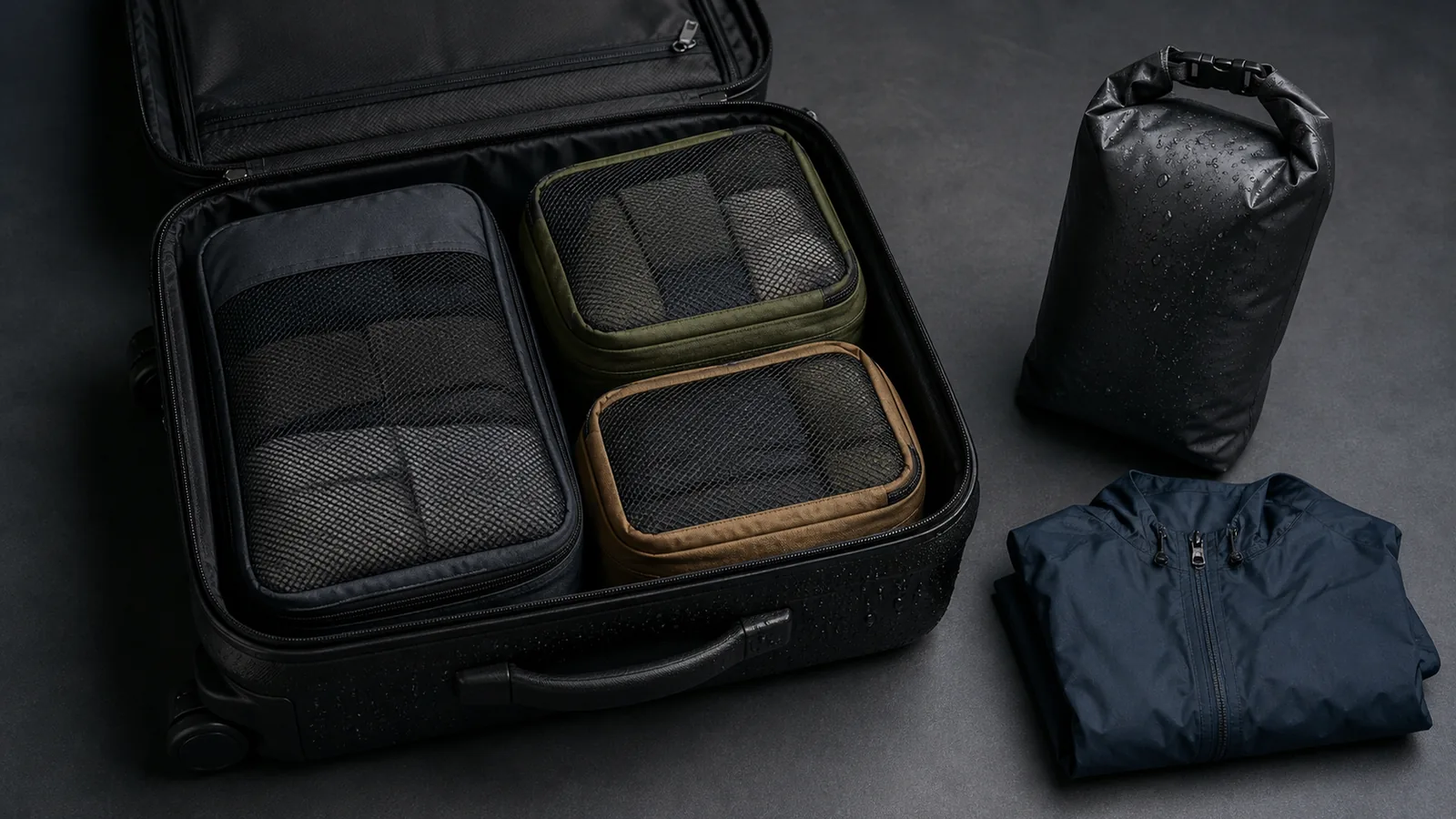
The short answer
Do not assume a packing cube is waterproof unless the maker clearly says it is and explains how the seams and closure are sealed. The most common travel cubes use fabric walls, mesh windows, and conventional coil zippers. Those features make the cube light, easy to see into, and simple to compress inside a suitcase, but they also give water several paths to the clothing inside.
A water-resistant fabric can slow a small splash without making the complete cube waterproof. The zipper, stitching holes, mesh, and seams still matter. Patagonia, for example, describes its Black Hole packing cube as weather-resistant, while Nite Ize describes its specialist RunOff cube as IP67 waterproof and identifies a waterproof zipper, TPU construction, and RF-welded seams. Those are different levels of protection, not interchangeable marketing words.
CobaltNook's eight-piece packing-cube set uses breathable mesh panels for quick visibility. That makes the set useful for normal suitcase organization, but it should not be treated as a waterproof container. If water protection matters, put the sensitive item in a suitable sealed bag first, then place that bag inside the cube if you still want the cube's organization.
Mesh, water-resistant, waterproof, and dry bags
| Container | What it does well | Water expectation | Best use |
|---|---|---|---|
| Breathable mesh packing cube | Visibility, clothing categories, easy unpacking | Not waterproof; mesh allows water and damp air through | Dry clothing inside luggage |
| Water-resistant packing cube | Organization with some splash protection | May resist light moisture; performance depends on fabric, seams, and zipper | Normal travel with occasional light exposure |
| Purpose-built waterproof cube | Organization plus a tested seal | Use only within the maker's stated rating and closing instructions | Wet environments when a cube format is useful |
| Roll-top dry bag | Dedicated water protection in a simple shape | Varies by model; check whether it is splashproof, waterproof, or submersible | Boating, heavy rain, wet gear, or sensitive contents |
| Clear zip-top bag | Small-item visibility and temporary leak isolation | Useful for small spills; not automatically durable or submersible | Toiletries, damp swimwear, or checkpoint liquids |
Eagle Creek's own packing-cube range separates mesh Reveal cubes, water-resistant Gear cubes, and waterproof Dry cubes with welded seams. That category split is a useful reminder: the word packing cube describes the organizer's shape and purpose, not one guaranteed level of water protection.
Why ordinary packing cubes leak
Mesh is meant to breathe
Mesh lets you identify shirts, socks, or underwear without opening every cube. It can also help a normal load avoid feeling sealed up. The tradeoff is direct: the openings that provide airflow also allow water through. A mesh window cannot be made waterproof by coating only the solid panels around it.
Standard zippers are not seals
An ordinary zipper brings two fabric edges together, but the teeth or coil do not form a watertight barrier. A flap may help shed a small splash, and a coated zipper can improve resistance, yet neither detail proves the whole cube can withstand sustained rain or immersion. Waterproof products normally specify a sealing system and tell users how to close and maintain it.
Stitched seams create entry points
Most travel cubes are sewn. Stitching is practical and durable for an organizer, but each needle hole can become a path for moisture. Products designed for stronger water protection may tape, seal, or weld seams instead. Nite Ize's waterproof cube specifically calls out RF-welded seams rather than relying on ordinary stitching alone.
Choose the container by the real risk
For clothing inside a hard-shell suitcase
Use regular packing cubes for organization. The suitcase is the first weather barrier, and the cubes keep the interior tidy. If a particular item cannot tolerate any moisture, add a sealed inner bag around that item. Our carry-on packing-cube setup shows how to assign cubes without filling every inch of the case.
For a soft backpack in light rain
A rain cover or waterproof pack liner protects the load more broadly than trying to make every small organizer handle the weather alone. Water-resistant cubes can add a second layer, but do not promise more than their maker's stated protection. If you use cubes in a backpack, keep electronics and documents in their own sealed protection.
For wet swimwear or a small toiletry leak
Keep wet or leak-prone items separate from dry clothes. A reusable wet bag, toiletry bag designed for spills, or sturdy zip-top bag is more suitable than a breathable clothing cube. Our packing cubes vs. zip-top bags guide explains why a hybrid system usually works better than asking one container to do every job.
For boating, paddling, or possible immersion
Choose equipment specifically rated for the water exposure you expect. A roll-top dry bag or tested waterproof cube is a different product from a standard travel organizer. REI groups purpose-built waterproof dry bags separately, and specialist products publish construction details or ratings. Follow the maker's closing instructions; even capable gear can fail when overfilled, damaged, or closed incorrectly.
How to check a waterproof claim before you trust it
- Look past the front fabric. A coated panel means little if the cube has a large mesh window.
- Check the seams. Search the product description for welded, taped, or sealed seams rather than assuming stitching is watertight.
- Check the closure. A waterproof zipper or tested roll-top closure is different from a standard zipper under a fabric flap.
- Read the rating or test language. “Water-resistant,” “waterproof,” and “submersible” describe different expectations. Use the exact limit the maker provides.
- Inspect wear before each wet trip. Abrasion, punctures, grit, and damaged closures can reduce protection.
- Test noncritical gear first. If the maker permits it, perform a controlled test with paper inside before trusting the container with electronics or documents.
A practical wet-weather packing system
You do not need to replace every normal cube with a heavy waterproof model. Build layers around the items that actually need protection:
- Pack ordinary dry clothes in regular cubes by category.
- Put liquids in the required or appropriate clear bag; a packing cube does not replace checkpoint rules. See our guide to packing cubes at TSA for the airport setup.
- Place wet swimwear, muddy items, or leak-prone toiletries in a separate sealed wet bag.
- Use dedicated waterproof protection for a passport, electronics, medication, or other moisture-sensitive essentials.
- Keep one small dry cube available for the first change of clothes if the rest of the bag may be exposed.
This layered approach preserves the best part of packing cubes—the ability to find and move a category quickly—without pretending that every fabric organizer can do the job of a dry bag.
Where CobaltNook packing cubes fit
CobaltNook's eight-piece set is built for practical travel organization. The breathable mesh panels help you see what is inside, while the set gives shirts, socks, toiletries, and laundry their own places in a carry-on, checked bag, weekend duffel, or family suitcase.
Use those cubes for dry travel categories and easy unpacking. Choose sizes based on the bag and clothing load rather than using every cube automatically; our packing-cube size guide and carry-on cube-count guide can help. If minimizing clothing volume is the priority, compare regular and compression cubes. None of those organization choices replaces proper water protection for wet or sensitive items.
Frequently asked questions
Are mesh packing cubes waterproof?
No. Mesh contains open spaces for visibility and airflow, so water can pass through. Use mesh cubes for dry clothing organization, not for protecting electronics, documents, or clothing from rain.
Does water-resistant mean a packing cube can be submerged?
No. Water-resistant usually means the product can slow limited moisture under the maker's stated conditions. It does not automatically mean the zipper, seams, or whole cube can handle immersion. Look for a specific waterproof or submersion rating.
Can I put wet clothes in a packing cube?
Use a separate wet bag or another suitable sealed container. A breathable cube can let moisture reach nearby clothes, while a standard fabric cube may absorb dampness. Unpack and dry wet items as soon as practical.
Are waterproof packing cubes the same as dry bags?
Not always. Some waterproof cubes use dry-bag-style materials and sealed construction, but shape alone does not guarantee the same performance. Compare the closure, seams, published rating, capacity, and intended use.
Bottom line
Most packing cubes organize; they do not waterproof. Mesh cubes are excellent for visibility and easy unpacking. Water-resistant cubes may add modest splash protection. Purpose-built waterproof cubes and dry bags are the tools to consider when water exposure is a real risk. Match the container to the job, verify the maker's exact claim, and give sensitive items their own sealed layer.