The short answer
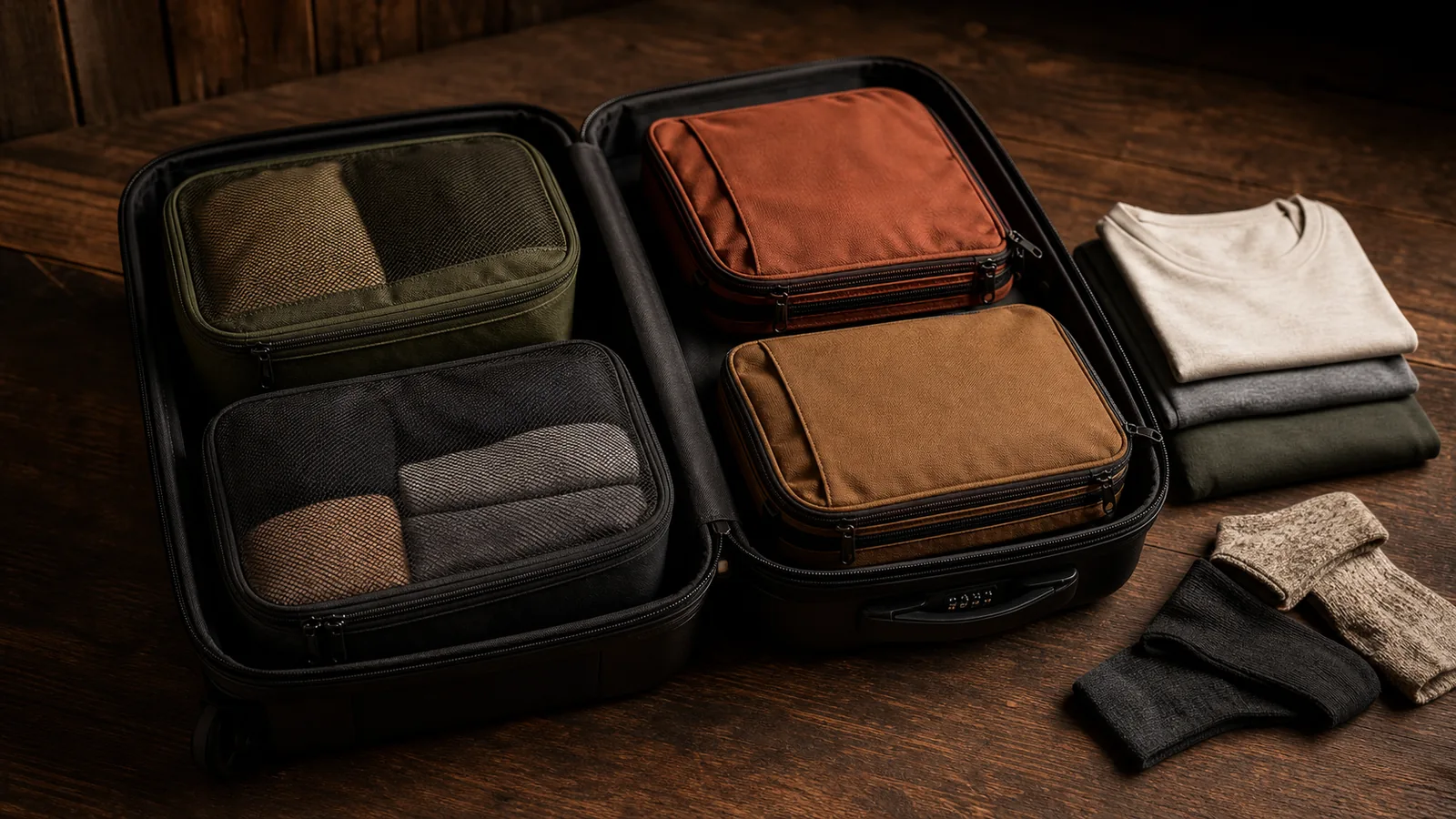
Regular packing cubes are the better default for most travelers. They divide a suitcase into useful zones, let you see or identify what is inside, and are easy to open during a trip. Compression cubes add a second zipper, strap, or similar mechanism that pulls the packed walls closer together. That can reduce the volume of sweaters, fleece, T-shirts, underwear, and other soft items that trap air.
The tradeoff is straightforward: compression takes extra effort, can make a cube lumpy when the load is uneven, and may put more strain on zippers, seams, and wrinkle-prone clothing. Regular cubes leave more air in the load, but their simpler shape is often easier to pack, access, and repack.
Independent testing supports treating these as different tools rather than declaring one universal winner. Wirecutter’s 2026 packing-cube guide separates its recommendations into regular cubes for most travelers and compression cubes for heavier packers after years of testing. Pack Hacker’s compression-cube guide defines compression models by the extra mechanism that cinches clothing down and notes that regular cubes remain more widely available.
Regular vs. compression packing cubes at a glance
| Decision point | Regular packing cubes | Compression packing cubes |
|---|---|---|
| Main job | Sort clothing and keep categories easy to access. | Organize clothing while reducing the volume of soft items. |
| How they close | Usually one main zipper around a fabric or mesh body. | A main opening plus a second zipper, strap, or cinching system. |
| Access during the trip | Quick; open the main zipper and remove what you need. | Slower if the compression stage must be reopened and reset. |
| Best items | Shirts, underwear, socks, sleepwear, and mixed clothing categories. | Fleece, sweaters, soft jackets, gym gear, and other compressible layers. |
| Wrinkle risk | Usually lower when items are folded or rolled neatly. | Can be higher when the cube is overfilled or compressed unevenly. |
| Bag weight | Adds the cube’s own small weight. | Still adds weight and may tempt you to pack more into freed space. |
| Best fit | Travelers who value order, visibility, and repeated access. | Travelers with a tight bag and a meaningful amount of soft clothing. |
What is the actual difference?
Regular cubes shape and separate
A regular packing cube is a zippered container that keeps a group of items together. Its value comes from structure: tops stay apart from bottoms, clean items stay apart from worn items, or one traveler’s clothing stays apart from another’s. The cube may help clothing settle into a neat rectangle, but it does not deliberately squeeze the walls inward.
This makes regular cubes forgiving. You can leave a little unused space, open them repeatedly, or move them between a suitcase and hotel drawer without resetting a compression system. If your main frustration is a messy bag rather than a lack of room, this is usually the right tool.
Compression cubes reduce the depth of soft loads
Most compression cubes start like regular cubes: fill the main compartment and close it. A second perimeter zipper or another tightening system then pulls the top and bottom closer together. The mechanism does not remove weight and is not the same as a vacuum seal. It simply squeezes some air and loft from soft clothing.
Peak Design’s current packing-cube product page is a useful product-specific example: its expansion/compression zipper lets the packed cube expand or contract. That describes one design, not every compression cube. Other models may use different zipper paths, straps, or buckles, so shoppers should inspect the actual mechanism rather than relying on the word “compression.”
When regular packing cubes are better
You open the bag throughout the trip
Regular cubes work well for multi-stop travel, family trips, and any itinerary where you repeatedly open and close the bag. A cube can move to a shelf or drawer, return to the suitcase, and remain easy to access. There is no need to recompress it each time a shirt or pair of socks comes out.
You care more about categories than maximum volume
If the suitcase already closes comfortably, extra compression solves a problem you do not have. A few clear categories may produce a smoother trip than a tightly packed block. Our guide to how many packing cubes to use in a carry-on explains why two to four well-chosen cubes are often more useful than filling every piece in a set.
You pack structured or wrinkle-prone clothing
Button-down shirts, dresses, and trousers can pick up creases when pressure is uneven. A regular cube does not guarantee wrinkle-free clothing, but it lets you place garments in smooth layers without pulling the cube’s faces hard against them. Travelers carrying business clothing may also want to compare a packing cube with a garment folder, which is designed around flatter folds.
You want quick visual checks
Mesh-front regular cubes make it easy to identify categories without opening every container. That visibility matters when several similar cubes share one suitcase or when a traveler is moving quickly. It also makes underfilling harmless: the cube can still organize a partial load without requiring a tight final shape.
When compression cubes are better
Your clothing is soft and bulky
Compression is most useful when the load contains fabric that traps air: fleece, knitwear, soft workout clothing, puffer layers, and similar items. A compression cube can make these pieces shallower and easier to stack in a tight backpack or carry-on. Thin, dense garments have less air to remove, so the difference may be modest.
The bag is close to full but not overweight
A smaller clothing bundle helps only when volume is the constraint. If the bag is already near an airline weight limit, compression may hide the visual warning that you have packed too much. The reliable way to make luggage lighter is still to remove items. Rick Steves’ long-running packing-light guidance puts that principle plainly: bring very little, then use cubes or compression tools to keep the remaining load organized.
You are building a one-bag setup
A one-bag traveler may accept slower access in exchange for a smaller bundle that fits beside electronics, toiletries, or shoes. Compression is particularly useful when a single bulky layer prevents the bag from closing. It is less useful when the load already fits and the traveler will open the cube several times a day.
You can load the cube evenly
Compression zippers work best when clothing is spread across the full footprint. A mound in the center can create a rounded shape that wastes corner space and makes the zipper harder to close. Pack the cube, press the contents flat with an open hand, start the compression zipper at one corner, and work around the perimeter without forcing it.
The downsides of compression people miss
Compression does not reduce weight
A sweater weighs the same before and after it is squeezed. The cube itself also adds fabric, hardware, and another zipper or tightening system. Freed space can be useful, but it can also invite one more shirt, another pair of pants, and a heavier final bag.
More hardware means more points of strain
The second zipper must pull against the packed load. Overfilling increases stress on zipper teeth, sliders, seams, and the fabric caught near the track. This does not mean compression cubes are fragile; it means their mechanism deserves more care. If the zipper needs body weight or force, remove an item and try again.
Access can become slower
Opening a compressed cube may release its slimmer shape. After removing one item, you may need to smooth the load and close the compression zipper again. That is reasonable for a cube opened once at the destination, but annoying for clothing or layers needed in transit.
Compression can create the wrong shape
A cube that becomes very dense and rounded may be harder to fit around suitcase wheels, shoes, and rigid toiletry bags. Space saved inside the cube is not automatically space used well inside the luggage. Test the final shape in the actual bag rather than judging the cube on a table.
Do compression cubes wrinkle clothes?
They can, but compression is not the only cause. Wrinkles come from fabric type, folding method, pressure, moisture, and how long the garment stays packed. A smooth, evenly loaded compression cube may hold clothing in place. An overstuffed cube with hard folds and a bulging center can press sharper creases into the load.
For wrinkle-prone garments, fold along natural seams, keep the surface smooth, and use only moderate compression. Place structured shirts in a regular cube or garment folder. For casual T-shirts and base layers, rolling can improve visibility, but it is not a guaranteed space-saving trick; our packing cubes vs. rolling clothes comparison explains the tradeoffs.
Which type should you use for your trip?
Weekend trip or simple carry-on
Use one or two regular cubes. The load is usually small enough that visibility and easy access matter more than aggressive volume reduction. Leave breathing room for the return trip rather than compressing the suitcase to its limit.
Cold-weather carry-on
Use one compression cube for bulky soft layers and regular cubes for the rest. This mixed setup prevents a fleece or sweater from dominating the bag while keeping underwear, sleepwear, and shirts easy to reach.
Business travel
Use regular cubes for base layers and casual clothing, then a garment folder or careful flat fold for shirts and trousers. Compression is better reserved for soft off-duty layers that can tolerate pressure.
Family or shared luggage
Regular mesh cubes usually win because each person or category stays visible. If winter clothing creates a genuine space problem, add one compression cube for the bulkiest shared items instead of compressing every category.
Backpack or one-bag travel
Compression can help when the backpack has a firm volume limit, but shape matters. One evenly loaded compression cube may fit better than several dense blocks. Keep a small regular cube or pouch for items you need before reaching the destination.
A five-minute test before you decide
- Pack the real list. Use the clothing planned for the trip, not a best-case sample.
- Weigh the bag first. If weight is already the problem, compression is not the solution.
- Identify the bulky soft items. If there are none, regular cubes probably provide enough value.
- Build two layouts. Try an organization-first layout, then compress only the bulkiest category.
- Test access. Remove the item you are most likely to need in transit and see which layout creates less disruption.
- Leave return-trip room. Clothing is rarely folded as perfectly on the last morning as it was at home.
If you are still deciding whether cubes add enough value at all, start with our broader guide: Are packing cubes worth it? If the real choice is between reusable cubes and a stronger air-removal system, read our packing cubes vs. compression bags comparison.
Where the CobaltNook set fits
The current CobaltNook 8-set packing cube system is built around trip organization rather than a secondary compression mechanism. The live product page lists breathable mesh panels for visibility, double-way zippers, reinforced handles, and eight pieces for carry-ons, checked bags, weekend duffels, or family travel.
That makes it a regular-cube choice for travelers who want flexible categories and quick access. You do not need to use every piece on every trip. Choose the sizes that fit the actual bag and leave the rest for another traveler, a different suitcase, clean-versus-worn separation, or a future trip.
Frequently asked questions
Do compression packing cubes save more space than regular cubes?
Compression cubes can reduce the volume of soft clothing by squeezing out some trapped air. Regular cubes mainly organize and shape clothing. Neither type changes the weight of what you pack, and the real space difference depends on the cube, fabric, and load.
Do compression cubes wrinkle clothes more?
They can create sharper creases when clothing is folded poorly, packed unevenly, or compressed too aggressively. Smooth folds, even layers, and moderate compression are safer for wrinkle-prone garments.
Are regular or compression cubes better for a carry-on?
Regular cubes are the simpler choice when organization and easy access matter most. Compression cubes are more useful when soft, bulky clothing must fit into a tight carry-on, but travelers still need to watch the bag’s weight.
Can regular and compression packing cubes be used together?
Yes. A practical mixed setup uses regular cubes for shirts, underwear, or items needed often and one compression cube for bulky soft layers. Mixing types can preserve access without giving up all volume reduction.
Bottom line
Regular packing cubes are the better all-purpose choice; compression cubes are the specialist choice for soft, bulky clothing in a volume-limited bag. Start with organization. Add compression only where it solves a visible space problem.
The best setup may use both: regular cubes for items you need often and one compression cube for the bulkiest layer. Whatever you choose, weigh the finished bag, protect the zipper from force, and leave enough room to repack without a wrestling match.
Sources and further reading
- Wirecutter: The Best Packing Cubes — independent testing and separate recommendations for most travelers, light packers, and heavier packers using compression cubes.
- Pack Hacker: Best Packing Cubes — specialist guidance on regular, compression, ultralight, and other packing-cube formats.
- Pack Hacker: Best Compression Packing Cubes — current explanation of compression mechanisms and tested examples.
- Peak Design: Packing Cube — first-party example of a cube using a separate expansion/compression zipper.
- Rick Steves: Packing Smart and Traveling Light — practical guidance on packing less before using cubes or compression tools.
- CobaltNook gear lineup — current product details for the eight-piece regular packing-cube set referenced above.