The short answer
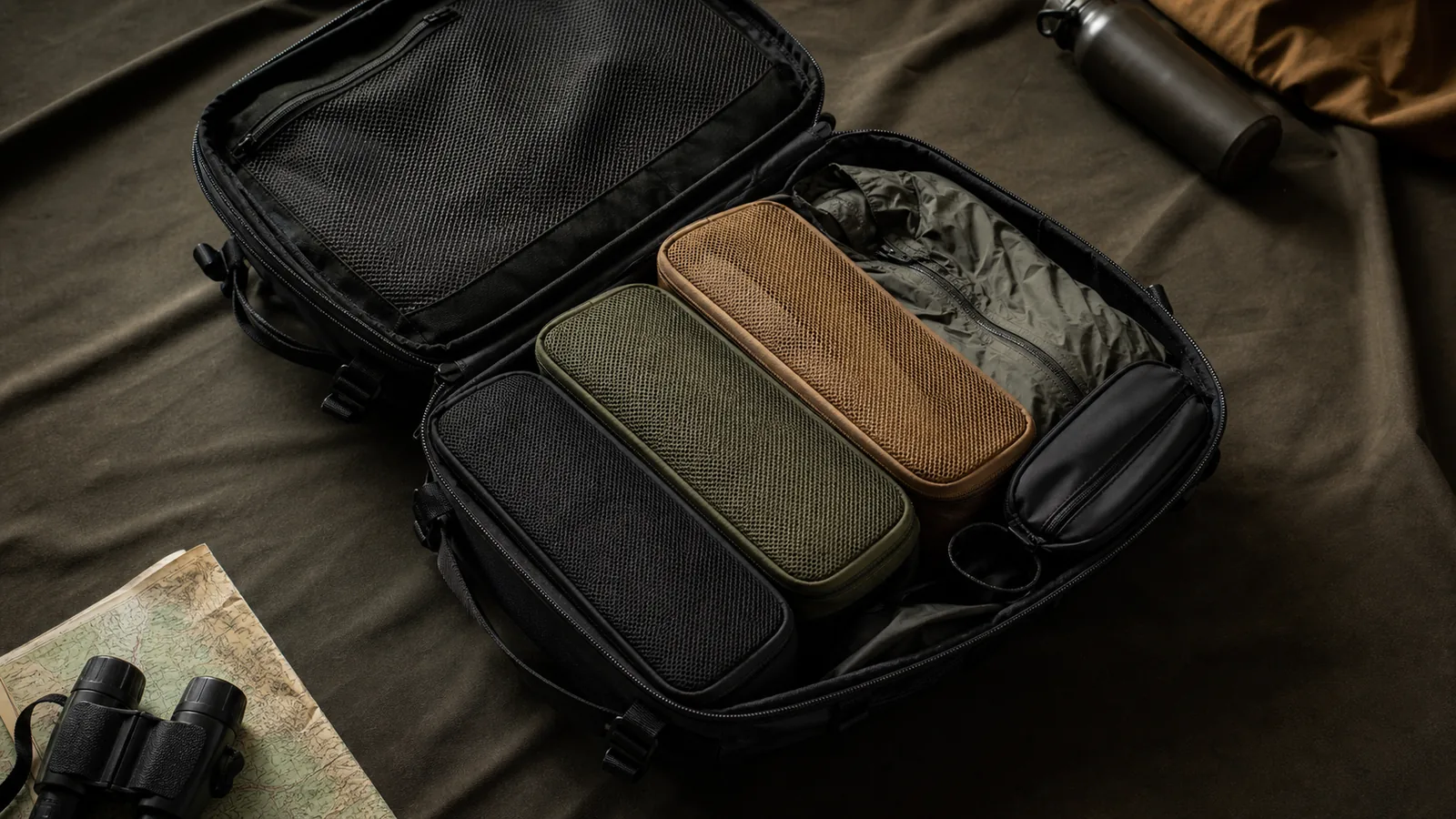
Packing cubes are most useful in a backpack when the bag opens wide, the cubes fit its interior footprint, and each cube has one clear job. They keep clothing from sliding into one pile, make it easier to remove one category without unpacking the whole bag, and turn repacking into a few simple zip-and-place steps.
The fit matters more than the number of cubes. A rectangular clamshell travel backpack accepts square or rectangular cubes easily. A tall top-loader, curved daypack, or narrow hiking pack may waste space around rigid cube corners. In those bags, one or two soft cubes can organize clothing while leaving odd-shaped gaps for a jacket, sandals, or toiletry pouch.
Independent testing supports using cubes across more than suitcases. Wirecutter’s 2026 packing-cube guide says its latest testing included clothing packed into carry-on suitcases, backpacks, and duffle bags. Pack Hacker’s updated guide treats compartmentalization, opening style, material, handles, and fit within the packing system as the main decision points—not merely how many cubes come in a set.
Clamshell vs. top-loading backpacks
| Decision point | Clamshell travel backpack | Top-loading or narrow backpack |
|---|---|---|
| Best cube approach | Two to four rectangular cubes arranged across the open panel. | One to three smaller or flexible cubes stacked by access priority. |
| Access | Easy to see and remove any cube when the full bag opens. | Lower cubes may be buried, so frequently used items should stay near the opening. |
| Shape | Regular cubes often match the flat, boxy interior. | Soft-sided cubes or stuff sacks may use curved space better. |
| Compression | Useful only when soft clothing volume is the real limit. | Can create a dense block that is awkward to slide past the opening. |
| Best use | Carry-on travel, city trips, work trips, and multi-stop travel. | Minimal travel loads, daypacks, and bags with a single deep compartment. |
What packing cubes do well in a backpack
They stop clothing from collapsing into the bottom
Loose shirts, underwear, and sleepwear tend to settle as a backpack is carried upright. Cubes hold those categories in a repeatable shape. When the bag opens, the clothing is still grouped rather than mixed with cables, toiletries, and the layer worn on the plane.
They make bag changes easier
A packed cube can move from a large travel backpack to a smaller hotel drawer, rental-car bag, or overnight bag without rebuilding the clothing stack. Pack Hacker notes that swapping a few organized bags in and out of a pack can make packing and unpacking easier. That benefit is especially useful on a multi-stop trip.
They reveal what you packed
Mesh panels and simple categories make it easier to see duplicate shirts or an overfilled “just in case” section. The cube should act as a limit, not a challenge. If the zipper requires force, remove something instead of turning an organization tool into a dense brick.
If you are still deciding whether the category earns space at all, our broader guide explains when packing cubes are worth it and when a bag’s built-in compartments already solve the problem.
How to choose cube sizes for a backpack
Measure the bag’s usable interior, not its advertised capacity
Backpack liters do not describe the exact floor shape. Laptop sleeves, curved corners, wheel housings on hybrid bags, internal frames, and front pockets can all reduce or reshape the main compartment. Open the empty backpack, measure the flat usable width and height, then compare those dimensions with the actual cubes you plan to use.
Start with one medium cube
A medium cube is a useful first test because it can hold several tops or a compact set of bottoms without taking over the bag. Place it inside the empty pack. Check whether it lies flat, whether the main zipper closes without pressure, and whether a hand can still reach the backpack’s remaining space.
Add small cubes around the real gaps
Use a smaller cube for underwear and socks, then decide whether a second medium or small cube improves the layout. Do not begin with a target number and force every piece into the bag. Our guide to how many packing cubes to use in a carry-on explains why two to four useful zones usually beat using an entire set.
Condé Nast Traveler’s 2026 organizer guide recommends categorizing first, experimenting with sizes and shapes, and not forcing every item into a cube. It also notes that some cubes can sit on their sides. That advice matters in backpacks, where a vertical cube can sometimes fit a narrow compartment better than a flat one.
A simple three-cube backpack setup
- Cube one: tops. Fold or roll T-shirts, base layers, and casual shirts into one medium cube. Keep the surface even rather than building a mound in the center.
- Cube two: bottoms. Use a second medium or small cube for shorts, lightweight pants, or workout clothes. If the trip is short, combine tops and bottoms instead of carrying a half-empty cube.
- Cube three: small clothing. Use a small cube for underwear, socks, and sleepwear. This is usually the category that benefits most from being easy to remove as one unit.
- Keep transit items outside. Place travel documents, medicine, chargers needed en route, liquids for screening, and a weather layer in accessible pockets or at the top of the bag.
- Fit rigid items last. Let shoes, toiletries, electronics, and other awkward shapes occupy the natural gaps around the soft cubes.
For clothing itself, cubes and rolling are not competing systems: you can roll casual garments inside a cube or fold them in smooth layers. Our packing cubes vs. rolling clothes guide compares visibility, wrinkles, and space without treating either method as a universal winner.
Pack for access, not for a perfect photo
Build the layout around the first thing you will need
If a sweater, sleepwear set, or change of clothes will be needed before the final destination, place that cube near the opening. A top-loading bag with the “best-looking” cube at the bottom can require a full unpack in an airport or train station.
Protect the backpack’s useful pockets
Do not let a large cube bow into the laptop sleeve, crush a front organizer, or block a zipper track. Close the backpack slowly after the first layout. If the shell distorts or a zipper is under tension, use a smaller cube or remove clothing.
Leave room for the return trip
Clothing is rarely folded as precisely on departure morning. Leave a little unused space so the cubes can close without force after laundry, souvenirs, or a rushed repack. Organization that works only in a perfect home setup will not survive real travel.
Should you use compression cubes in a backpack?
Use compression cubes only when bulky, soft clothing is the volume problem. They can reduce the depth of fleece, sweaters, or soft jackets, but they do not reduce weight. The extra zipper or tightening system can also turn an uneven load into a rounded or rigid block.
A backpack may benefit from one compressed clothing cube, especially in a rectangular clamshell design. Compressing every category can make access slower and hide overpacking. Our regular vs. compression cube comparison explains when organization should remain the priority and when volume reduction earns the extra effort.
Tortuga’s current packing-cube collection is a useful manufacturer example: it separates regular modular cubes for organization from compression cubes intended to maximize packing space. That is product-specific positioning, not proof that compression is best for every backpack.
When packing cubes are the wrong fit
- The backpack is narrow or strongly curved. A flexible stuff sack may use the available shape better than a rectangular cube.
- The load is mostly rigid gear. Cameras, hard cases, tools, and bulky shoes do not gain much from a clothing cube.
- You need frequent access to every layer. Several stacked cubes in a top-loader can create more unpacking, not less.
- Weight is already the limit. Cubes add fabric and zippers, and better organization can tempt you to pack more.
- The backpack already has strong dividers. Adding containers inside every compartment may duplicate a system that already works.
For hiking, camping, or irregular outdoor loads, compare the shape and access tradeoffs in our packing cubes vs. stuff sacks guide. The better choice depends on whether you need suitcase-like categories or a soft container that conforms to the pack.
The five-minute fit test
- Load the real clothing list. Do not test with an idealized half load.
- Place the largest useful cube first. Check the flat footprint and zipper clearance.
- Add one small cube at a time. Stop when the next cube creates a worse shape or blocks access.
- Retrieve a transit item. Time how much of the bag must move to reach it.
- Wear the backpack. Confirm the load does not bulge awkwardly against the back panel or pull the zipper seams.
- Weigh the finished bag. Better organization is not permission to ignore airline or comfort limits.
Where the CobaltNook set fits
The current CobaltNook gear page describes its eight-piece packing cube set as a regular travel-organization system with breathable mesh panels, double-way zippers, and reinforced handles. It is presented for carry-ons, checked bags, weekend duffels, and family travel.
For a backpack, treat eight pieces as a pool of options rather than a requirement to use the whole set. Start with the pieces that create two or three useful clothing zones in the actual pack. Leave any cube at home if it blocks access, distorts the bag, or duplicates a built-in compartment.
Frequently asked questions
Do packing cubes work well in a backpack?
Yes. They work especially well in clamshell travel backpacks because the full packing area opens like a suitcase. In top-loading backpacks, use fewer or smaller cubes so one large container does not block everything underneath it.
Do packing cubes save space in a backpack?
Regular packing cubes mainly organize and shape clothing; they do not automatically shrink it. Compression cubes can reduce the volume of soft clothing, but they do not reduce weight and may create a dense shape that fits the backpack poorly.
How many packing cubes should you use in a backpack?
Two to four cubes are enough for many travel backpacks: one for tops, one for bottoms, and one smaller cube for underwear and socks, with an optional fourth cube for sleepwear or activity clothing. Use fewer when the pack is small or top-loading.
Are packing cubes useful in a hiking backpack?
They can keep clothing categories together, but a narrow or curved hiking pack may fit flexible pouches or stuff sacks more efficiently. Keep rain gear, water, food, navigation, and safety items accessible according to the trip rather than burying them for a tidy layout.
Bottom line
Packing cubes work in a backpack when they improve access and category control without fighting the bag’s shape. Clamshell travel backpacks usually handle two to four rectangular cubes well. Top-loading and curved backpacks need fewer, smaller, or softer containers.
Start with one medium cube, add only the zones that make the real trip easier, and keep transit essentials outside the clothing system. The best backpack layout is not the one with the most cubes—it is the one you can open, understand, and repack without emptying the whole bag.
Sources and further reading
- Wirecutter: The Best Packing Cubes — independent testing of packing cubes in carry-on suitcases, backpacks, and duffle bags, including regular, lightweight, and compression options.
- Pack Hacker: Best Packing Cubes — specialist testing and guidance on materials, openings, handles, size, compression, and fit within a travel pack.
- Condé Nast Traveler: How to Use Packing Cubes More Effectively — 2026 advice from experienced travelers and organizers on categories, size experiments, strategic stacking, and avoiding forced fits.
- Tortuga: Packing Cubes — current manufacturer example of modular regular and compression cubes designed around travel backpacks.
- CobaltNook gear lineup — current product details for the eight-piece regular packing-cube set referenced above.