The short answer
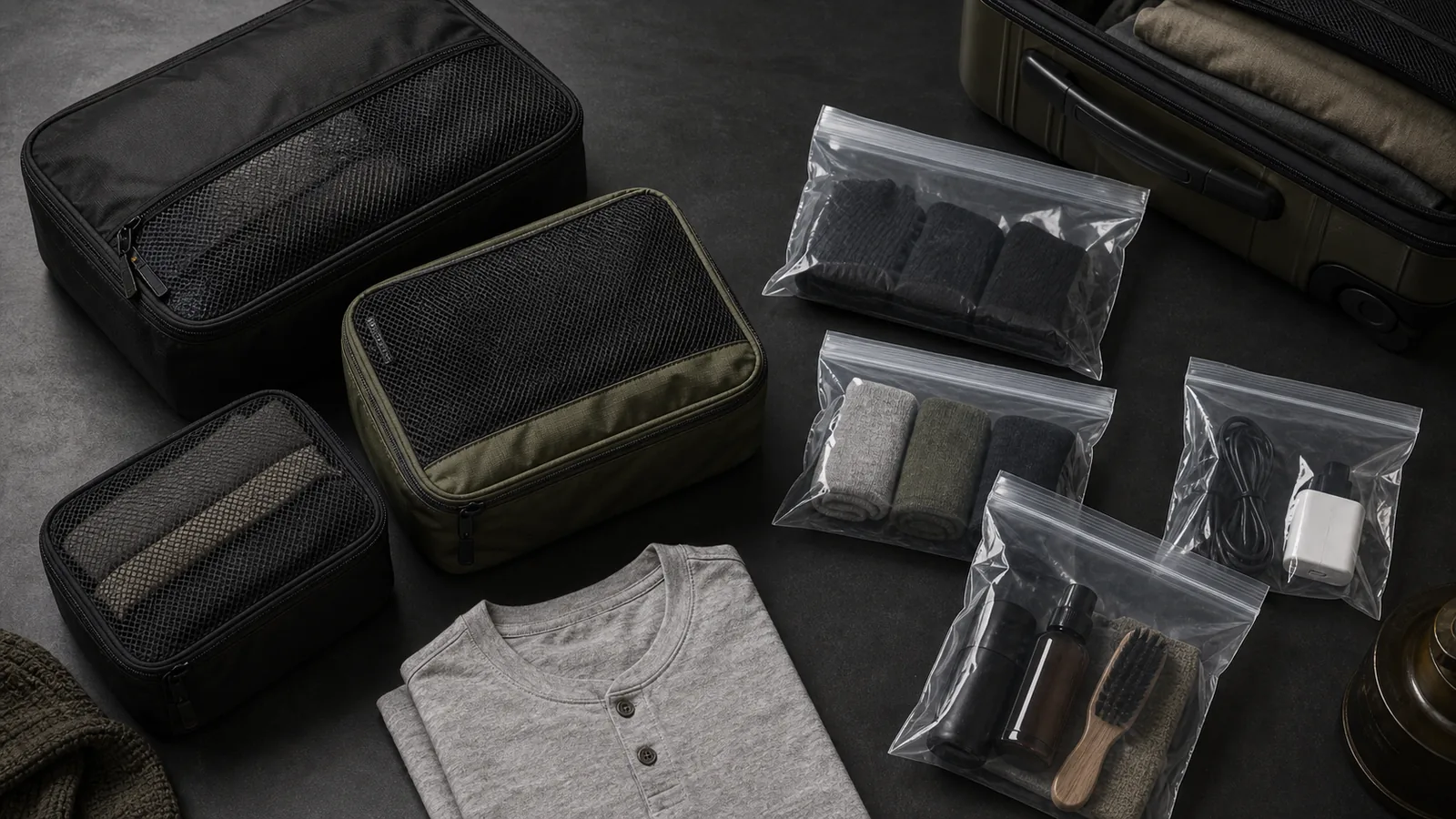
Packing cubes are the better main system for clothing. Zip-top bags are the better specialist container for small, wet, messy, or inspection-ready items. Fabric cubes stay rectangular, open wide, and tolerate repeated packing. Clear plastic bags are inexpensive, let you see every item, and can squeeze into narrow gaps, but thin bags lose their shape and are easier to puncture or overload.
If you are deciding whether to buy cubes or use bags already in your kitchen, start with the trip. A weekend flight with folded clothing favors two or three cubes. A beach day, road-trip snack kit, or toiletries pouch may justify several zip-top bags. You do not need to force one format to organize every category.
Packing cubes vs. Ziploc bags at a glance
| Question | Packing cubes | Zip-top bags |
|---|---|---|
| Best use | Shirts, pants, underwear, sleepwear, and clothing categories opened repeatedly. | Toiletries, damp swimwear, snacks, cords, documents, and small loose pieces. |
| Access | Wide zipper opening shows a whole clothing category at once. | Clear material makes contents visible, but narrow openings can be awkward for folded clothes. |
| Shape | Structured rectangle stacks cleanly in suitcases and duffels. | Flexible bag molds around contents and leftover gaps. |
| Durability | Designed for repeated packing when used within its stated load and care limits. | Varies by product; ordinary storage bags are easier to crease, puncture, or strain at the seal. |
| Compression | Only a cube with a separate compression feature reduces volume by design. | Pressing out air may flatten a soft load, but an ordinary zip-top bag is not a vacuum compression bag. |
| Moisture control | Depends on material, seams, and zipper; mesh cubes are not waterproof. | A closed bag can contain damp or spill-prone items, but product construction and condition still matter. |
| Main weakness | An overfilled cube becomes a rigid block that may waste space. | A large bag of mixed clothing turns into a slippery stack that must be rebuilt after opening. |
What is the real difference?
A packing cube is a reusable luggage drawer
A packing cube divides a suitcase, duffel, or travel backpack into stable sections. You can lift out the shirts cube, use it without disturbing underwear or sleepwear, then zip it closed and put it back. That repeatable shape is the main advantage: it makes packing and unpacking predictable rather than simply wrapping clothes in another layer.
Eagle Creek’s current Pack-It Reveal cube is one product-specific example. The manufacturer describes a mesh visibility panel, structured design, angled opening, and easy-grab zippers. Those details are not universal to every cube, but they show why the category is built around repeated access and organization rather than a disposable seal.
A zip-top bag is flexible transparent containment
A zip-top storage bag gives you a sealable clear pocket without a rigid footprint. It works well when seeing the contents matters or when the load is small enough that you do not need a wide panel opening. Cables, spare batteries, snacks, travel documents, first-use toiletries, and damp swimwear are all easier to identify when they are visible.
The official Ziploc storage-bag range also shows why product type matters. Standard storage bags are marketed primarily for food storage, while the brand’s heavy-duty line is described for tougher uses such as tools and travel toiletries. Do not assume every thin sandwich or storage bag has the same strength, seal, reuse guidance, or intended use.
When packing cubes are the better choice
Use packing cubes when you expect to open the same clothing category several times. A five-night trip may involve repeated searches for socks, base layers, or one clean shirt. A cube lets you open that category without spreading every item across a hotel bed or the bottom of a suitcase.
Cubes also make packing rules easier to repeat. One cube can hold tops, another underwear and socks, and a third sleepwear or activewear. On a family trip, each traveler can have a dedicated cube or color. Our family packing cube guide shows how that separation reduces mix-ups, while the weekend-bag setup applies the same idea to a shorter trip.
Choose cubes over loose zip-top bags when appearance and reset speed matter. A stack of transparent bags may look organized at departure, but removing one shirt can disturb everything above and below it. A cube keeps the category together even after you have worn half its contents.
When zip-top bags are the better choice
Use zip-top bags when the category is small, irregular, or likely to leak. A clear bag makes chargers, medicines, printed reservations, small toys, and snack portions visible. A separate bag can also isolate damp swimwear or a toiletry bottle from clean clothing until you can unpack properly.
They are also useful as a low-cost packing test. If you are unsure which categories deserve dedicated organizers, pack one trip with labeled clear bags. Notice which bags you open repeatedly, which ones tear or become awkward, and which jobs actually benefit from visibility. Upgrade the repeat-use clothing categories to cubes, then keep a few bags for specialist tasks.
Do not treat a closed plastic bag as guaranteed protection for electronics or important papers. Seals can be incomplete, corners can puncture, and moisture can be trapped inside. For high-value or moisture-sensitive gear, use a product specifically designed and rated for the required protection.
Which one saves more suitcase space?
Neither format automatically creates more space. A normal packing cube organizes; a compression cube adds a secondary zipper or another designed reduction method. A normal zip-top bag contains; pressing out some air may flatten socks or a shirt, but it does not turn the bag into a rated vacuum system.
Fit matters more than the empty organizer’s thickness. Rectangular luggage usually accepts cubes efficiently because the shapes align. Small zip-top bags can use narrow gaps around shoes or a toiletry case. Problems start when travelers fill every cube until it is rigid or create many slippery plastic packets that shift when the suitcase stands upright.
Run a practical test: pack the real contents, close each organizer without force, place everything into the real bag, and remove one item you expect to need. The system that closes easily and resets quickly is more useful than the one that appears smallest in a staged photo. If reducing bulky clothing is your main goal, read our packing cubes vs. compression bags comparison.
Which is better for a carry-on?
For the main clothing load, packing cubes usually work better. Carry-ons are rectangular, frequently opened, and packed with categories that need to survive several hotel changes. Cubes help clothing remain grouped even when airport security, an overnight stop, or a tight connection forces you to open the bag.
Zip-top bags still have two important carry-on roles. First, they keep small items visible inside a personal item. Second, a clear quart-size bag is part of the US liquids-screening process. The Transportation Security Administration’s liquids rule says passengers may bring one quart-size bag of qualifying liquids, aerosols, gels, creams, and pastes through the checkpoint, with containers limited to 3.4 ounces or 100 milliliters unless an exception applies. A fabric packing cube does not replace that bag.
Use a cube for clothing, the required clear bag for checkpoint liquids, and a small pouch or bag for cables and hard accessories. Our packing cubes vs. EDC pouch guide explains why clothes and small hard goods are easier to manage in separate containers.
What about wet clothes, laundry, and shoes?
A zip-top bag is useful for a damp swimsuit or a small spill-prone category during transit. Remove damp contents and dry both the item and bag as soon as practical; sealing wet fabric for a long period can trap moisture and odor. For a full load of worn clothing, a larger laundry bag or dedicated cube may be easier to handle than several small plastic bags.
Shoes deserve their own barrier if the soles are dirty. A large zip-top or purpose-built shoe bag can work, but check the size before relying on it. Do not force sharp buckles, heels, or hardware against thin plastic. If the category is bulky and soft rather than messy, the packing cubes vs. stuff sacks guide covers a more durable flexible-container option.
A simple hybrid setup that works
Most travelers get the best result by combining formats instead of choosing one for the entire bag:
- Medium packing cube: shirts and pants.
- Small packing cube: underwear and socks.
- Clear quart-size bag: checkpoint liquids that follow the applicable rule.
- Small zip-top bag: snacks, documents, or another visible loose-item category.
- Separate damp-item bag: swimsuit or spill-prone toiletries, emptied promptly after travel.
- EDC pouch: reusable home for chargers, adapters, keys, or hard accessories.
Label each bag by job rather than by vague categories such as “miscellaneous.” The goal is not to create the maximum number of containers. It is to reduce the number of times you disturb the rest of the luggage.
A five-minute decision test
- List the categories. Clothing, liquids, damp items, snacks, documents, cables, and shoes do not need the same container.
- Mark repeat-use items. Categories opened daily favor a wide, reusable cube.
- Mark messy or inspectable items. Transparent sealed bags suit items that need visibility or temporary isolation.
- Pack the real outer bag. Check whether the loaded shapes fill the suitcase without force.
- Retrieve one item. If finding one shirt requires rebuilding five bags, simplify the system.
- Plan the return trip. Make room for laundry, damp gear, and categories that change volume.
Where CobaltNook packing cubes fit
CobaltNook’s current gear lineup includes an eight-set packing-cube system. That makes it a practical starting point for travelers who want reusable clothing categories instead of building the main luggage layout from disposable or short-life bags.
The set does not make zip-top bags unnecessary. Use the cubes for the repeated clothing job and keep clear bags for liquids, damp items, snacks, or other specialist categories. If you want to compare another space-saving packing method before choosing, see packing cubes vs. rolling clothes.
Common mistakes to avoid
- Calling organization compression: containment and volume reduction are separate functions.
- Using one giant bag for all clothing: it removes the category access that makes an organizer useful.
- Assuming every plastic bag is equally durable: construction, thickness, seal, and intended use vary.
- Trusting an ordinary cube as waterproof: verify the specific product before protecting sensitive items.
- Leaving damp fabric sealed: unpack and dry wet contents promptly.
- Ignoring checkpoint rules: use the required clear liquids bag instead of substituting a packing cube.
- Packing sharp hardware against thin plastic: separate tools, buckles, and hard-edged gear appropriately.
Frequently asked questions
Can you use Ziploc bags instead of packing cubes?
Yes. Zip-top bags can sort small items, isolate damp gear, and provide a low-cost trial system. Packing cubes are usually easier to reuse for clothing because they hold a stable shape, open wider, and are built for repeated packing.
Do Ziploc bags save more space than packing cubes?
They can flatten around small soft loads, but neither format automatically creates compression. Space use depends on the contents, air left inside, bag shape, and how the organizers fit the outer luggage.
Are packing cubes waterproof?
Not unless the specific product says so. Mesh panels and ordinary fabric zippers are designed for access and ventilation, not waterproof protection. Verify the materials, seams, and closure before trusting any organizer with moisture-sensitive gear. For the full difference between mesh, water-resistant, and waterproof designs, read our packing-cube water-protection guide.
Should carry-on liquids go in a packing cube?
A packing cube does not replace the TSA liquids bag. For US checkpoints, TSA says carry-on liquids, aerosols, gels, creams, and pastes must follow its limits and fit in one quart-size bag per passenger, unless an exception applies.
Can packing cubes and zip-top bags be used together?
Yes. Use cubes for clothing categories and zip-top bags for toiletries, damp items, snacks, or small pieces that benefit from a transparent sealed container. Keep each organizer assigned to one job.
Bottom line
Use packing cubes as the reusable structure for clothing, then add zip-top bags only where transparency, temporary isolation, or a liquids rule makes them useful. Cubes win for repeat access and a tidy suitcase. Zip-top bags win for low-cost specialist jobs. A simple hybrid setup is usually better than forcing either format to handle the entire trip.