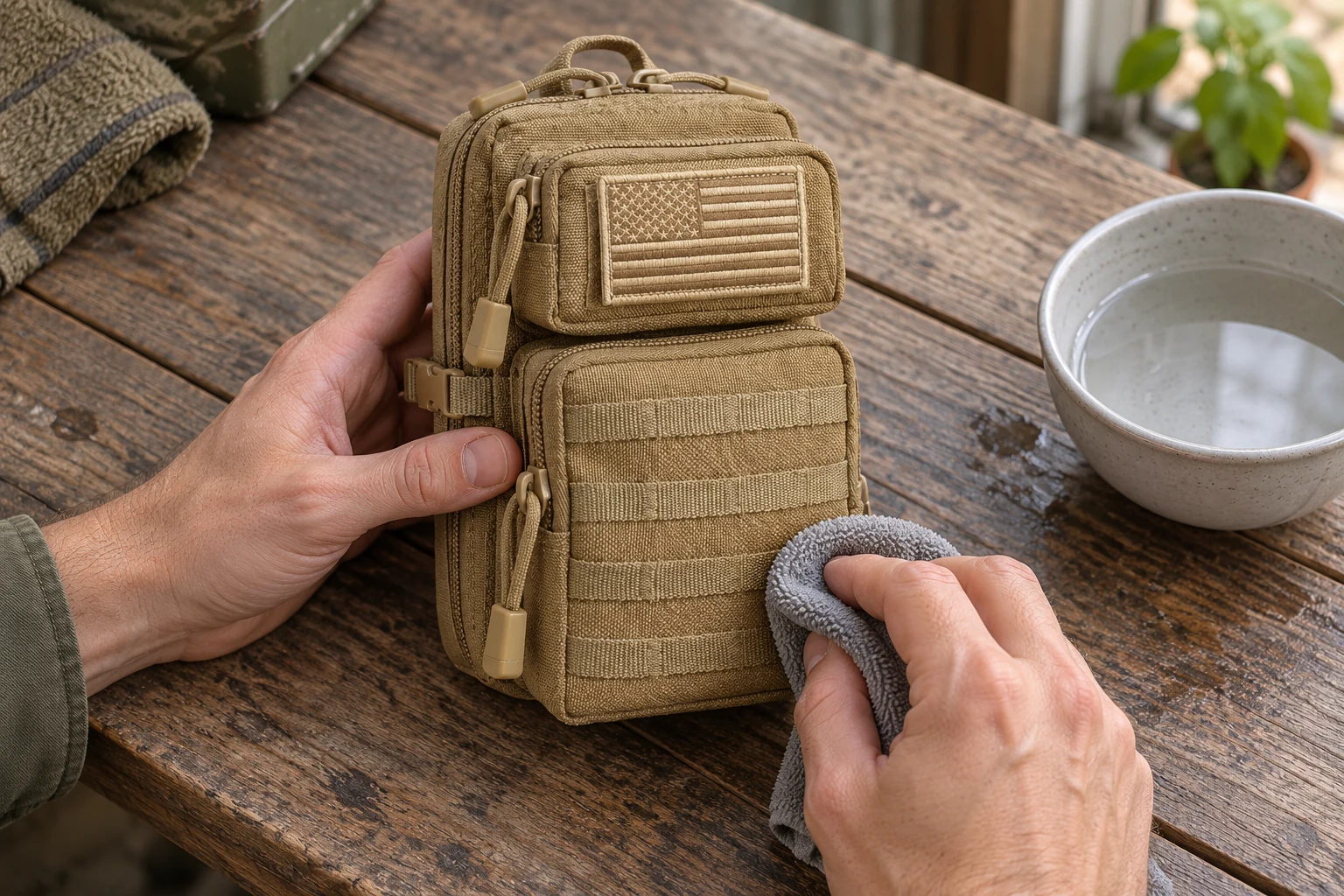
The safe cleaning method in seven steps
- Check the maker's care instructions. A sewn-in label or product-specific guide should override general advice because coatings, padding, stiffeners, and hardware vary.
- Empty every compartment. Remove electronics, batteries, tools, documents, hook-and-loop patches, and detachable straps. Open all zippers and shake the pouch upside down.
- Dry-brush first. Use a soft brush or clean cloth to lift dust, crumbs, sand, and dried mud before adding water. Pay attention to seams, zipper tracks, and rows of MOLLE webbing.
- Spot-test. Test cool water and diluted mild soap on a hidden area. Stop if the color transfers or the surface changes.
- Clean gently. Wipe the fabric with a damp cloth or soft brush. Work on one small section at a time rather than soaking the entire pouch by default.
- Remove residue. Wipe again with clean water until no soap remains. Do not twist, wring, or force water through padded areas.
- Air-dry completely. Blot with a towel, reshape the pouch, leave every compartment open, and dry it in moving air away from direct heat and strong sun.
This conservative method matches the care direction published by established tactical-pack makers. 5.11 Tactical recommends a damp cloth and mild soap for its tactical bags and warns that harsh detergent or machine washing can affect coatings and fabric. Mystery Ranch's pack-care guide also starts with emptying pockets and removing debris, then uses a soft brush, mild detergent when needed, and shaded ventilation for drying.
What you need
- A soft-bristled brush, such as a clean clothes or nail brush
- Two clean cloths or microfiber towels
- Cool or lukewarm water
- A small amount of mild soap or detergent
- A dry towel for blotting
- A shaded, ventilated place for drying
You usually do not need a strong cleaner. More chemical strength is not automatically better: it can leave residue, change color, or affect a water-resistant finish. If the pouch handled fuel, solvents, unknown chemicals, bodily fluids, or another hazardous substance, do not treat that as routine washing. Follow the substance's safety guidance or replace the pouch when it cannot be cleaned safely.
If you are not sure which parts are webbing, attachment rows, or ordinary storage, start with our plain-English guide to what makes a tactical EDC pouch different.
Spot-clean or hand-wash?
Spot-cleaning is the best first choice for ordinary dirt. It limits how much water reaches hidden seams, inner foam, stiffeners, hook-and-loop panels, and coatings. A deeper hand wash is reasonable only when the whole pouch is dirty and the maker's instructions allow it.
| Condition | Start with | Why |
|---|---|---|
| Dust, crumbs, light scuffs | Shake, vacuum carefully, or dry-brush | Water is unnecessary |
| Small muddy area | Let it dry, brush, then spot-clean | Dry soil lifts more easily before it turns into slurry |
| Sweat or light odor | Damp-cloth clean, then long ventilation | Removes surface residue without soaking padding |
| Widespread dirt | Gentle hand wash only if maker permits | Reaches more fabric with less agitation than a machine |
| Oil, paint, solvent, or unknown chemical | Check product-specific safety advice | General soap-and-water advice may be unsafe or ineffective |
How to clean MOLLE webbing
MOLLE webbing creates narrow channels where grit can sit against the pouch. Unthread removable straps and accessories first. Brush parallel to the rows, then lift each row gently enough to reach underneath without stretching it. Use a damp, soapy brush only where dry brushing does not work.
Do not pull hard on one loop or scrub one small spot aggressively. That can fuzz the webbing or put uneven stress on stitching. After cleaning, inspect the attachment rows and their seams. Loose stitching, tearing, melted fibers, or distorted attachment points are repair issues, not dirt.
How to clean zipper tracks and pulls
Open the zipper and use a dry soft brush to move grit out of the teeth or coil. Brush in the same direction as the track instead of forcing debris deeper. Follow with a barely damp cloth if needed, then operate the zipper slowly after it dries.
Never yank a slider that feels stuck. Look for fabric, thread, sand, or an overloaded compartment putting pressure on the track. Do not add household oil: it can attract dirt and stain fabric. Use a product-specific zipper lubricant only when the zipper maker or pouch maker recommends it.
Mud, salt, food, and odor
Dried mud
Let the mud dry, flex the fabric lightly, and brush off as much as possible. Then spot-clean what remains. Starting with a wet scrub often spreads soil into seams and webbing.
Salt and sweat
Wipe the affected area with clean water, then use diluted mild soap if a residue or odor remains. Finish with another clean-water wipe. Salt left around zipper tracks or hardware can make movement rougher over time.
Food and drink
Blot liquids instead of rubbing them outward. Remove solids with a spoon or dull edge, then clean from the outside of the mark toward the center. Keep batteries, medication, first-aid supplies, and electronics out until the pouch is fully dry and clean.
Musty odor
First remove the cause: hidden moisture, organic debris, or damp contents. Clean gently, open every pocket, and let the pouch dry with strong airflow. Fragrance only masks the problem. If visible mold returns after cleaning or the odor remains deep in padding, replacement can be safer than repeated soaking.
What not to do
- Do not assume machine washing is safe. Agitation can stress webbing, zipper pulls, coatings, padding, and hook-and-loop areas.
- Do not use a hot dryer or hair dryer. High heat can distort synthetic fabric, coatings, foam, or plastic hardware.
- Do not use bleach or fabric softener. These are unnecessary for routine dirt and may affect color, finish, or residue.
- Do not pressure-wash a small pouch. A method acceptable for one maker's large pack is not automatically appropriate for a compact organizer with different seams and materials.
- Do not wring it out. Blot with a towel and let airflow do the rest.
- Do not reload it while damp. Closed compartments trap moisture around metal tools, paper, batteries, and electronics.
How to dry it properly
Set the pouch on a clean towel, press gently to remove surface water, and restore its normal shape. Open every zipper. If the pouch collapses, loosely support it with a clean dry towel, but do not pack it tightly. Hang or stand it where air can reach both the inside and outside.
Drying time depends on humidity, padding, and how wet the pouch became. Do not judge only by the outer fabric. Feel the deepest seams, inner corners, and any padded wall. Reload the pouch only when those areas are fully dry and there is no cool, damp feel.
Inspect and reset the pouch
Cleaning is a good time to make the pouch easier to use. Check the zipper path, seam stitching, webbing, buckles, and hook-and-loop panels. Remove items that leaked, corroded, expired, or were never used. Then rebuild the kit around one job.
Use our EDC pouch organization guide to create clear zones. If the pouch had been overstuffed, compare your load with the EDC pouch size guide. For mounted carry, reattach it with the alternating weave shown in our MOLLE attachment guide and check that the pouch does not sway.
How often should you clean it?
Clean based on use, not a fixed calendar. Brush off sand or grit soon after a dusty trip. Wipe spills before they set. Dry a pouch promptly after rain, sweat, or a damp vehicle environment. For a work-bag or truck organizer that stays mostly clean, a quick empty-and-inspect every few months may be more useful than frequent washing.
A pouch used for camping, road work, or outdoor carry may need attention after each dirty trip. Our camping and travel pouch guide helps separate quick-access items from larger equipment, while the truck-kit guide explains why a small organizer should not replace a complete emergency kit.
Frequently asked questions
Can you wash a MOLLE pouch?
Yes, but start with its care label or maker instructions. For a typical fabric pouch, empty it, brush away grit, spot-clean it with cool water and mild soap, remove the residue, and air-dry it completely.
Can a MOLLE pouch go in a washing machine?
Do not assume it can. Machine agitation can stress webbing, coatings, stiffeners, zipper pulls, and hook-and-loop panels. Use a machine only when the maker explicitly allows it.
How do you dry a tactical pouch?
Open every compartment, blot excess water, reshape the pouch, and air-dry it in a shaded, well-ventilated place. Wait until seams, pockets, and padding are fully dry before reloading it.
How do you clean MOLLE straps and zippers?
Brush dry grit out first. Use a soft brush and mild soapy water for remaining dirt, then wipe away residue. Work along zipper tracks and webbing rows rather than scrubbing across them aggressively.
Bottom line
Clean a MOLLE pouch with the least force, water, heat, and chemical strength that will do the job. Most routine care needs only an empty pouch, a soft brush, mild soap, cool water, and enough shaded airflow to dry every seam. The maker's instructions always come first, and a damaged pouch needs repair or replacement—not a harsher wash.
Sources and further reading
- 5.11 Tactical: tactical bag cleaning guidance — recommends damp-cloth cleaning with mild soap and warns against harsh detergents and machine washing for its bags.
- 5.11 Tactical: care for nylon bags and pouches — starts with a soft brush and cold water and advises hand washing when uncertain.
- Mystery Ranch: cleaning and care instructions — covers debris removal, soft-brush cleaning, mild detergent, and shaded ventilation for pack drying.