The short answer
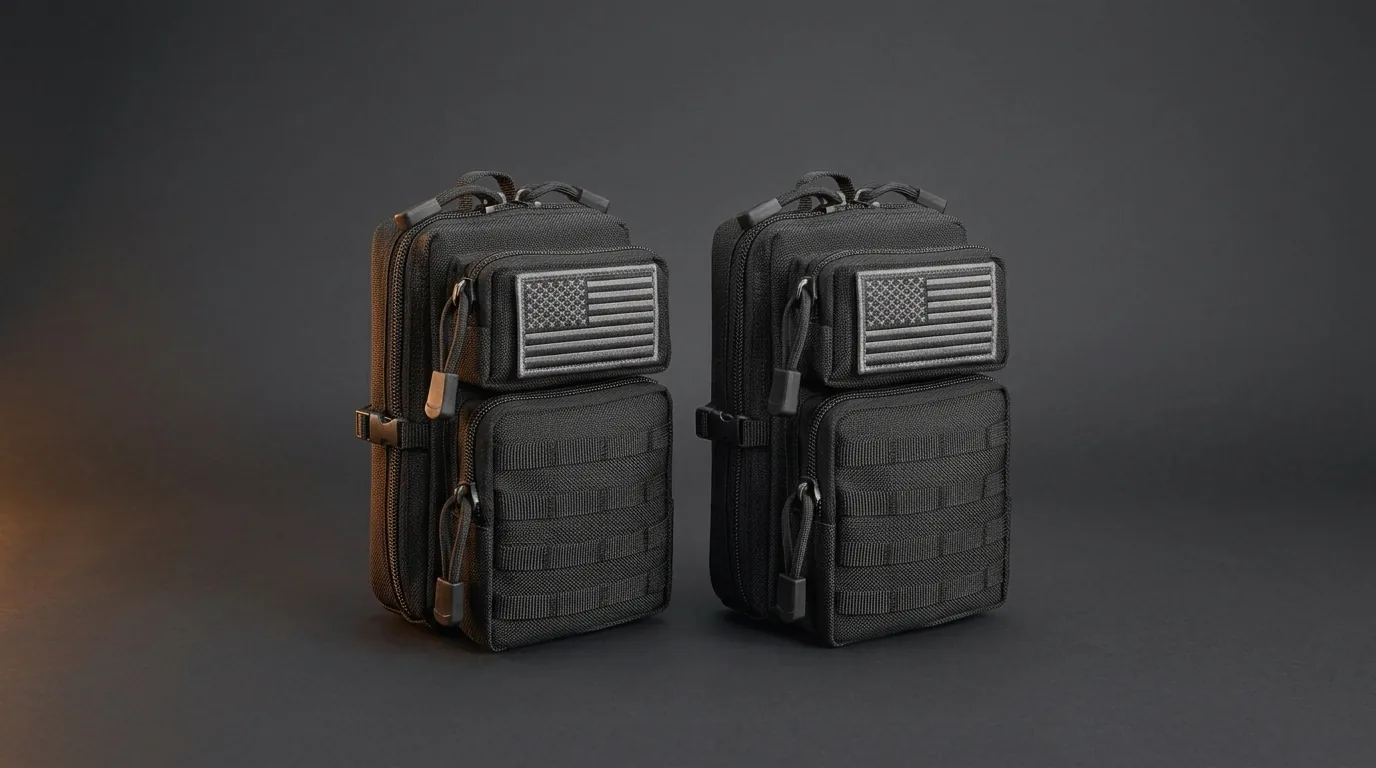
A tactical EDC pouch is a small zippered organizer designed to keep frequently used gear protected, grouped, and easy to move. Compared with a basic fabric pouch, it usually puts more emphasis on structure, tougher fabric, multiple compartments, secure zipper pulls, webbing, and attachment options.
The word tactical is often misunderstood. It describes the pouch's practical construction and modular layout more than the objects inside it. A tactical pouch can hold a charging cable, power bank, flashlight, pen, keys, work badge, tire gauge, compact tools, or travel accessories. The useful question is not whether the loadout looks tactical. It is whether the pouch solves a repeat problem.
| Feature | What it does | When it matters |
|---|---|---|
| Divided storage | Separates small items so they stay visible and reachable | Daily carry, work bags, travel, vehicle kits |
| Rugged outer fabric | Helps the pouch hold its shape during repeated handling | Frequent transfers and rougher environments |
| Secure zippers and pulls | Makes compartments easier to open and close consistently | Gloves, low light, commuting, field work |
| Front or rear webbing | Adds attachment points for compatible setups | MOLLE panels, packs, belts, or exterior carry |
| Grab handle or carry loop | Makes the whole kit easy to lift and move | Truck, desk, backpack, or bag-to-bag transfers |
What makes a pouch “tactical”?
There is no single feature that turns an organizer into a tactical EDC pouch. The label usually points to a combination of durable materials, practical access, secure closure, modular attachment, and a layout that can be reset after use.
Dirt and grit can settle into zipper tracks and webbing after regular use. Our MOLLE pouch cleaning guide explains the gentle brush, mild-soap, and shade-drying method.
- Several storage zones: a main compartment, front pocket, mesh area, elastic loops, or small sleeves can separate items by job.
- Reinforced carry points: handles, loops, and webbing help the pouch tolerate frequent movement.
- Glove-friendly access: larger zipper pulls can be easier to find and operate than tiny hardware.
- External webbing: MOLLE-style rows may let the pouch connect to a compatible surface or hold light accessories.
- Compact structure: the pouch should protect and organize gear without becoming a second backpack.
Features only help when they match the use. A pouch with many loops is not automatically better than a simple one. Choose the layout that gives your most important items a clear home.
Common everyday uses
Work-bag organizer
Use one pouch for charging gear, a flashlight, pens, small adapters, a badge, and other items that tend to settle at the bottom of a backpack. Keeping the kit separate makes it easier to move between a work bag and a travel bag. See our work-bag pouch setup for a practical example.
Truck or vehicle kit
A compact pouch can group a tire gauge, flashlight, charging cable, gloves, note card, and other small vehicle-use items. Keep it secured where it will not move around the cabin or interfere with controls. A pouch is not a complete roadside emergency kit; larger safety gear needs its own suitable storage. Our truck-kit guide explains the split.
Travel accessory pouch
Use it for dry accessories that do not belong in clothing cubes: cables, adapters, earbuds, a pen, keys, and small personal items. Check every item against current travel rules before flying. The organizer itself does not make restricted contents acceptable.
Task-specific grab kit
A field technician, photographer, driver, or facilities worker can build a small kit around one repeat task. The pouch works best when its purpose fits in one sentence, such as “small charging and inspection tools” or “items I move between the truck and work bag.”
Does a tactical pouch need MOLLE?
No. You can use a tactical EDC pouch as a stand-alone organizer. It can sit inside a backpack, work bag, carry-on, drawer, or secured vehicle compartment without attaching to anything.
MOLLE-compatible webbing matters when you want the pouch fixed to a matching panel, pack, or belt setup. Attachment should be stable, balanced, and appropriate for the surface. If your bag has no matching webbing, use the pouch internally or follow the options in our guide to using a MOLLE pouch without MOLLE webbing.
Tactical EDC pouch vs. basic organizer
A basic organizer can be the better choice for a light, simple load. A tactical pouch makes more sense when you value structure, repeated handling, clear compartment separation, or compatible attachment points.
| Choose a basic organizer when… | Choose a tactical EDC pouch when… |
|---|---|
| You carry a few soft, lightweight items | You carry mixed gear that needs separation |
| The pouch stays inside one clean bag | The kit moves often between bags, work, or vehicle storage |
| Low weight matters more than structure | Structure and quick access matter more |
| You do not need attachment points | You may use webbing, loops, or a grab handle |
If most of your load is electronics, compare the layouts in our EDC pouch versus tech pouch guide. If you carry longer tools, a tool roll may fit better.
How to pack one without overloading it
- Choose one job. Define the pouch in a short phrase before adding items.
- Lay out the real essentials. Start with items you use or miss regularly.
- Place quick-use items near the opening. Avoid burying a flashlight, cable, or access item.
- Separate hard and delicate gear. Keep metal items away from screens, batteries, and lenses.
- Close it without pressure. The zipper should not need force or compress fragile items.
- Test it for a week. Remove unused weight and add only items supported by real need.
For a zone-by-zone setup, use our EDC pouch organization guide. If you are unsure about capacity, start with the EDC pouch size guide.
What a tactical pouch should not replace
- A complete first-aid kit: medical supplies should be clearly identified, maintained, and stored correctly.
- A roadside emergency kit: larger safety equipment needs suitable vehicle storage and regular checks.
- A protected battery case: loose batteries need safe handling that a general fabric pocket may not provide.
- A secure container for restricted items: laws, workplace rules, venue policies, and travel rules still apply.
Frequently asked questions
What makes an EDC pouch tactical?
A tactical EDC pouch usually combines durable fabric, secure zippers, divided storage, attachment points, and a compact shape designed for repeated use. “Tactical” describes the construction and layout; it does not mean the pouch must carry weapons or survival gear.
Do you need MOLLE webbing to use a tactical pouch?
No. Use it as a stand-alone organizer inside a backpack, work bag, truck console, or carry-on. MOLLE compatibility only matters when you want to attach the pouch to a matching surface.
What should go in a tactical EDC pouch?
Pack small items tied to one job, such as charging gear, a flashlight, notes, work accessories, vehicle basics, or travel items. Avoid filling it with unrelated just-in-case gear.
Is a tactical EDC pouch the same as a tech organizer?
Not always. A tech organizer is mainly shaped for electronics and cables. A tactical EDC pouch usually has a more general layout and may add rugged fabric, external webbing, reinforced carry points, or attachment options.
Bottom line
A tactical EDC pouch is a durable, divided organizer—not a required style of loadout. It is useful when small gear needs to move together, stay easy to reach, and survive repeated daily handling. Pick one purpose, choose the smallest layout that fits, and use MOLLE or external attachment only when your carry setup genuinely needs it.
Sources and further reading
- Ready.gov: Build A Kit — official emergency-kit guidance for separating broader preparedness from a small daily organizer.
- TSA: What Can I Bring? — current US screening guidance for items packed for air travel.