The short answer
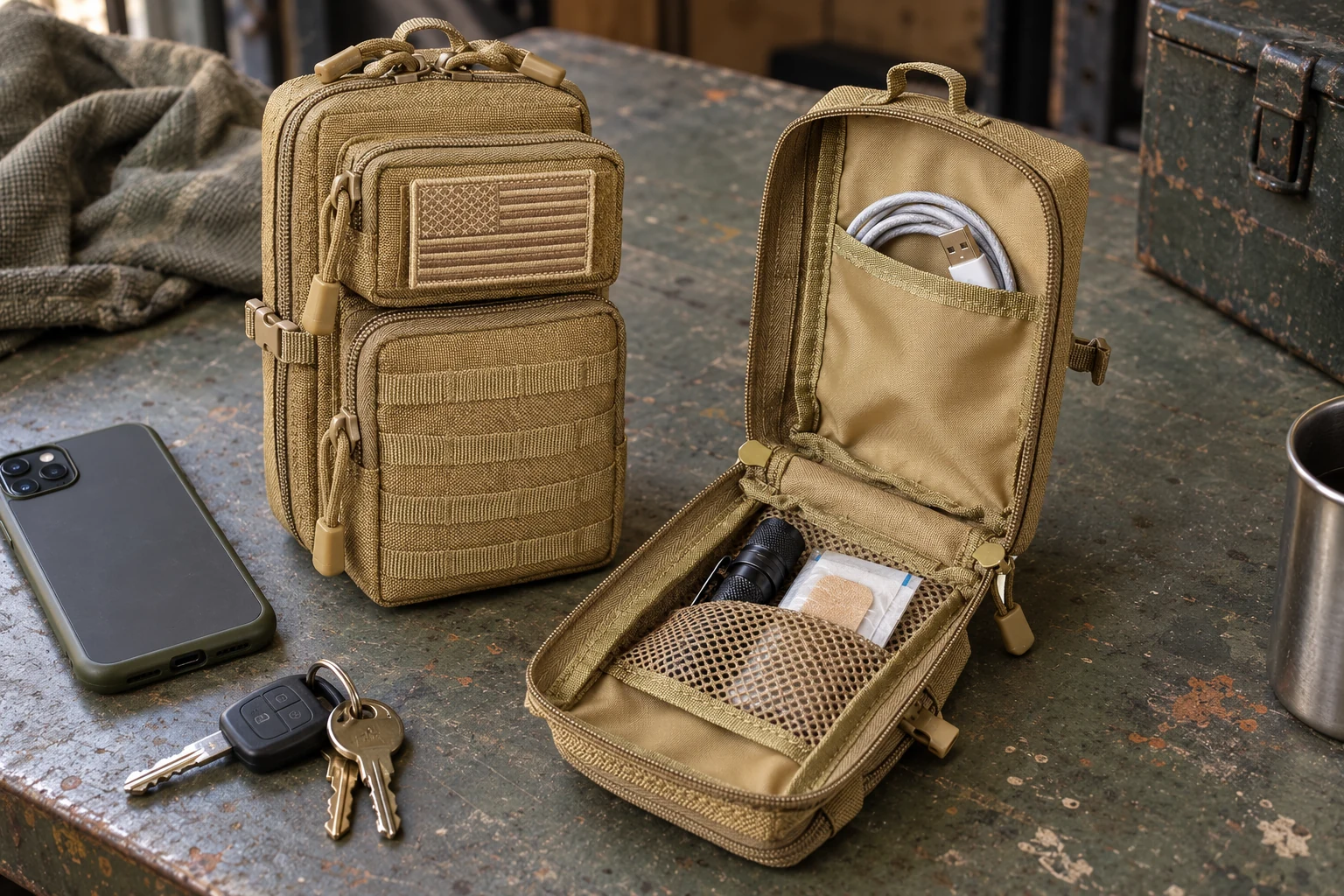
A practical EDC pouch usually holds six groups: phone power, light, writing, small personal-care items, keys or access items, and a few extras matched to your day. The goal is not to collect gear. It is to stop small useful items from disappearing into a work bag, truck console, backpack, or carry-on.
Start with the problems you face every week. If your phone runs low, carry one suitable cable and a compact power bank. If you enter dark parking areas or inspect equipment, add a small flashlight. If you regularly need notes, keep one pen and a slim notebook. Build around real use, then remove anything that has no clear job.
| Category | Useful starting items | Common overpacking mistake |
|---|---|---|
| Power | One cable, compact power bank, small wall adapter if needed | Carrying several duplicate cables and adapters |
| Light | Compact flashlight with a protected switch | Adding bulky lights that crowd the pouch |
| Notes | One reliable pen and slim notebook or note cards | Multiple pens, markers, and full-size notebooks |
| Personal care | Microfiber cloth, tissues, bandages, or other simple items you use | Mixing loose medicine or a full first-aid kit into general gear |
| Access | Keys, badge, small key accessory | Loose heavy key rings that scratch electronics |
| Task extras | Only items tied to work, travel, truck, or commute needs | Packing for unlikely situations instead of normal routines |
A simple everyday starting list
Use this as a starting point, not a shopping list. Your pouch may need fewer items.
- One phone cable: choose the connector your main device actually uses.
- A compact power bank: useful when outlets are not reliable.
- A small flashlight: easier to control than using a phone in a dark parking lot, vehicle, or work area.
- One pen and a slim notebook: for quick notes, measurements, names, or instructions.
- Keys or access items: keep them clipped or separated from screens and batteries.
- A microfiber cloth: useful for glasses, screens, or small cleanup.
- A few adhesive bandages: keep them clean and flat, or place medical items in a separate marked kit.
Match the pouch to one role
The best list changes with the pouch's job. A work-bag pouch may center on charging and notes. A truck pouch may hold a flashlight, tire gauge, gloves, and a charging cable. A travel pouch may hold dry essentials that move between bags. Give the pouch one sentence-long purpose before adding anything.
If the purpose is too broad—“everything I might ever need”—the pouch becomes hard to reset. Our EDC pouch layout guide shows how to divide a clear list into quick-access, protected, and grouped zones.
What to leave out
- Duplicates: carry one working cable or pen unless a backup solves a real problem.
- Loose medicine: keep medicine in original labeled packaging and follow its storage instructions.
- Unprotected batteries: prevent terminals from contacting metal objects and follow device guidance.
- Leaking liquids: use a separate sealed toiletries bag when possible.
- Sharp or restricted items: they may be unsafe, inappropriate for the setting, or restricted during travel.
- Heavy “just in case” gear: weight makes a small kit less likely to move between bags.
Keep general EDC and first aid easy to identify
A few clean bandages can cover a minor everyday need, but a general EDC pouch should not be mistaken for a complete emergency or first-aid kit. Medical supplies need their own inspection, labels, storage conditions, and replacement schedule. A separate clearly marked kit is easier for another person to recognize quickly.
For the practical difference, see our EDC pouch versus first-aid kit guide. For broader emergency planning, use official preparedness guidance rather than treating an everyday organizer as a survival kit.
Check every item before air travel
An organizer pouch does not make its contents automatically travel-safe. Airport and airline rules apply item by item. Recheck official guidance before flying, especially for liquids, tools, sharp objects, spare batteries, and portable chargers. Our EDC pouch air-travel guide gives a practical overview, but current official rules should make the final call.
Use the one-week test
- Pack the minimum list. Start with the items you expect to use this week.
- Give every item one place. Nothing should float loose over several other items.
- Carry it for seven normal days. Notice what you used, what you searched for, and what stayed untouched.
- Remove the dead weight. Take out low-use items that do not solve an important problem.
- Add only from evidence. If you needed the same missing item more than once, consider adding it.
- Reset the pouch. Replace used items, recharge power, and return everything to its place.
Choose the pouch after the list
Lay out the final items, group them by function, and measure the thickest pieces. Choose the smallest pouch that closes without pressure and still lets you retrieve items cleanly. A bigger pouch often invites more clutter rather than improving the kit.
Use our EDC pouch size guide to compare the item footprint, loaded thickness, access style, and carry location.
Frequently asked questions
What are the most useful items for an EDC pouch?
Start with items that solve frequent small problems: a charging cable, compact power bank, flashlight, pen, note card or slim notebook, keys, and a few simple personal-care items. Adjust the list to your work, travel, or vehicle routine.
How many items should be in an EDC pouch?
There is no ideal number. Keep only items with a clear job and a fixed place. If the pouch bulges, the zipper needs pressure, or one item blocks several others, remove the lowest-use item.
Should medicine or first aid go in an EDC pouch?
Keep important medicine in its original labeled packaging and follow storage directions. A separate, clearly identified first-aid kit is usually easier to find and maintain than loose medical supplies mixed with everyday gear.
Can an EDC pouch go through airport security?
The pouch itself can usually travel, but every item inside must follow current security and airline rules. Check the official rules before each trip, especially for tools, liquids, batteries, and sharp objects.
Bottom line
Build an EDC pouch around frequent real problems, not the longest possible gear list. Start with power, light, notes, access items, and a few personal essentials. Give every item one place, separate medical or restricted gear when appropriate, and remove anything that adds bulk without regular value.
Sources and further reading
- Ready.gov: Build A Kit — official emergency-kit guidance; use this for broader preparedness rather than treating a daily pouch as a full emergency kit.
- TSA: What Can I Bring? — current US screening guidance for individual travel items.
- FAA: Portable Electronic Devices With Batteries — official guidance for devices, spare batteries, and power banks during air travel.